


The President of the European Central Bank Jean Claude Trichet has said that the European Union is at the epicentre of a global crisis.
Mr Trichet has called on its political leaders to face up to the worst disaster since World War II.
However, Mr Trichet ruled out one of the plans that politicians had been hoping might be able to tackle the debt problem.
Politicians have been working on a plan to create a super fund of trillions of euro to protect banks and states in trouble.
One idea was to use the €440bn in the EU's bailout fund to access even more money from the ECB.
That idea now looks doomed as ECB chief as Trichet said bluntly today "I am not in favour of bailout funds being refinanced by the ECB".
Meanwhile, a meeting of EU finance ministers has concluded in Luxembourg, but no substantial decisions on the eurozone crisis were taken.
The ministers postponed a decision on whether to give an additional €8bn in bailout funds to the Greek government.
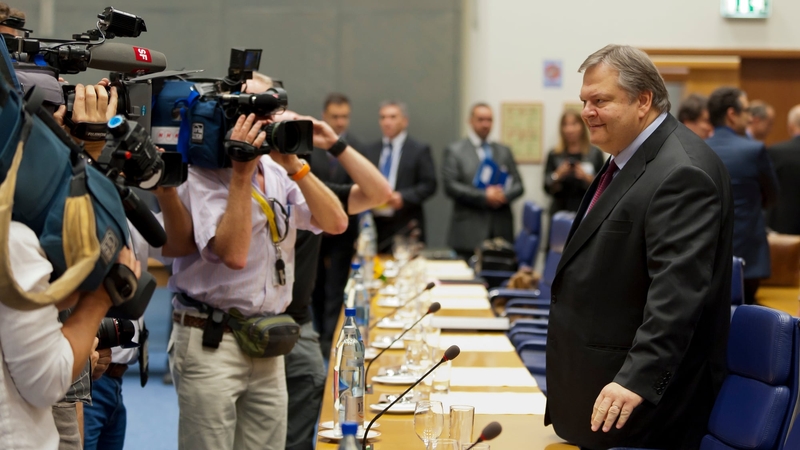
After returning to his capital, Greek Finance Minister Evengelos Venizelos said his country had enough cash to cope until November.
However, the mood is dark as bank shares took a sharp tumble on the markets today.
French and Belgian leaders are scrambling to help Dexia bank, which is buckling under its exposure to Greek debt.
Chair of the Eurogroup Jean-Claude Juncker ruled out any possibility of a Greek default.
He also said he was also confident that plans to further expand the EU's bailout fund would not be blocked by Slovakia.
Finance Ministers from all 27 EU-member states meet in Luxembourg today.
Greek Prime Minister George Papandreou, who on Sunday announced deep cuts for 2012 in a bid to unblock promised EU and IMF funds, will now have to agree "additional measures" with international auditors "to close any remaining gaps for 2013 and 2014," Mr Juncker said.
His comments came after seven hours of talks between eurozone finance ministers in Luxembourg.
The ministers had downplayed the chances of €8bn in loans originally set for September being re-activated, prompting Greek Finance Minister Evengelos Venizelos to suggest Athens was being made a "scapegoat" for wider eurozone debt troubles.
In the end Mr Venizelos was sent back to the drawing board, with a demand to secure creditors' agreement on a new massive overhaul of the rapidly shrinking Greek economy, to enable a "definite and final decision" on the loan funding before the end of October.
Mr Juncker said Athens does not now need the money - which it previously said was required swiftly - to avert a default.
When Greek lawmakers last voted through a financial overhaul in the summer, central Athens ground to a standstill as protests degenerated into sometimes violent clashes with riot police.
However, this time Mr Juncker is anticipating "rapid legislation and entry into force" of the overall package.
The Greek parliament is set to vote on the changes at the start of November.
Mr Junker also said that two of the litany of hold-ups to the resumption of Greek bailout transfers were removed.
These were Slovakia dragging its heels in ratifying changes to the eurozone's rescue fund; and fall-out over a deal Finland struck directly with Athens to obtain cash collateral before handing over its share of loans.
Asked after talks with the Slovakian prime minister if he was confident Bratislava would not torpedo the vote, Mr Juncker gave an emphatic "yes."
Only Malta and The Netherlands have still to rubber stamp a deal struck in July, though there appear to be no particular sticking points for those nations.
Meanwhile Klaus Regling, the head of the European Financial Stability Facility, will explore further ideas on how to ramp up the effectiveness of the €440bn rescue fund, after broad discussions about possible "leveraging," to multiply its firepower.
Continuing fears about the eurozone debt crisis and a possible Greek default saw share values on most Asian markets down in early trading, after falls on Wall St last night and in Europe yesterday.
The euro has also fallen in value against the dollar and the yen.
