


Burma's new government has begun freeing about 14,000 prisoners and commuting thousands more sentences in an amnesty critics have dismissed as a token gesture.
Activists said the vast majority of those released from prisons across Burma, the country officially known as Myanmar, were common criminals and few were political prisoners.
Rights groups put the number of political prisoners there at about 2,200.
The large number of political detentions has been central to the imposition of economic sanctions on Burma's rulers since a bloody crackdown on pro-democracy protests in 1988.
Their release has long been a key demand by the West.
The amnesty was announced by President Thein Sein and came just days after United Nations special envoy Vijay Nambiar visited Burma and urged the release of all political prisoners.
According to the presidential decree, all death sentences were commuted to life imprisonment and many terms were reduced by one year.
Burma's prison department chief, Zaw Win, said 14,000 prisoners would be freed today.
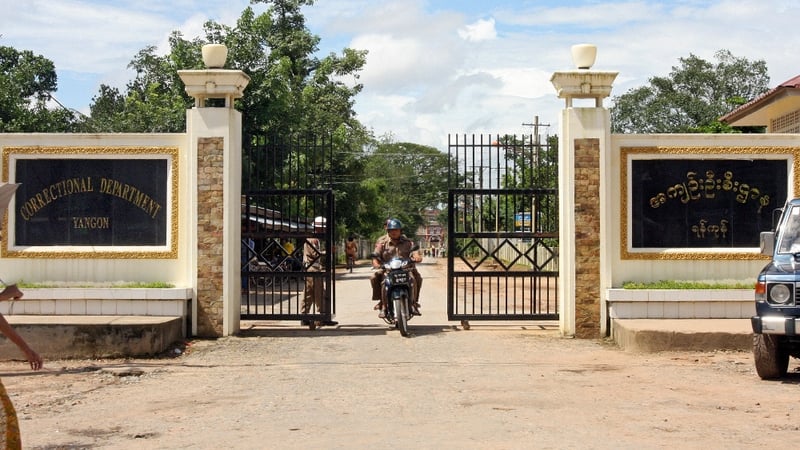
About 2,000 people were freed from Yangon's notorious Insein Prison earlier, but activists said only two political detainees were among them.
The US Campaign for Burma, a Washington-based advocacy group, said the failure to release political detainees showed Burma's new government had no intention to introduce democratic reforms.
'Today, Thein Sein's government has shown it's true colours...' it said in a statement. 'This can hardly be considered progress.'
Burma held its first parliamentary election in two decades last November, but critics said the poll was a sham and the previous military regime was still holding all the power.
The amnesty comes at a time when sanctions are sharply in focus.
Burma insists there are no political prisoners in its jails and is trying to attract foreign investment.
The country has some 60,000 prisoners held in 42 prisons and 109 labour camps, according to official figures.
