


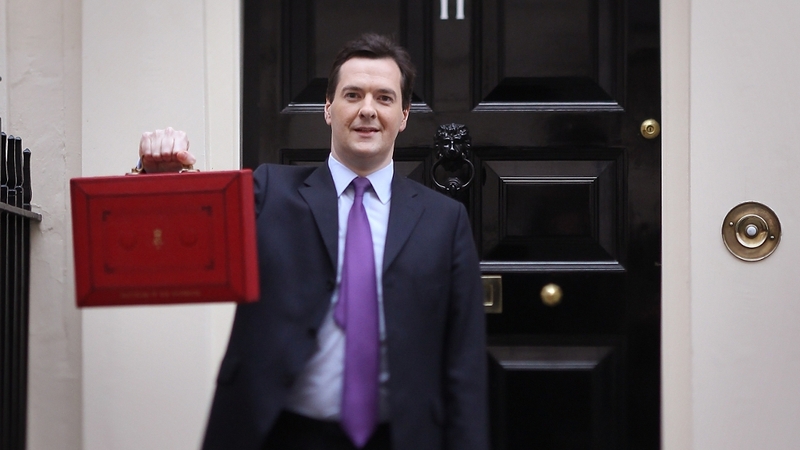
British Chancellor George Osborne has delivered his annual budget, unveiling plans to kick-start Britain's weak economy.
Mr Osborne unveiled a budget for 'growth and jobs', even though he admitted that growth would be lower than expected this year.
Ignoring widespread calls to reduce the size of the coalition's spending cuts - the deepest for decades - Mr Osborne told parliament: 'Britain has a plan and we're sticking to it.'
In a boost to the private sector, he cut corporation tax paid by businesses by 2% after earlier announcing that he planned a reduction of 1%.
In a lift for the construction sector, he unveiled financial assistance for people struggling to buy their first home.
A total of £21bn (€24bn) of government spending cuts are due in 2011-12, around a quarter of the savings lined up by the Conservative-Liberal Democrat coalition by 2015.
Against this backdrop, Mr Osborne today lowered the government's official forecast for 2011 economic growth to 1.7% from an earlier prediction of 2.1%.
He said the major downgrade, which was in line with market expectations, came after the economy surprisingly shrank in the final quarter of 2010 and due to rising commodity prices and inflation.
The 2012 growth estimate was also trimmed to 2.5%, compared with 2.6% previously.
Further ahead, the economy is predicted to pick up speed, expanding by 2.9% in 2013.
Mr Osborne also downgraded public sector net borrowing for the current fiscal year, which runs to the end of March, to £146bn from £148.5bn previously.
The coalition is seeking to slash a record public deficit run up under the previous Labour government due to bank bailouts and weak tax revenues in the recession.
Following last year's general election, Mr Osborne gave a painful emergency budget and spending review in which he announced plans to save £81bn over five years in order to slash a record public deficit.
In a blow to British people ahead of the budget, Mr Osborne in January hiked the rate of Britain's sales tax, or VAT, to 20% from 17.5%.
Last month he announced that a special levy on banks - imposed following the 2008 financial crisis - would be raised to yield £2.5bn this year.
Separate data published yesterday showed that British annual inflation jumped to 4.4% in February, the highest level since October 2008.
