


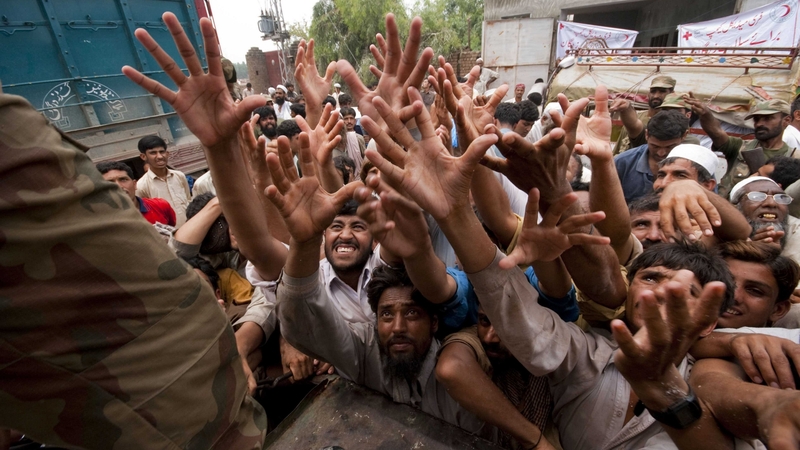
The UN has warned that it will cost billions to repair the damage caused by the devastating floods in Pakistan.
More than 1,600 people have died and millions more have been left homeless following the worst flooding in the country's history.
Pakistan Prime Minister Yousuf Raza Gilani has appealed for more help from the international community.
Landslides triggered by the floods are hampering already troubled relief efforts, with aid workers using donkeys or travelling on foot to reach people in desperate need of help.
Poor weather has made it difficult for helicopters to deliver food to some parts of the Swat Valley, northwest of the capital Islamabad and among the areas first hit by the deluge.
Many roads have been destroyed and landslides have added to the isolation of many areas.
‘It is hard to get supplies there. I would like to emphasise we are moving by foot or donkey. We are making all kinds of possible efforts. We are unable to get in to most places of Swat Valley,’ said Maurizio Giuliano, spokesman for the UN Office for the Coordination of Humanitarian Affairs.
President Asif Ali Zardari's decision to go ahead with official trips to Europe during the crisis has renewed criticism of his leadership. The military has taken the lead in relief efforts, while the government is under fire for perceived dithering.
Pakistan's troubled economy will need huge injections of foreign aid.
In the long term, billions may be needed to rebuild infrastructure and restore livelihoods, aid groups say.
The flooding, brought on by unusually heavy monsoon rains over the upper reaches of the Indus river basin, including eastern Afghanistan and northern India, has destroyed 360,000 houses, aid groups say.
The Government has announced an additional €550,000 in humanitarian aid for Pakistan.
A total of €750,000 has now been allocated by the Government to Concern, Trócaire and the United Nations Office for the Coordination of Humanitarian Affairs.
