


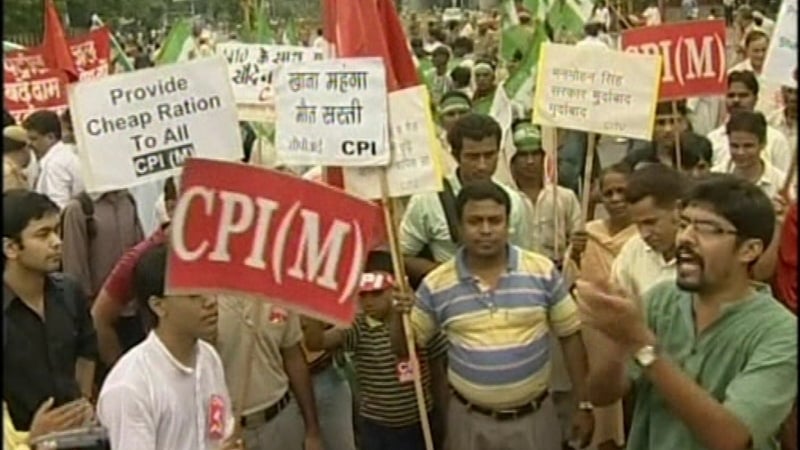
Strikes over fuel price rises have caused transport mayhem and sporadic violence in major cities in India where schools and businesses closed down.
Flights were grounded in Mumbai and Kolkata.
Protestors attacked buses, blocked roads with burning tyres and organised sit-down protests on inter-city railway links.
Police were out in force to prevent any large-scale unrest during the day-long strike.
The day of action virtually shut down the software sector in Bangalore where hundreds of software firms, including Infosys and Wipro, told employees to stay at home.
In New Delhi, the government said it would not be bullied into reneging on reform promises, and Finance Minister Pranab Mukherjee insisted there was 'no question' of rolling back on the fuel price hikes.
The Indian government scrapped petrol subsidies last month and announced an across-the-board rise in the price of other fuels as a key part of its strategy to rein in fiscal deficit.
Flights to and from Mumbai airport were severely disrupted, with domestic airlines cancelling 45 departures and 39 arrivals.
The city's taxis were mostly off the streets, schools, colleges and businesses closed down.
There were clashes in several cities, with police charging with batons and using water cannon to disperse crowds.
The Confederation of Indian Industry said the strike had a 'significant impact' on business and trade in some parts of the country, with an estimated economic loss of more than 30bn rupees (€510m).
