


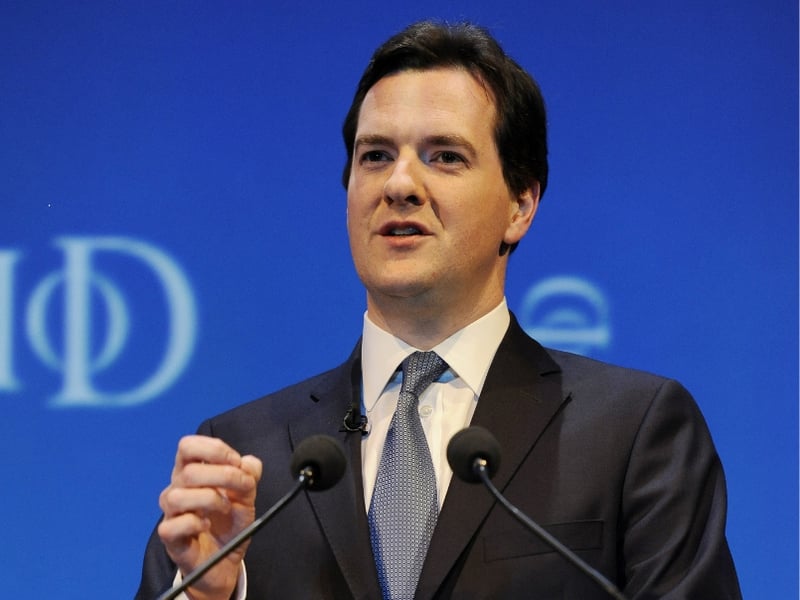
Britain's Chancellor of the Exchequer George Osborne has unveiled plans for an immediate £6.25bn cut in 'wasteful' public spending, insisting the government was 'getting on with the job' of tackling the deficit.
Mr Osborne, standing alongside his Liberal Democrat deputy at the Treasury, David Laws, said the reductions would be made while maintaining 'frontline' services in key areas such as the NHS.
He also announced that schools' spending would be protected.
Some £500m will be 'recycled' to boost employment and skills and the rest will be used to cut the government's debt.
'In the space of just one week we have found and agreed to cut £6.25bn of wasteful spending across the public sector,' Mr Osborne said.
Previously only health, defence and international development budgets had been promised protection from in-year cuts.
But Mr Osborne said: 'Because we have found these savings, I am able to make a new commitment which we didn't think possible before.
'I have already agreed that savings for health, defence and international development will be reinvested in their front lines.
'Today I am also able to protect schools funding, funding for Sure Start spending and 16-19 education spending from these in-year cuts.
'Schools will have to become more efficient, like everyone else, but their savings will be reinvested in the classroom this year.'
Mr Osborne said the savings were based on 'strong economic advice' from the Bank of England and the Treasury in favour of 'early action to deal with our debt', the Chancellor said.
It reflected a 'decisive shift' around the world towards deficit reduction as a priority.
Referring to a note left by outgoing Labour chief secretary Liam Byrne for Mr Laws, Mr Osborne said: 'It's all very well writing a letter telling us the money has run out; the real challenge is having an answer to that letter.'
He said his theme of 'we're all in this together' meant 'cutting wasteful spending while protecting the quality of key frontline public services we all depend on'.
Northern Ireland
Northern Ireland faces £128m in spending cuts following today's emergency budget.
Slashing the cost of quangos was among the measures announced by Mr Osborne to address the deficit.
Selling off surplus government buildings could be among measures taken as ministers strive to avoid axing frontline staff such as doctors and nurses.
The Scottish and Welsh First Ministers arrived in Belfast today for talks.
Northern Ireland First Minister Peter Robinson and deputy First Minister Martin McGuinness met Scottish leader Alex Salmond and Welsh chief Carwyn Jones to consider their financial strategies.
Mr Robinson said more details on how the £128m cuts would be imposed were awaited from the Treasury.
He told the Assembly there were hard decisions ahead for the Stormont Executive.
'In taking those decisions as far as we are capable of doing given the fact that we have little choice if cuts are imposed upon us, we must do everything that we can to protect the frontline services,' he said.
'We need to remember that the option of simply cutting jobs out of the public sector will have an impact on recovery in Northern Ireland.
'The prospect of holding back on capital programmes will have an impact, particularly on the construction industry, and while if we had recovered from the recession you will create jobs in the private sector to offset any jobs lost, they will be net losses if we were to take those cuts in this financial year.'
He said it would now be up to the Executive to determine the extent the cuts of £128m applied and whether they were carried forward into the next financial year.
