


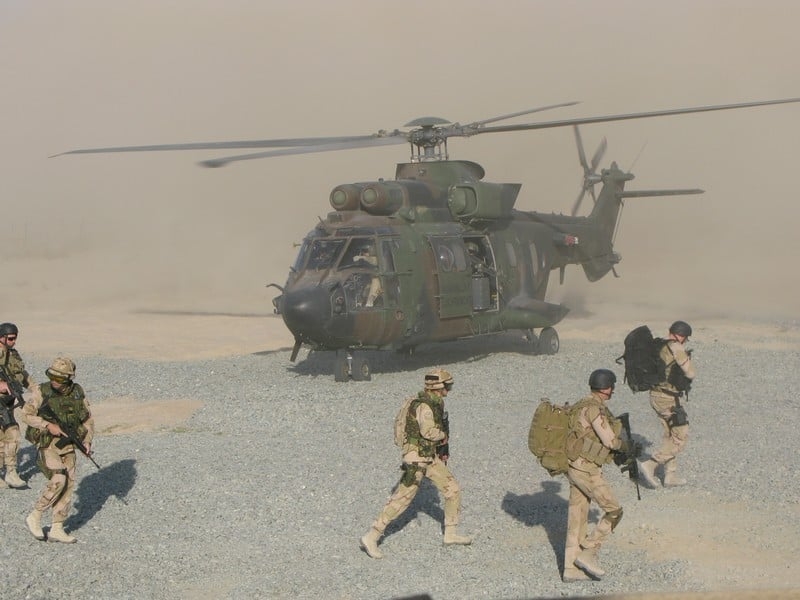
Dutch Prime Minister Jan Peter Balkenende's coalition government has collapsed after the two largest parties failed to agree on whether to withdraw troops from Afghanistan this year as planned.
The fall of the government, just two days short of its third anniversary, all but guarantees that the 2,000 Dutch troops will be brought home this year and will eventually prompt new parliamentary elections.
The collapse, the fourth for a cabinet led by Mr Balkenende in eight years, throws into doubt the scope and timing of planned budget cuts for next year as the Dutch economy battles to emerge from the global downturn.
'I unfortunately note that there is no longer a fruitful path for the Christian Democrats, Labour Party and Christian Union to go forward,' said Mr Balkenende, who leads the centre-right Christian Democrats.
The collapse occurred after more than 15 hours of talks, which lasted until early this morning, and acrimonious exchanges throughout the week.
Mr Balkenende wanted to extend the Dutch troop deployment in the NATO-led mission in Afghanistan past an August deadline, but Deputy Prime Minister Wouter Bos' Labour Party opposed any extension.
NATO had asked the Netherlands, among the top ten contributing nations to the mission, to investigate the possibility of a longer stay in Afghanistan as the alliance seeks to contain the Taliban insurgency.
Parliamentary elections could be held mid-year at the earliest, but would likely be followed by months of talks between parties to form a government.
A new government may prove difficult to establish, with opinion polls suggesting four or five parties may be needed to secure a majority coalition in the 150-seat parliament.
Right-wing legislator Geert Wilders's Freedom Party, which has called for an end to the Afghan mission, could be the big winner at the next election.
Opinion polls tip the Freedom Party, campaigning on mistrust of the government and an anti-immigration ticket, to become the largest or second biggest party in parliament.
Labour could regain some much-needed electoral support by its stance over Afghanistan but that may not be enough to form a left-leaning coalition.
The collapse of Mr Balkenende's coalition effectively nullifies an existing agreement to hold off any economic austerity steps until 2011 and could lead to deeper cuts when next year's budget is unveiled in September.
So far, 21 Dutch soldiers have been killed in Afghanistan.
