


Haiti's leaders can point to progress since a powerful earthquake devastated the country but just surviving the first weeks' chaos, hunger and overwhelming loss may be the easiest part of a long recovery.
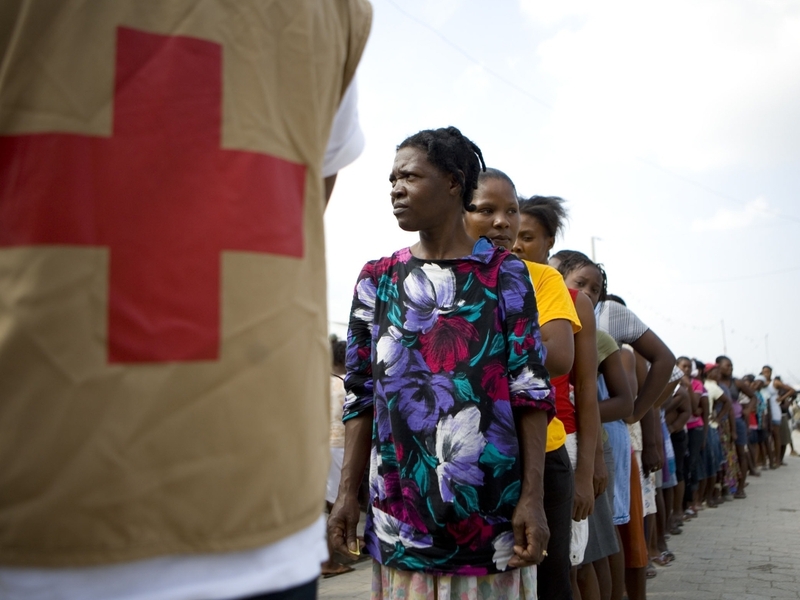
Since the 12 January catastrophe killed up to 200,000 people and left around 1 million homeless in the nation of 9 million, authorities and aid workers have cleared tens of thousands of bodies from the rubble, provided water supplies for makeshift refugee camps and developed a system of food distribution.
Some police are back in the streets, schools in unaffected areas will open on Monday, communications are working and some businesses have reopened their doors.
But Haiti faces massive hurdles ahead, and it was already the Western Hemisphere's poorest nation before the quake, grappling with widespread hunger and illiteracy, weak infrastructure, corruption and decades of political turmoil.
The government, with international assistance, must provide long-term shelter, food supplies, healthcare and sanitation for the legions left homeless, and do so in the few months before the hurricane season - and its risks of deadly winds and flooding - hits its stride in July.
Security is one of the biggest challenges. The earthquake weakened Haiti's security forces, triggered looting and left many people more vulnerable than ever to criminal gangs in the capital.
The post-quake exodus of residents to the countryside could also contribute to the spread of urban problems.
Money has poured in for the recovery effort, but rebuilding will require billions of dollars, few of the lost businesses were insured, and the disaster has shown that the shoddy building standards of the past are not good enough in a city that sits on an earthquake faultline.
President Preval says Haiti must decentralize by having businesses - and their workers - set up outside the capital city, which experts said was home to more than 2 million people before the earthquake and had an infrastructure suited for just 200,000.
He also wants to continue rural infrastructure projects that had begun before the disaster. Experts agree that Haiti's recovery programme cannot focus exclusively on the capital.
Arrests over alleged child smuggling
Haitian police have arrested 10 US citizens caught trying to take 33 children out of the earthquake-stricken country in a suspected illicit adoption scheme, authorities said on Saturday.
The five men and five women were in custody in the capital, Port-au-Prince after their arrests on Friday night.
There are fears that traffickers could try to exploit the chaos and turmoil following the earthquake quake to engage in illegal adoptions.
One of the suspects, who says she is leader of an Idaho-based charity called New Life Children's Refuge, denied they had done anything wrong.
The suspects were detained at Malpasse, Haiti's main border crossing with the Dominican Republic, after Haitian police conducted a routine search of their vehicle.
Authorities said the Americans had no documents to prove they had cleared the adoption of the 33 children - aged 2 months to 12 years - through any embassy and no papers showing they were made orphans by the quake.
‘This is totally illegal,’ said Yves Cristalin, Haiti's social affairs minister. ‘No children can leave Haiti without proper authorization and these people did not have that authorization.’
Laura Sillsby from the Idaho group said: ‘We had permission from the Dominican Republic government to bring the children to an orphanage that we have there.’
‘We have a Baptist minister here (in Port-au-Prince) whose orphanage totally collapsed and he asked us to take the children to the orphanage in the Dominican Republic,’ Miss Sillsby added.
US military suspends medical evacuations
Meanwhile, the New York Times has reported that the US military has suspended medical evacuations of critically injured Haitian earthquake victims until a row over who will pay for their care is settled.
Citing unnamed military officials, the newspaper said the military flights carrying people with spinal cord injuries, burns and other serious wounds, ended on Wednesday after Florida governor Charlie Crist formally asked the federal government to shoulder some of the cost of the care.
Hospitals in Florida have treated more than 500 earthquake victims so far, including an infant who was pulled out of the rubble with a fractured skull and ribs, the report said.
Other states have also taken patients and those flights have been suspended as well, the paper added.
