


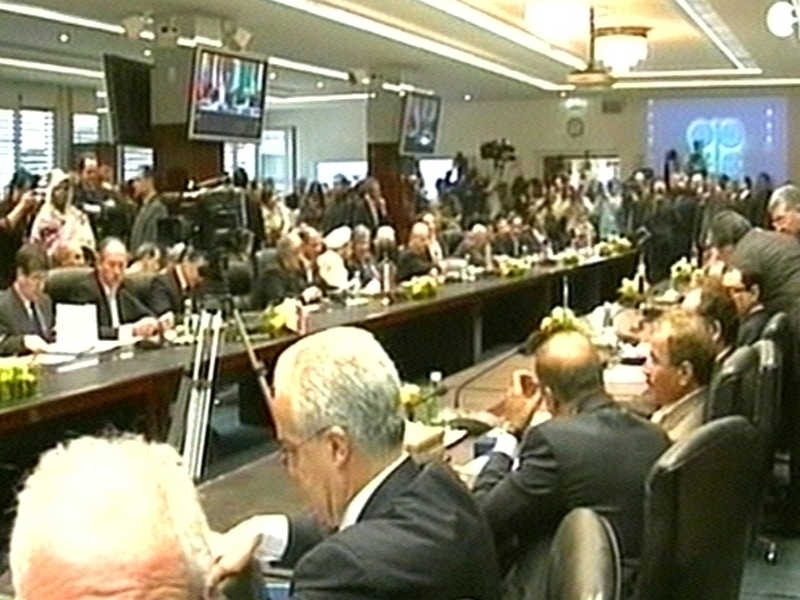
OPEC ministers have agreed to leave existing output targets unchanged, but promised to enforce those curbs more strictly and said they would meet again at the end of May.
The decision reflected concern for the world economy and a belief production curbs so far have begun to take away some of the over-supply from oil markets.
Ministers from the 12-member organisation had repeatedly said their focus was better compliance with deals in place since September to lower targets by 4.2 million barrels per day.
OPEC adherence has been estimated at roughly 80% and full compliance would take away up to a million barrels per day more.
OPEC's cuts since last September have helped to pull prices up from a low of $32.40 (€25.12) in December.
But levels are still just over $100 (€77.53) below last year's record high of nearly $150 (€116) and the group cannot forget the price crash of the late 1990s when oil fell towards $10 a barrel.
Saudi Arabian Oil Minister Ali al-Naimi echoed comments by King Abdullah last year that a reasonable price for oil was about $75.
Analysts predicted the immediate price reaction when the oil market resumes trade would be negative but not necessarily for the longer term.
