


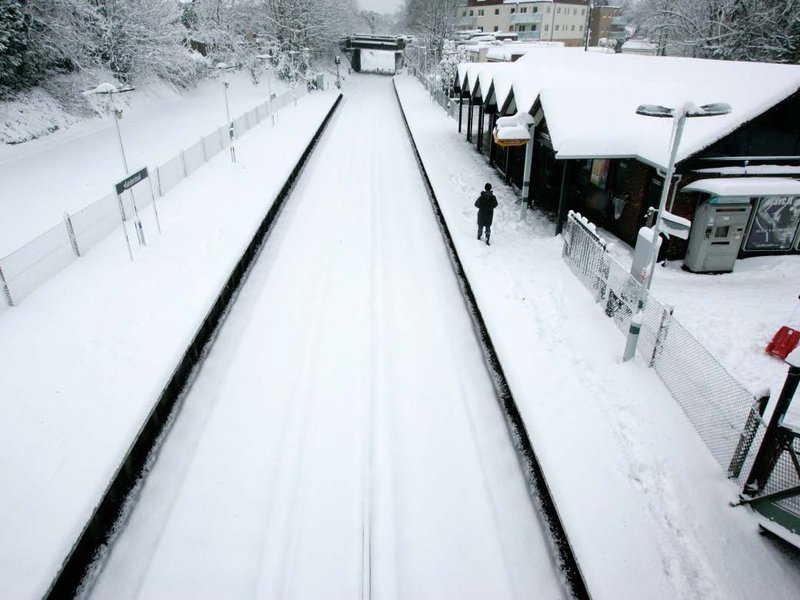
An icy night and forecasts of more heavy snow have led to disruption at airports and schools across Britain for a second day.
Hundreds of flights have been delayed or cancelled.
Millions returned to work in the southeast of England as transport systems stalled by yesterday's blizzards slowly returned to operation, but tens of thousands of children have been given a another day off because schools across the country remain closed.
'I can't believe it. I love snow,' said six-year-old Benedict Shorthose, gripped by the excitement of a prospect of a second day of snowball fights in snowy London.
But businesses angry at the failing infrastructure are counting the cost of yesterday's snow - the heaviest in southern England since 1991.
Experts estimate about 6.4m people did not get to work yesterday and warned another day of disruption could mean a total cost to a recession-hit economy of £1.2bn.
Stung by criticism after the capital's buses and underground trains came almost to a standstill yesterday, Transport for London issued early reports today of 'good level of service across the vast majority of the Tube and bus network'.
Heathrow and Britain's other airports are open but airport operator BAA said many flights will be delayed or cancelled.
The Met Office has issued an extreme weather warning to motorists to beware of icy roads and drifting or heavy snow and said there was a risk of snowfalls and severe weather affecting many parts of Scotland.
David Frost, director-general of the British Chambers of Commerce business organisation accused authorities of complacency and a lack of planning for the extreme weather.
'There is more freak weather about and we shouldn't just buckle to it. There should be more planning going into it,' he told BBC radio.
'When something like this does happen, we are caught very much on the hop.'
The image of the British capital buckling under a few centimetres of snow prompted commentators to make comparisons with World War Two, when even daily air raids by German bombers failed to halt London buses.
'Not even the Luftwaffe stopped the capital's buses,' bemoaned the Daily Telegraph's editorial writer. 'The very first instinct in the public sector these days is to give up, rather than battle with the elements.'
So far, this winter has been Britain's coldest in more than a decade and forecasters expect the cold weather to continue for several more days with freezing winds blowing in from Russia.
