


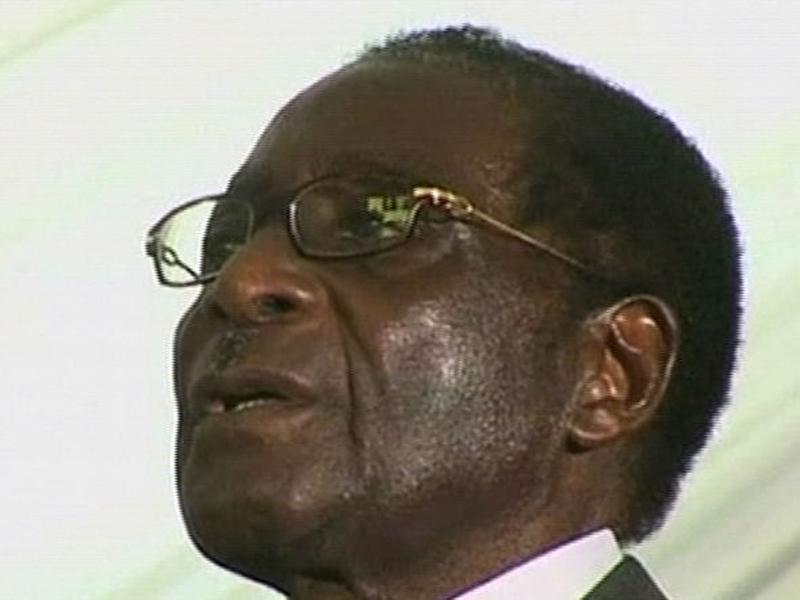
The African Union has called for a national unity government in Zimbabwe after the widely-condemned re-election of President Robert Mugabe in a poll scarred by violence.
A summit of the pan-African body, which had been divided over what to do about Zimbabwe, adopted a resolution calling for Mr Mugabe to enter negotiations with opposition leader Morgan Tsvangirai, who withdrew from the election because of violence.
The resolution fell short of the much tougher statement wanted by some African nations but it was a rare AU intervention in an internal political dispute and an unprecedented rebuff to Mr Mugabe, previously feted as am anti-colonial hero.
Before the two-day summit ended, Zimbabwe's neighbour Botswana called for Mr Mugabe to be barred from both the AU and the southern African regional body SADC.
It was the toughest public statement from one of Zimbabwe's neighbours since Mr Mugabe was sworn in on Sunday for a sixth term following a one-candidate election condemned by monitors as violent and unfair.
Kenyan Prime Minister Raila Odinga has also called for Mr Mugabe, 84, to be suspended from the AU after an election that extended the veteran leader's 28-year rule.
The Botswana statement underlined the deep rifts both within Africa as a whole and among Zimbabwe's neighbours.
South Africa, the designated mediator in Zimbabwe, has resisted open condemnation of Mr Mugabe. The summit called for SADC mediation to continue.
The AU summit in the resort of Sharm el-Sheikh was dominated by a deepening political and economic crisis in Zimbabwe, whose once prosperous economy is racked by the world's highest rate of hyper-inflation, food and fuel shortages and 80% unemployment.
Mr Tsvangirai withdrew from the poll because of the violence. He said Mr Mugabe loyalists had killed 86 of his supporters in the Movement for Democratic Change (MDC).
Mugabe spokesman lashes out at West
Earlier, a spokesman for President Mugabe dismissed Western intervention in his country saying western powers could go and hang themselves a thousand times.
Intervention by Western powers, particularly Britain's Prime Minister Gordon Brown, is fiercely resisted by Mr Mugabe's supporters.
French Foreign Minister Bernard Kouchner has said the European Union will only accept a Zimbabwean government headed by opposition leader Morgan Tsvangirai.
'The European Union will accept no government other than a government led by Mr Tsvangirai', Mr Kouchner told French television.
UN Secretary-General Ban Ki-moon has promised to push for a solution.
Mr Ban has pledged to work to defuse the political crisis in Zimbabwe, saying the country's election had implications for all of Africa.
Speaking in Tokyo, Mr Ban repeated his view that the poll lacked legitimacy.
Zimbabweans should be able to 'enjoy genuine freedom' so they can 'choose their leaders out of their own will without being intimidated,' he told a news conference.
'You have my full commitment that I will spare no efforts to work out a solution,' Mr Ban said.
He cited the example of the Kenya crisis, which he said 'can give us some good lessons'. Former UN chief Kofi Annan brokered a power-sharing deal that ended weeks of bloodshed after a disputed election in December.
'The situation in Zimbabwe has great implications not only to the people and government in Zimbabwe,' Mr Ban said, calling it 'important to maintain the credibility of democratic rule in Africa as a whole'.
Mr Ban said the deputy UN chief, Asha-Rose Migiro, and his Zimbabwe envoy, Haile Menkerios, were at the AU summit and were ready to help mediate on Zimbabwe.
