


British scientists claim they can lay to rest the age-old debate: did modern humans come from Africa?
An analysis of thousands of skulls shows mankind originated from a single point in Africa.
Scientists from the University of Cambridge's Department of Zoology wrote in the journal Nature that variations in skull size and shape decreased the further a skull was away from Africa, just like variations in DNA.
The decrease reflects the fact that, while the original African population was stable and varied, only a small number of people embarked on each stage of the multi-step migration out of Africa.
This effectively created a series of 'bottlenecks', which reduced diversity.
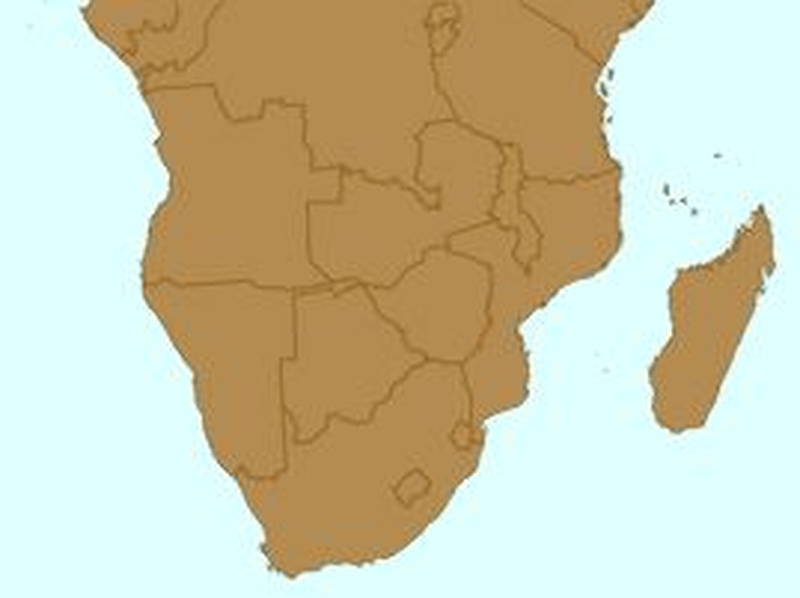
The highest level of variation in skull types was seen in southeastern Africa, the generally accepted cradle of mankind.
The Cambridge work also suggests in-breeding with other early humans, such as Neanderthals, either did not happen or was insignificant.
That is in contrast to recent suggestions that such hybrids may have been fairly common.
'We're not saying there was never a single mating between a homo sapiens and a Neanderthal. But I can say, very confidently, that whatever the product of that mating was, it didn't breed back into the population,' said Cambridge's Andrea Manica.
Chris Stringer, a palaeoanthropologist at the Natural History Museum in London, said the new research was important for indicating that modern human diversity was derived entirely from Africa rather than coming from inter-mixing elsewhere.
