


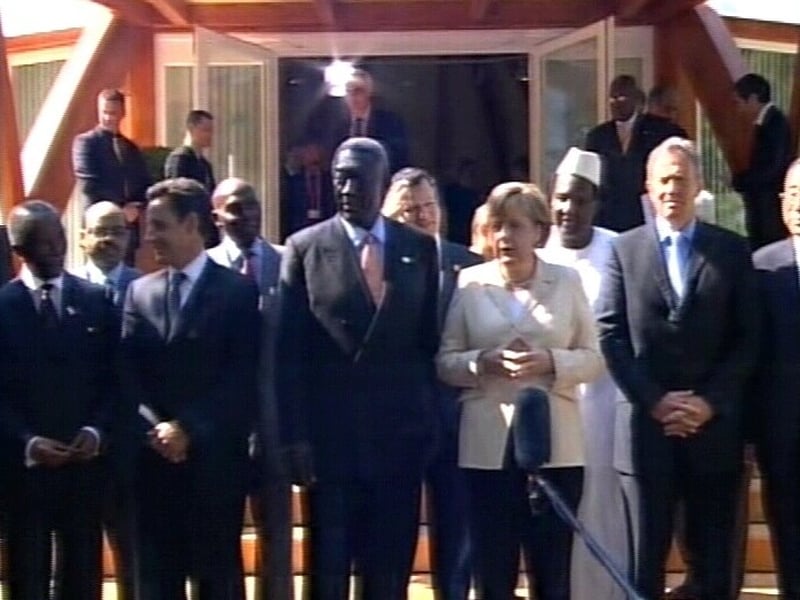
There has been strong criticism of the G8 leaders' announcement of a $60bn pledge to fight AIDS, malaria and tuberculosis in Africa.
The declaration included a raft of humanitarian measures aimed at countering accusations that the most industrialised nations were failing the world's poor.
Despite this, campaigners for Africa have pointed out that the pledge is made up largely of money which has already been announced, including $30bn from the US.
Aid agency Oxfam said the announcement fell far short of previous pledges, saying that the $60bn figure was meaningless as only $3bn extra will be provided by 2010.
U2 singer and campaigner Bono has denounced what he described as a 'deliberately misleading' pledge.
Saying he was exasperated, Bono criticised the lack of a timeline and the fact that the pledge did not apply specifically to Africa.
The G8 document gives specific mention to the aid commitment made at the last G8 summit in Gleneagles in Scotland, which promised to progressively increase aid by $50bn per year by 2010, of which half would go to Africa.
This is an acknowledgement that certain member nations have not met the commitments they made at the 2005 summit.
Malaria target
Among the other initiatives included in the new pledge is a commitment to allow local production of drugs, such as anti-retrovirals for HIV/AIDS patients, to ensure cheaper prices for medication.
A target has also been set to cut the prevalence of malaria in 30 African countries, the disease is responsible for 80% of deaths in the region.
Initiatives aimed at funding health strategies, education and peacekeeping have also been announced.
However, many campaign groups remain unimpressed with the deal. Commitments made in 2005 such as plans to work towards a free trade deal that would remove tariffs on African exports, have not been fulfilled.
Earlier, US President George W Bush took ill in Germany and missed some of the morning's meetings.
A White House aide said Mr Bush had a stomach ailment; he returned to meetings at the summit later.
