


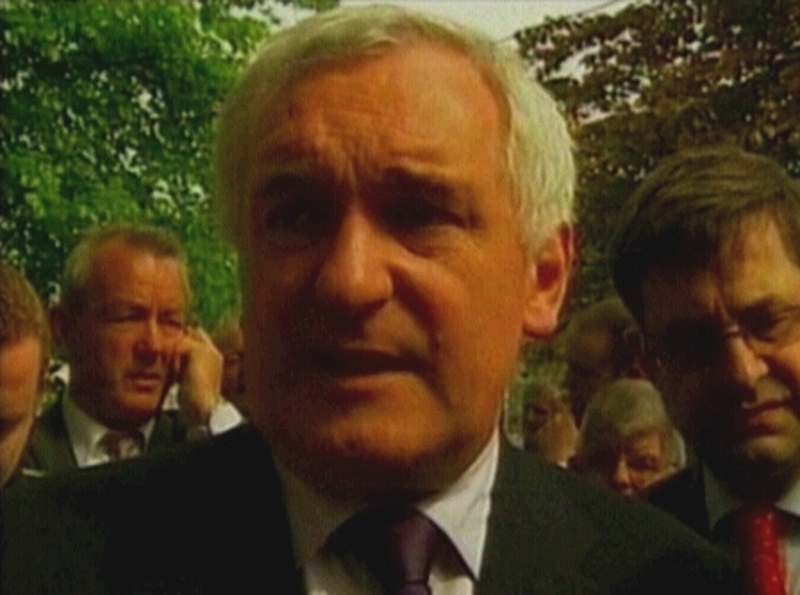
The Taoiseach, Bertie Ahern, has said it is clear that Ireland is entering a period of challenging economic conditions and that it is important to focus on restoring and renewing competitiveness across all dimensions.
Mr Ahern was responding to the latest inflation figures from the Central Statistics Office, which confirm Ireland's inflation rate has averaged 5% throughout the past six months.
He said he and the Minister for Finance will be seeking an early meeting with IBEC and ICTU after the formation of a new Government to discuss how to tackle inflation.
In response to the figures, SIPTU General Secretary Jack O'Connor called for the negotiations for the next national pay deal to be brought forward.
Mr O'Connor said this was an unacceptably high level of inflation and that tackling it had to be put at the top of the political agenda.
However, IBEC Director General Turlough O'Sullivan warned that increasing wages now could lead to prices spiralling even higher.
Meawhile, David Begg, the General Secretary of the Irish Congress of Trade Unions (ICTU), said the rise in inflation can no longer be passed off as a spike and that it is time for the trade unions to act.
He said that the cost of living is now likely to exceed the pay terms of the Social Partnership Pay Deal and that this is a very serious problem indeed.
Mr Begg said the Congress would have to ask employers and government to advance the date for negotiating the next pay module of the social partnership agreement.
He added that it would also call on the Government to cut the standard rate of Value Added Tax (VAT) to bring prices down.
The CSO data shows that the annual rate of inflation eased slightly to 5% in May from 5.1% in April despite further increases in rents and average mortgage repayments during the month.
Fuels responsible
It also showed that average monthly mortgage repayments have risen by 46.5% in the past year while rents have risen by 11.1%.
The data also shows that housing, water, electricity, gas and other fuels have been responsible for 65% of annual inflation.
The SIPTU leader said that no comfort could be taken from the 5% inflation rate and that it was a fallacy to maintain that the factors driving Irish inflation were outside the control of any Irish Government.
He said governments had done nothing for decades to address the price of building land or to invest in social and affordable housing to maintain house prices at some rational level.
He also said that the current system of energy regulation had pitched electricity and gas prices far higher than they needed to be for this year.
Mark Fielding, Chief Executive of small business group ISME, said that despite the drop, unpredictability about the level of inflation over the next number of months was creating 'a huge level of uncertainty' within the business community. He said this was making it difficult to plan ahead and was undermining confidence.
Today's inflation data shows that overall public utility charges have increased by an average of 9.3% in the past year. It also shows that services inflation is running at 9.1% compared with an inflation rate of 0.3% for goods.
