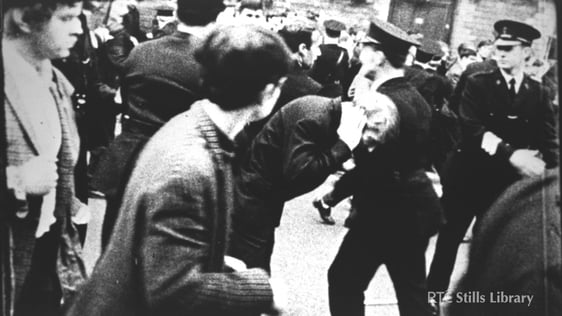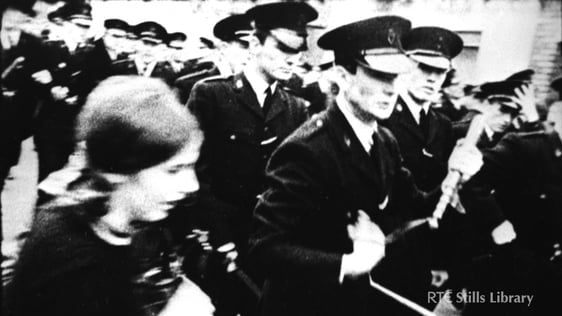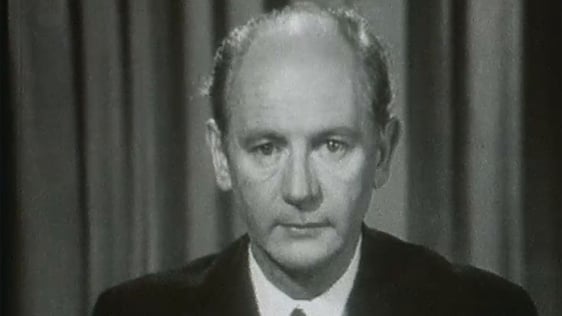
As the civil rights movement gathered momentum in late 1968, the number of disturbances also increased. On 9 December 1968, the Prime Minister of Northern Ireland, Terence O'Neill, went on television warning that, "Ulster is at a crossroads" and appealing for an end to the growing disorder. He attempted to reassure civil rights supporters by promising to implement a programme of genuine change. O'Neill also appealed to them to call off their street protests to allow an atmosphere for change to develop.
Eddie McAteer of the Nationalist Party and Cardinal Conway welcomed the speech. Encouraged by public reaction, O'Neill sacked William Craig, Minister of Home Affairs, from his cabinet. The civil rights movement announced a suspension of marches until 11 January 1969.
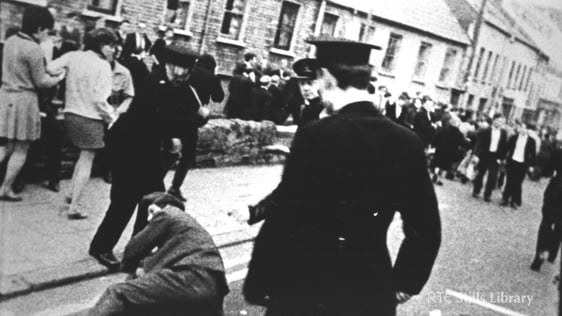
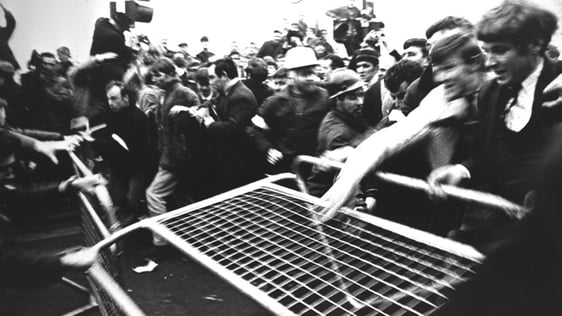
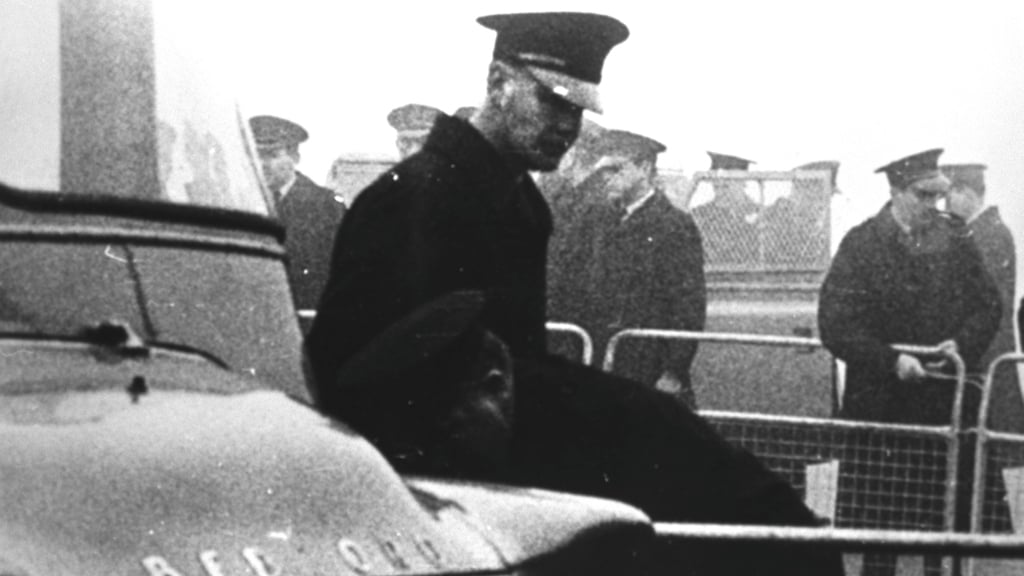
The accompanying image shows RUC men erect barriers on a street in Northern Ireland during the riots.
© RTÉ Stills Library 0130/073
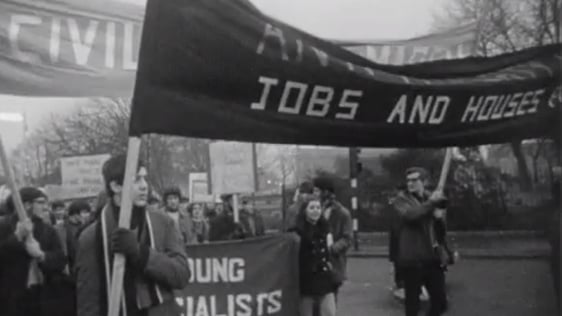
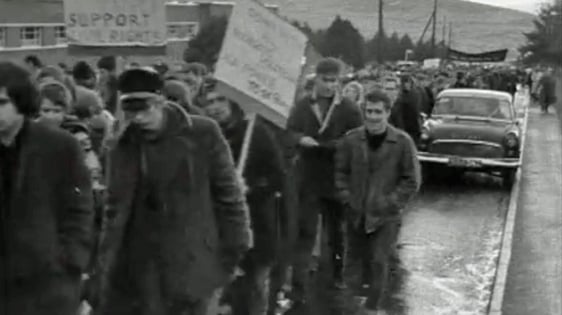
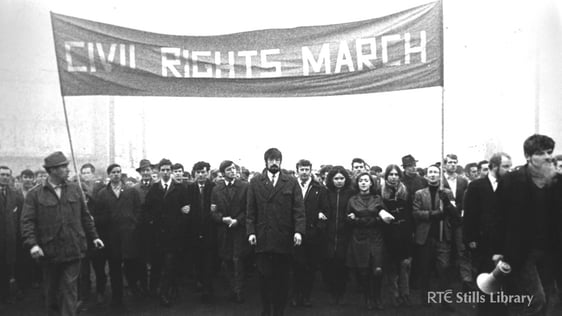
In a demonstration inspired by the US civil rights march from Selma to Montgomery, a People's Democracy march consisting mainly of students sets out for Derry from Belfast.
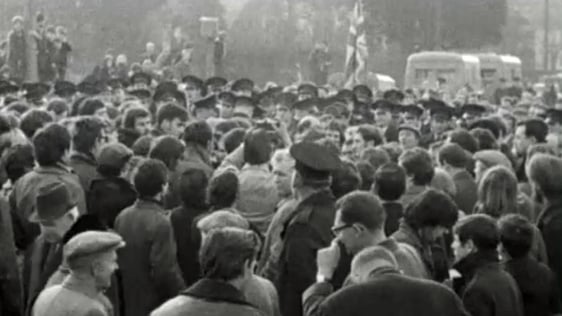
The student protesters and members of the Loyal Citizens of Ulster face each other at the railway bridge outside Antrim Town.
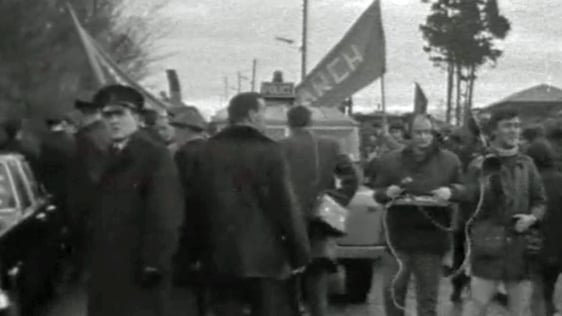
There are scuffles at Randalstown, Antrim, where opponents of the People's Democracy march have gathered, led by Major Ronald Bunting.
More scuffles on the civil rights march route, this time at Toome, Antrim, after a flower-pot hits Major Ronald Bunting's car.
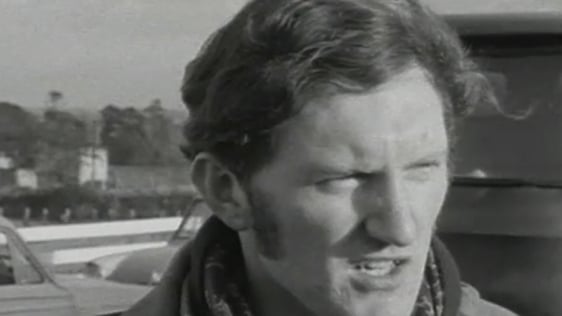
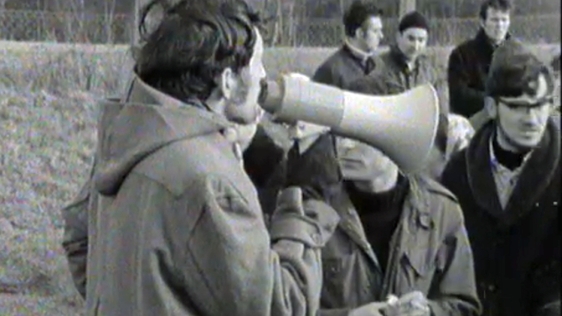
Michael Farrell, spokesman for the People's Democracy march, defends the route they have taken and is critical of the protection they have received from the authorities.
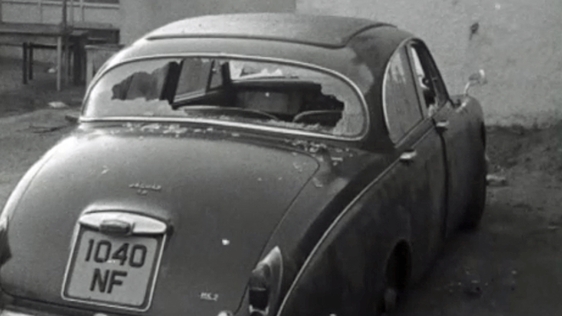
A RTÉ News report showing the damage done to a number of buildings in Maghera, Derry, after hours of rioting.
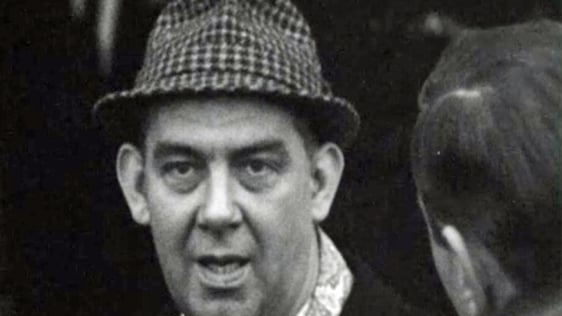
Following a meeting with the Minister of Home Affairs Captain Long, Ian Paisley and Major Ronald Bunting talk to journalists about the People's Democracy march and their own plans.
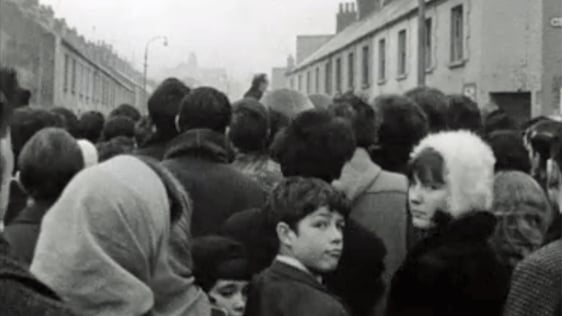
As Ian Paisley and Major Ronald Bunting addressed their loyalist supporters in the Derry Guildhall, a large crowd of Catholics grew hostile outside.
The People's Democracy march leaves Claudy, bolstered by local support. Michael Farrell addresses his fellow-marchers before they come to Burntollet Bridge, informing them of police warnings. Farrell also provides instruction on the route they will take and how to avoid confrontation. Once they arrive at the bridge, the marchers come under attack and many of the police officers flee.
Students describe how they were attacked at Burntollet Bridge and the failure of the police to take action in their defence.
Gerry Fitt MP addresses a crowd in a nationalist area of Derry and calls on them to defend their property against the police.
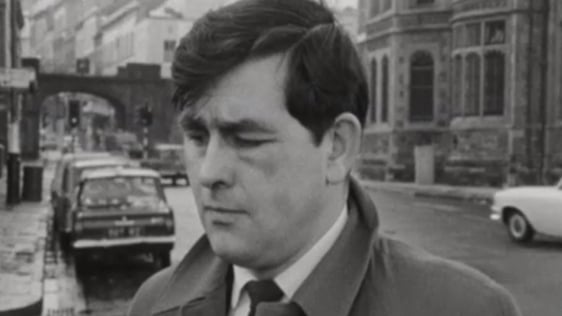
Paul Grace, chief steward of DCAC (Derry City Action Committee), explains how they have ended their ban on street demonstrations as a result of the People's Democracy march from Belfast to Derry and subsequent events.
Tom McGurk and Bernadette Devlin, participants in the People's Democracy march, talk to John Howard of RTÉ.
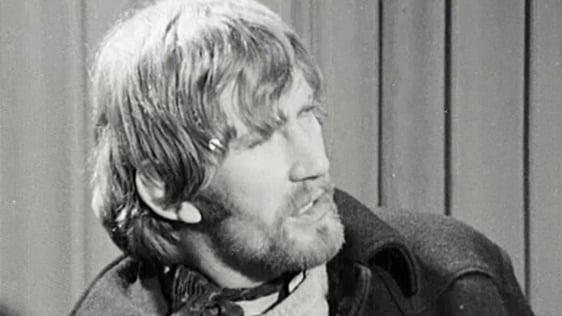
Protestant marcher John McGuffin gives his views on the People's Democracy march in a studio discussion.
Bernadette Devlin, John McGuffin and Tom McGurk, participants in the People's Democracy march, discuss the role of partition in the civil rights protests with Ernest Blythe and Peadar O'Donnell.
In a report for RTÉ's "Seven Days", Rodney Rice looks back on the Belfast to Derry march and the escalation of violence across Ulster.
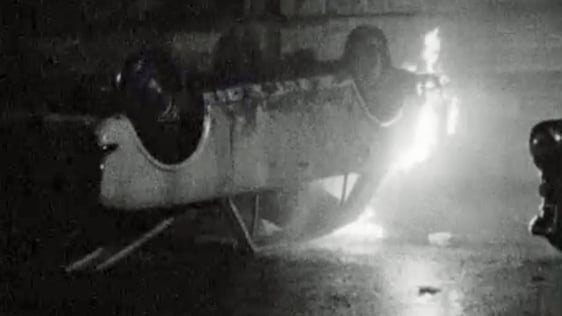
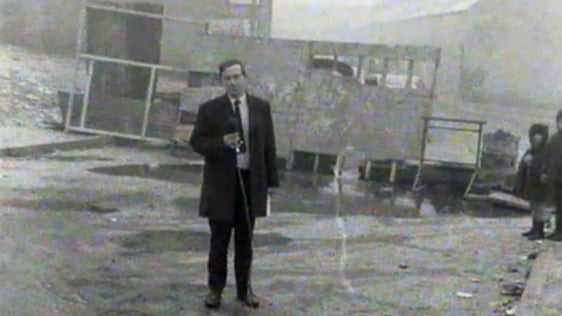
Donal Kelly reports from a barricade St. Columb's Street, Derry, where police attacked houses in the early hours of the morning on Sunday 5 January 1969.