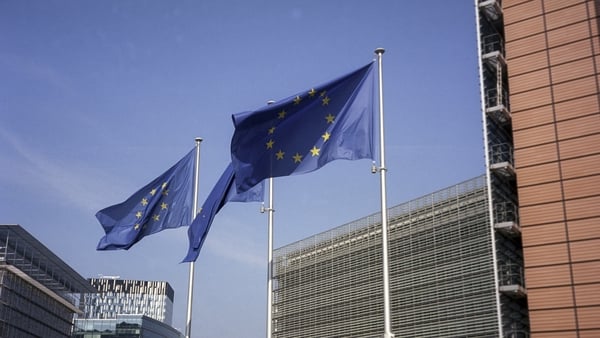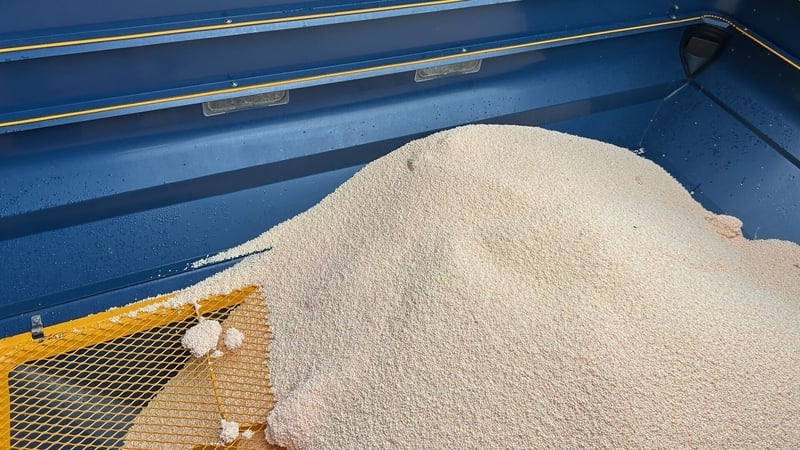

The European Commission will issue a series of measures to address the soaring cost of fertiliser, due to the global shortage of its key ingredients caused by the closure of the Strait of Hormuz.
One measure would be to provide liquidity support to farmers and to make advance payments from the Common Agriculture Policy (CAP) more flexible so that farmers can repay bank loans and meet obligations towards fertiliser suppliers, according to a draft of the Fertiliser Action Plan, seen by RTÉ News.
At present, the key ingredients for artificial fertiliser - ammonia and urea - are being held up in the strait as a result of the US-Israeli war on Iran.
Some 20% of global supplies of the two ingredients normally pass through the strait.
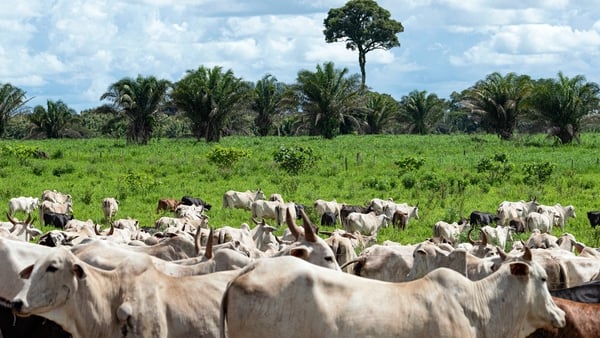
While European farmers rely heavily on imported fertilisers, now more expensive and less available, domestic production has also become increasingly expensive due to energy costs.
The Commission has said the price of nitrogen fertilisers in April was more than 70% higher than average prices in 2024.
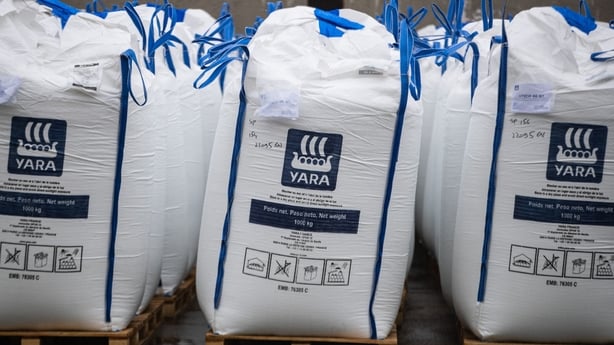
The action plan will set out short term relief for farmers in terms of affordability and availability as well as a long-term readjustment of the fertiliser sector, with greater reliance on home-grown and organic fertiliser use, according to the draft.
The Commission will use existing emergency funds within the CAP to "provide fast relief for farmers".
It is also proposing that fertiliser producers, farmers and other stakeholders would "make mutual voluntary commitments to ensure the availability and affordability of home-grown fertilisers for EU farmers, improve predictability for both producers and users through voluntary contractual relations, and support the decarbonisation of the EU fertiliser industry".
Last month the Commission announced the EU's state aid rules would be made more flexible to allow member states to address the immediate impact of the energy crisis, with further flexibility now being directed towards the fertiliser sector.
Member states will be encouraged to increase funding "within existing CAP envelopes" to create new eco and climate schemes to improve fertilisation efficiency, stimulate use of recycled nutrients and "strengthen farm resilience".
The draft plan states that national governments can use existing Covid recovery and cohesion funds to support biogas and biomethane production.
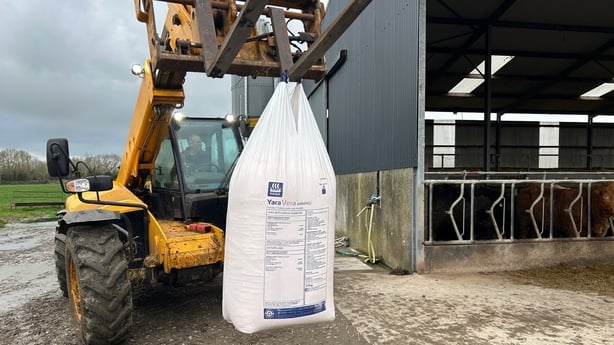
"Biogas can reduce dependency, generate additional income for farmers, create local value in rural areas and strengthen resilience through circular solutions for energy and recycled nutrients," the draft said.
The Commission suggests member states could trigger the Internal Market Emergency and Resilience Act (IMERA), a Covid-era initiative which could see fertilisers designated as "crisis-relevant goods".
This means there would be "enhanced monitoring, joint procurement, targeted information requests" in order to speed up availability and expand domestic production capacity.
The Irish Government has lobbied for the Commission to exempt fertiliser from the EU’s tax on carbon-heavy goods that are imported into the single market from external suppliers, known as CBAM (Carbon Border Adjustment Mechanism).
The tax, which came into effect on 1 January, has added to the increased cost of fertiliser.
However, it is understood that, while the Commission has suggested some flexibilities to the application of CBAM for fertilisers, it has refused to suspend the measure altogether.
The Irish Farmers’ Association (IFA) has reacted angrily to a leaked version of the Fertiliser Action Plan.
"We estimate that CBAM will cost EU farmers almost €900m in 2026. The Commission imposed this tax on farmers and has refused to reverse course despite the price of fertiliser more or less doubling in price.
"One would be forgiven for thinking that there are some in the Commission who welcome the massive increase in fertiliser prices. It’s hard to think any differently given their inaction on CBAM," IFA President Francie Gorman said.
He added: "Based on leaked versions of what will be announced tomorrow, the Commission’s Fertiliser Action Plan will do absolutely nothing to address either the availability or price of fertiliser.
"To consider publishing a Fertiliser Action Plan and not address CBAM is quite incredible. One would have to question if the Commission has any interest at all in addressing the price or availability of fertiliser across the EU."
Mr Gorman will join a protest by the pan-EU farming organisation COPA at the European Parliament in Strasbourg.
The European Commission will unveil the action plan in Strasbourg, as the monthly plenary session of the European Parliament gets under way.