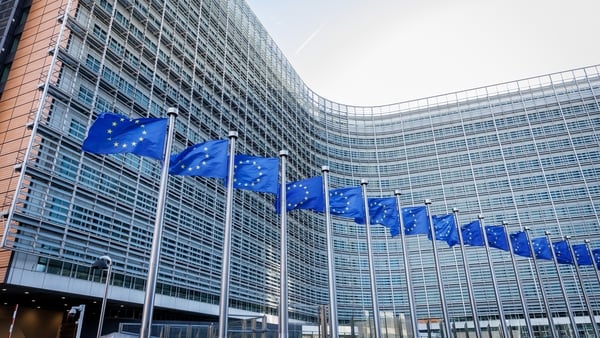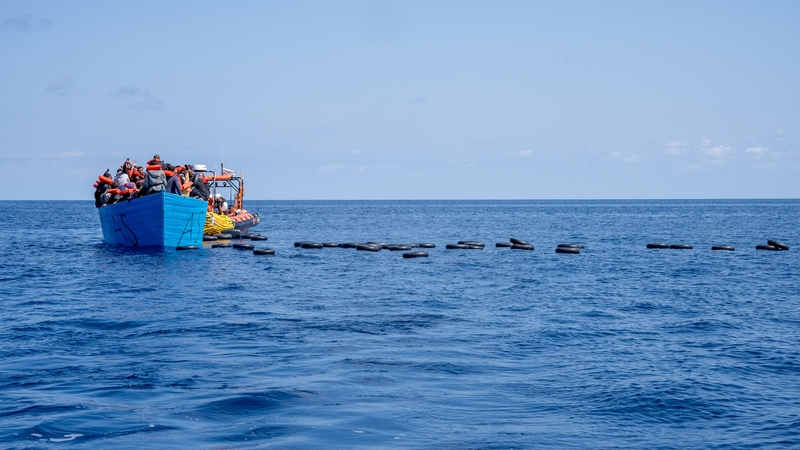

Forty-six countries, which comprise the Strasbourg-based human rights organisation, the Council of Europe, have issued a far-reaching political declaration that could influence how judges handle migration cases.
Ireland is among the countries that have joined the declaration, which focuses in particular on the deportation of criminals and asylum processing.
The declaration states that while migrants' fundamental rights and freedoms "must be respected and protected in accordance with the principle of non-discrimination", national governments have an "undeniable sovereign right to decide on and control foreign nationals’ entry into and residence in their territory".
The statement adds: "[National governments] have the right to establish their own immigration policie... and pursue immigration control as a public interest."
The declaration is being seen as a critical moment in the relationship between Council of Europe members and the European Court of Human Rights (ECHR), which has come under increasing pressure from national capitals who have accused Strasbourg judges of frustrating national efforts to deport violent criminals.
The Council of Europe is a human rights and democracy body set up after World War II. It is distinct from the European Union and is the political body overseeing the ECHR.
Ahead of the declaration, some 90 Irish civil society groups, academics and activists, sent a joint letter to the Irish and British governments warning against any dilution of European human rights law given that the European Convention on Human Rights, which the court upholds, is a key component of the Good Friday Agreement.
Concern that declaration could undermine Good Friday Agreement
Director of the Human Rights Consortium in Northern Ireland Kevin Hanratty said: "In Northern Ireland, the European Convention on Human Rights is not optional or abstract, it is woven into our constitutional settlement and our peace agreement.
"Any attempt to weaken, reinterpret or selectively disapply Convention rights risks undermining the foundations of rights protection that support stability and good governance here. Protecting the universality of human rights protections is essential for everyone on this island."
Chief Executive of Free Legal Advice Centres (FLAC) Eilis Barry said "The European Convention on Human Rights is a practical, living framework that protects people in their everyday interactions with the state – in healthcare, housing, education, policing and the courts.
"Once we start treating human rights as conditional or negotiable for certain groups, everyone’s rights become less secure. That is why it is so important that Ireland speaks clearly and decisively in defence of the Convention system."
The declaration was issued this morning in the Moldovan capital Chişinău.
It follows months of tension between a group of member states, led by Denmark and Italy, which have been increasingly vocal about the ECHR, and other countries concerned about politicising the court.
Critics of the court have said its rulings frequently frustrate the deportation of foreign-born violent criminals because they have family born in the country from which they are being expelled.
Separately, hostility to the European Convention on Human Rights has gripped UK politics, especially following the failed effort to deport asylum seekers to Rwanda, with both Reform UK and the Conservative Party committed to withdrawing from the Convention if elected to government.
Declaration not binding on ECHR
Sources have made it clear that the declaration is not binding on the court. Rather, it will allow for a broader margin of appreciation by judges when it comes to the domestic implications of decisions by the court.
According to the declaration: "National authorities, which are in principle better placed than an international court to evaluate local needs and conditions, enjoy a margin of appreciation when implementing the Convention at the national level, subject to the supervisory jurisdiction of the Court".
The document also refers to the "spirit of shared responsibility" between the Court and national governments and that both "fulfil their respective roles, and that each fully respects the role of the other."

The declaration states that "there are significant, complex, migration-related challenges in various member States which were either unforeseen at the time the Convention was drafted or have evolved significantly since then.
"The failure to address these challenges adequately may weaken public confidence in the Convention system."
The declaration states that inability "to expel or extradite an individual convicted or charged with a serious offence" can lead to significant challenges for States, "including in relation to their fundamental duty to guarantee the right to everyone within their jurisdiction to live in peace, freedom and security, notably by protecting public safety and national security and preventing disorder and crime."
Healthcare in receiving country should not be factor when extraditing
The signatories declare that, under Article 3 of the Convention, the prohibition of torture and inhuman or degrading treatment or punishment "is absolute" and is without exception or derogation when taking into account the prospect of expelling an individual to a third country.
However, the declaration adds that national authorities can assess the "minimum level of severity of ill-treatment" that constitutes inhuman or degrading treatment or punishment, and that "it is relative and depends on all the circumstances of the case."
The declaration also makes it clear that a lower standard of healthcare in the receiving state - compared to the state in which the crime was committed - should not be a factor when extraditing an individual.
The statement also refers to Article 8 of the European Convention on Human Rights, which asserts an individual’s right to a family and private life.
It states that national authorities should be able to expel a foreign national from "even though such a measure may interfere with their right to respect for private and family life, so long as such interference is in accordance with the law and necessary in a democratic society in pursuit of a legitimate aim."
Such aims may include "national security, public safety or the economic well-being of the country, the prevention of disorder or crime, the protection of health or morals or the protection of the rights and freedoms of others."
The declaration states that "the right balance must be struck between individual rights and interests and the weighty public interests of defending freedom and security in the societies of the States Parties."
According to sources, this part of the declaration will make it easier for countries to expel persons under certain conditions, despite the constraints of Article 8.
The declaration also refers to so-called return hubs, whereby failed asylum seekers can be removed from one country to another pending deportation, and the issue of the "instrumentalisation" of migration, in particular in the case of Russia and Belarus, who have allegedly deliberately funnelled migrants towards eastern European borders in order to antagonise EU member states.
In the latter case, the declaration states that while migrants subject to such manipulated migration by "hostile states" enjoy rights and protection under the Convention, their conduct in attempting to "irregularly cross the State border may be relevant in assessing the State's compliance with certain Convention
obligations."
There have been previous political declarations by the Council of Europe in recent years. However, this is the first that deals with migration. Today’s declaration is the outcome of a joint initiative led by Denmark and Italy in May of last year.
Prime ministers Mette Frederiksen and Giorgia Meloni wrote an open letter claiming that the world had "changed fundamentally" since European human rights law had been conceived "in the ashes of the great wars."
The letter, co-signed by Poland, Estonia, Latvia, Lithuania, Czechia, Austria and Belgium, stated that in a globalised world migration was now on a "completely different scale" and that while some migrants had willingly integrated, "others have come and chosen not to integrate, isolating themselves in parallel societies and distancing themselves from our fundamental values of equality, democracy and freedom."
The letter added: "In particular, some have not contributed positively to the societies welcoming them and have chosen to commit crimes. It is beyond our comprehension how some people can come to our countries and get a share in our freedom and our vast range of opportunities, and, indeed, decide to commit crimes. Although this concerns only a minority of immigrants, it risks undermining the very - 2 - foundation of our societies. It harms the trust between our citizens and it harms the trust in our institutions."
The letter was sharply criticised by Council of Europe secretary general Alain Berset, who accused the authors of "politicising" the ECHR, while other Council of Europe members were also critical.
Officials say, however, that the clash prompted an effort to contain the conflict within the Council of Europe itself and led to a ministerial meeting in December designed to try and reconcile the two opposing camps.
During that meeting in Strasbourg, Ireland joined 26 other countries in a joint statement which stated that the "rights and freedoms of our populations are challenged by: people who take advantage of our hospitality by committing serious crime; trafficking in human beings and instrumentalisation of migrants."
The statement also said that today’s migration challenges "were either unforeseen at the time the convention system and the Convention were drafted or have evolved significantly since then."
It added that states had a "fundamental duty" to safeguard national security, protect democracies, and ensure the security of individuals.
"Failing to recognise and respond to these challenges, we risk undermining the very fundamental rights and freedoms that the Convention protects," the statement concluded.
In a statement, the Department of Justice said: "In December 2025, ministers from all 46 Council of Europe member states (including Ireland) agreed to draft a new political declaration addressing migration and the European Convention on Human Rights (ECHR), in response to concerns raised by a number of member states about the interpretation of the Convention by the European Court of Human Rights in the context of migration.
"It should be noted that throughout discussions, Ireland has reiterated its longstanding and continued support for the ECHR and the role of the European Court of Human Rights (ECtHR) as an essential element of the architecture of the rule of law in Europe.
"As a founding member, Ireland has voiced its support for the work of the Council of Europe in promoting human rights and democracy, and continues to advocate for, and fully respect, the independence and the integrity of the ECtHR. Ireland is pleased that the declaration recognises the need for effective management of migration while protecting fundamental rights."