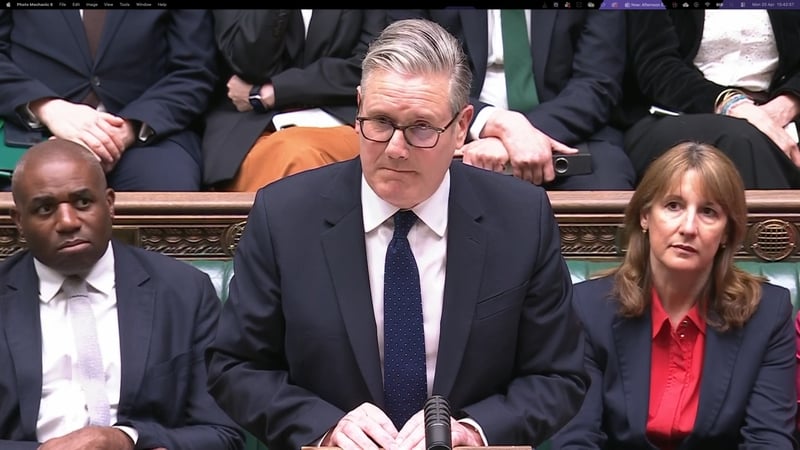

British Prime Minister Keir Starmer has survived a bid by opposition politicians to subject him to a parliamentary probe over his controversial appointment of Peter Mandelson as envoy to the US.
Members of parliament voted against referring Mr Starmer to a committee to consider if he misled parliament over giving Mr Mandelson, an ex-associate of late US sex offender Jeffrey Epstein, the plum diplomatic post.
It was the latest development in an unrelenting scandal that has plagued Mr Starmer's Labour government for months, hampering its work and leading to calls for him to resign.
After a debate lasting more than five hours, 335 MPs voted against launching an investigation compared to 223 for, a majority of 112 in the 650-seat parliament.
The probe would have been held by the cross-party privileges committee, which investigates potential breaches of parliamentary conduct.
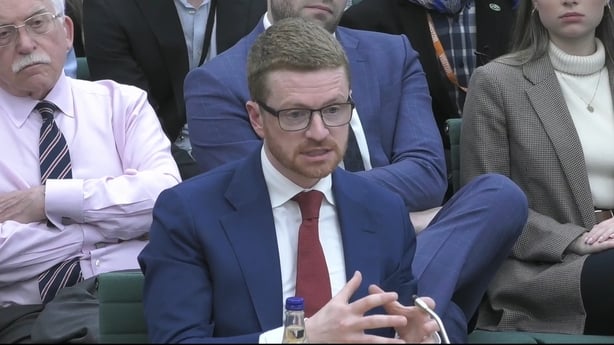
Conservative Party leader Kemi Badenoch, who led the move for the probe, said it was "very obvious" that what Mr Starmer had told the House of Commons regarding Mr Mandelson's 2024 appointment was "not correct".
"It's clear that full due process was not followed," she told MPs.
Mr Starmer denies allegations that his office applied pressure on the foreign ministry to approve Mr Mandelson's appointment as Britain's ambassador in Washington despite having failed security vetting.
Earlier this month, Mr Starmer sacked the most senior civil servant in the foreign office, Olly Robbins, for not telling him or other ministers that Mandelson had not passed the checks.
Starmer, who branded the probe motion "a political stunt" ahead of local elections in England, Scotland and Wales next week, commands a large majority in the lower house of parliament.
We need your consent to load this rte-player contentWe use rte-player to manage extra content that can set cookies on your device and collect data about your activity. Please review their details and accept them to load the content.Manage Preferences
Labour MPs were ordered to vote against the motion, meaning it was always unlikely to pass.
Several Labour MPs dissented however, highlighting their discontent with the prime minister.
Brian Leishman, a frequent Labour rebel, said Mr Starmer should have referred himself to the committee and was voting for the motion.
MP Emma Lewell said the government's instruction to vote against "played into the terrible narrative that there is something to hide".
Mr Starmer sacked Mr Mandelson in September 2025 after a fresh batch of revelations came to light about the extent of the latter's friendship with Epstein, who died in prison in 2019.
But the row has only escalated since, with Mr Starmer's former chief of staff Morgan McSweeney and ex-communications head Tim Allan forced to step down earlier this year.
Mr Starmer's cause has not been helped by the fact that UK police are investigating Mandelson over allegations he committed misconduct in office while serving as a Labour minister more than a decade ago.
Mr Mandelson is accused of leaking sensitive information to Epstein. He denies wrongdoing.
Advising Starmer to appoint Mandelson 'wrong' - McSweeney
Morgan McSweeney blamed Mr Mandelson for not telling the full truth about his relationship with convicted sex offender Jeffrey Epstein during his appointment as Ambassador to the US.
Mr McSweeney told the House of Commons Foreign Affairs Committee that if Mandelson had told the truth he would not have come close to being appointed.
Mr McSweeney told MPs that he accepted responsibility for advising the prime minster to appoint Mr Mandelson to the UK's most important diplomatic post.
Watch: Learning of Mandelson's ties to Epstein 'like knife through my soul’ - McSweeney
He added that Mr Mandelson’s appointment was a "serious error of judgement" and "the prime minster relied on my advice, and I got it wrong".
However, Mr McSweeney said the real reason Mr Starmer did not know the full facts about Mandelsons close relationship with Jeffrey Epstein was because Mr Mandelson himself was not forthcoming.
"The nature of the relationship that I understood he had with Epstein was not a close friendship. How I understood it at the time was a passing acquaintance that he regretted having and that he apologised for.
"What has emerged since then was way, way, way worse than I had expected at the time, and it was when I saw the pictures, when I saw the Bloomberg questions in September 2025, I have to say it was like a knife through my soul," Mr McSweeney said.
He added: "The prime minister did not have enough information because Mandelson did not share the necessary information with him. He had ample opportunity to do so and he did not."
Mr McSweeney said that if Mr Mandelson had told the truth he would not "have come close to being appointed".
The Cork man is widely seen as a protégé of Mr Mandelson and resigned in February over his part in the appointment.
He said it would have been "much better" for the cabinet office's propriety and ethics team (PET) to ask Mr Mandelson follow-up questions, which he said he "didn't feel" elicited truthful responses from Mr Mandelson.
Asked whether it had been appropriate for him, a friend of Mr Mandelson, to question him about his links to Epstein, Mr McSweeney told MPs: "I think that when I look back on it, I certainly think it would have been much, much better if I'd asked PET to ask those follow-up questions.
"I guess my thinking at the time was I'd put follow-up questions to him in writing, and that if a senior member of staff did that, that he would feel more obligated to give the truth and the full truth.
"I didn't feel that I got that back from him. But it wasn't my decision. It was the prime minister's decision, and he saw the DV (developed vetting) as part of that decision."
Mr McSweeney also denied telling officials that Mr Mandelson's "checks should be cleared at all costs".
Mr Starmer considered a "wide range of views" when he made the decision to appoint Mr Mandelson as ambassador to the US, Mr McSweeney said.
However, he hit out at suggestions by some cabinet ministers they warned against the appointment at the time.
"I have to say, I know that a lot of people now say they told the prime minister they were against it at the time.
"Everything I know about how the prime minister works is he will consult widely, he will take a lot of views on, and if everybody else was opposed to this appointment but me, he would not have made an appointment such as that," he said.
Mr McSweeney added: "He does like to try to build consensus within his team and to get a wide range of views. And he doesn't just listen to one person on it.
"He certainly spoke to other ministers, other senior staff and took his time reaching decisions he reached."