
The counting has barely started, but the spinning is already in overdrive, with the political consequences already clear.
Labour is in trouble, the Conservatives are in trouble, and Reform UK has well and truly arrived as a major force in British politics.
It also looks like Britain's battle over Europe is about to resume.
British Prime Minister Keir Starmer was asked whether he is going to resign over this election drubbing and has said no.
Asked if he will lead Labour into the next election as Prime Minister, he said: "Yes, it was a five-year term I was elected to, and I intend to see that through."
Mr Starmer’s next step is a big-picture response to the discontents of British politics, in which he will attempt to sell moving closer to the EU as a big part of the solution.
Watch: Starmer says he will not resign after local election losses
The same pollsters who were predicting a big win for Reform UK are also mostly recording a view among the British that Brexit was a mistake.
An aggregate of the last six polls on the question, taken over the last four months, shows a 59-41% majority in favour of rejoining the EU, according to the National Centre for Social Research.
That sets up the prospect of renewed hostilities over Britain’s place in Europe, with the apparent winner of these elections, Nigel Farage and his Reform UK party, the latest incarnation of the Brexit Party, formerly UKIP.
Mr Farage said the results so far showed "an historic shift in British politics" and he predicted that "the best is yet to come".
Reacting to the results, Mr Starmer said: "I think it's very important that we don't sugarcoat these results, so I'm not going to do that. They are tough results.
"I accept that they reflect voters who don't feel that their lives have changed enough or quickly enough, and that's been going on for a long time.
"We were elected to deal with that, and I'm not going to walk away from that responsibility and plunge the country into chaos."
Asked whether he was the problem for the party, a perception picked up by pollsters during the campaign, Mr Starmer replied: "We won a landslide victory in July 2024. I led our party to that victory, that is a five-year mandate to change the country.
"Yes, there are difficult conditions. The inheritance was terrible. The international context is very, very difficult.
"But we need to inject that hope and convince people that things can and will get better, and that's why, in coming days, I'll set out the further steps that we will take."
Watch: 'Truly historic shift in UK politics,' says Farage
Starmer expected to argue for closer links to EU
Those further steps are expected to include a major speech in which he will argue that Britain's stalling economy and place in the world require closer links with the European Union, much closer.
Talks are already under way over UK participation in the EU’s new defence industry finance scheme, the re-admission of the UK to the Erasmus student exchange programme has already been agreed, and improved access to the single market is also under active discussion.
The UK is also trying to stave off the consequences of the new passport control scheme that will add extra bureaucracy to the summer holidays for British visitors to Mediterranean countries.
However, the new opposition, certainly outside Westminster, is now Reform UK.
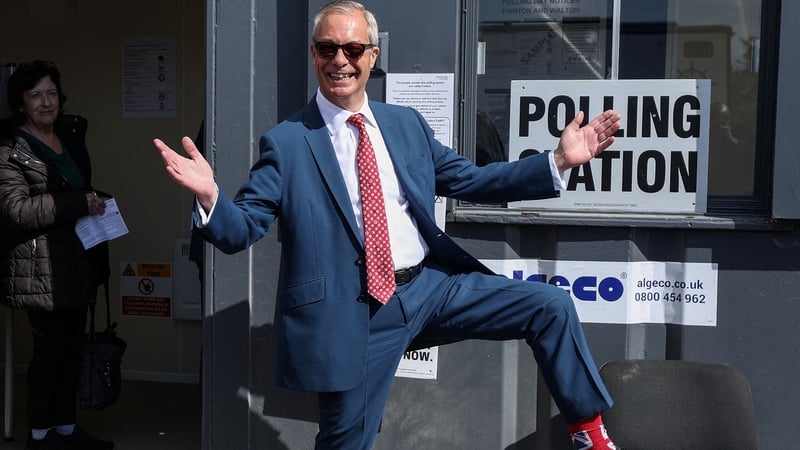
Mr Farage turned up in Romford, Essex, at the town hall in Havering, the most eastern of the outer London Boroughs, which Reform won earlier in this election.
It was not everyone’s top tip for Reform’s most likely win in London, that was Bromley in south east London and north Kent.
Speaking outside the town hall, Mr Farage said: "I think overall, what's happened is a truly historic shift in British politics. We've been so used to thinking about politics in terms of left and right, and yet, what Reform are able to do is to win in areas that have always been Conservative.
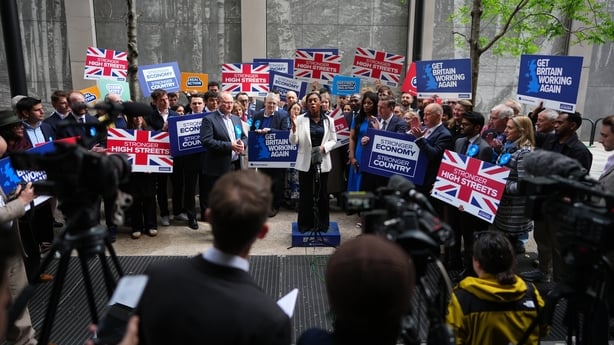
"But equally, we're proving in a big way we can win in areas that Labour has dominated, frankly, since the end of World War I.
"At the moment, we're winning one in three of all the seats that are up. But I genuinely think the best is yet to come.
"I'm very excited about the northeast results, the Yorkshire results, some more to come in the west midlands, Essex, we're feeling supremely confident, and that's significant, given that half the shadow cabinet have seats in Essex. So it's a big, big day.
"It's a big, big day, not just for our party, but for a complete reshaping of British politics in every way."
"These are the most significant set of elections between now and the general election, and I think we're in a very good place. And our lead, you look at our lead over the other parties, it's consistently about nine and a half percent," he added.
Asked about what the results mean for Mr Starmer, Mr Farage replied: "Personally, I'd be very sad to see the prime minister go. I would be very, very sad indeed. He's the greatest asset we've got."
How will local election results transfer into Westminster?
Based on early, partial declarations from a couple of dozen councils, so not a huge amount of data, Reform could be the biggest party with around 27%, with its rivals all polling less than 20%. Labour and the Conservatives are on 18.5%, 15.7% for the Greens and the Liberal Democrats with 11.6%.
Labour spinners have pointed out that Tony Blair took a beating in the 1999 local elections as well, but went on for many years and elections afterwards.
However, Mr Blair also won the inaugural elections to the devolved parliaments in Scotland and Wales that same year.
This time, Keir Starmer’s Labour Party will lose Wales and the mould of British two-party dominance at elections was already broken by the SNP in Scotland 20 years ago.
If the UK is, as Conservative leader Kemi Badenoch asserts, now in an age of multi-party politics, then how those parties interact with Britain's first past the post electoral system matters.
It is set up for a two-party system; now England is a five-party system and Britain is a seven-party system.