
If Nigel Farage is the answer, what is the question?
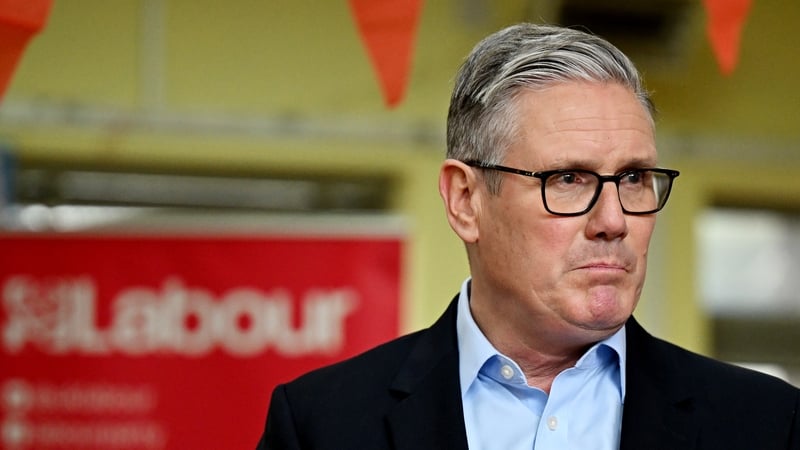
If Gordon Brown is the answer, what type of question does Keir Starmer think the electorate have just asked of him?
If multi-party politics are here to stay in Britain, shouldn't there be a proportional representation electoral system to reflect that fact in government formation?
If all three of the regional parliaments in the UK are headed by parties that don’t want to be in the UK, what does that mean for the future of the UK?
Should the Labour Party leader stay or should he go?
So many questions raised by those elections to the Scottish and Welsh parliaments and English metropolitan councils.
Answers may emerge in the short, medium and long term - political personalities, electoral reform and the future of the union all operate on different timescales.
So let the speculation begin.
Who will speak for Britain?
In the autumn the Irish Government will host a meeting of the European Political Community, a post-Brexit invention to fill the void in the political space where leaders from the EU and its satellites get to meet and talk about top level strategic security concerns.
Who turns up from Britain is an important question for the Irish Government - indeed for all the governments attending.
Is it going to be the known quantity of Keir Starmer, who has played a strong leadership role in Europe’s handling of the wars in Ukraine, Gaza and Iran, and the consequent energy crises, or is it going to be someone entirely new to the small and intimate club of European leaders, at what is almost certain to be a pivotal time in these twin crises of security and energy supply.
Doubtless Micheál Martin and other leaders would prefer one less piece of uncertainty in these very uncertain times.
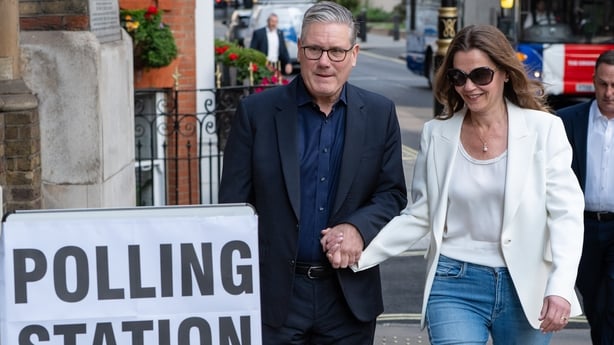
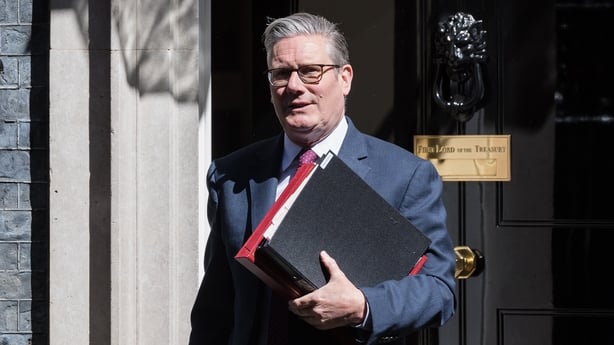
Mr Starmer himself seems intent on toughing it out and playing to one of his strengths - repairing relations with other European states through the security and defence channel.
It is clearly an area where the UK has something to bring to the European party and can use the opening to seek closer links to the EU’s economic motor, the single market and customs union.
Apparently, this is partly where Gordon Brown is supposed to come into the picture: if the British state is to fulfil its own defence aims, it is going to have to come up with lots of money.
The same is true of other European countries. Britain and the EU states have a common interest in getting the best value for that money, which means the long talked about rationalisation of the European defence industries.
An old face for a new role
Gordon Brown's role in staving off the worst impact of the financial crisis is supposed to be reprised, this time in mobilising money for defence on both sides of the English Channel.
He was announced as a special adviser to the prime minister on Saturday.
If the big vision works out for Mr Starmer, it would mean a revitalised UK defence industry, especially in sectors like shipbuilding, missiles and drones, and space and cyber defence.
Call it a patriotic industrial policy, but it might be a way of reaching the disaffected white working-class males that have been deserting the Labour party in droves.
Many boxes could be ticked, economic, industrial, diplomatic and political.
Keir Starmer is due to make a major speech setting out this path tomorrow.
It has been trailed as a big idea: recognise that Brexit has damaged the UK economically, and try to repair as much of that damage as possible by getting closer to the EU.
While the electorate has apparently been critical of the Labour leader for not clearly communicating that idea, and linking it to their daily concerns over rising prices, flatlining incomes and declining prospects, pressing on the EU pedal carries with it great political risk.
While opinion polling seems to indicate a majority of Britons now regard Brexit as a mistake that had damaged their economy and standing in the world, an actual poll - an election - has just made Nigel Farage’s Reform UK a major political force in the land.
Reform - the rebranded Brexit Party - did particularly well in those parts of the country where the vote to leave the EU was strongest in the 2016 referendum.
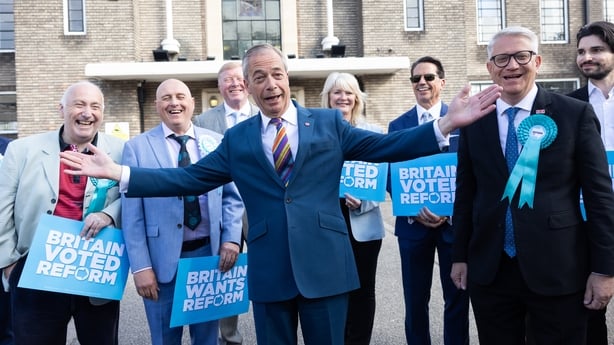
Prime Minster Starmer’s new policy sets up another fight over Europe, six years after Britain left the EU, ten years after it voted for Brexit.
Is this the right hill to die on if you are Keir Starmer?
Perhaps the calculus is that a fight over Britain’s closeness to the EU (or not) is inevitable, and it's better to go on the offensive and take the fight to Mr Farage.
After all, he is going to bring the fight to them, along the lines of "Brexit hasn’t failed, because it hasn’t been tried yet".
And it is an area on which Reform is vulnerable, if the argument can be made forcefully enough.
That is a big question mark that hangs over a leader whose communication skills have been repeatedly questioned by his backbenchers.
It also risks re-opening internal party divisions over the Europe question.
But if you are as deep in the hole as Mr Starmer appears to be after Thursday’s election results, almost anything is worth a try.
With a massive Commons majority, he has the means to get things done - but has so far failed to create the impression that he is actually getting things done.
The need to make things better
He faces, as his former strategic communications adviser James Lyons told Rachel English on the News at One on Friday, the same problem all British governments have over the past 20 years: stagnant living standards after crisis upon crisis: financial crash, Brexit, Covid, Ukraine, Iran.
"The heart of these elections is anger - even a fury - about living standards. Living standards in the UK have stagnated or declined ever since the 2008 financial crash, and people have voted repeatedly for someone, anyone, who they think can change their lives for the better," he said.
"So you saw that when they voted for Brexit. You saw it when they voted for Boris Johnson. You saw it when they voted for the Labour government two years ago. And I think they're going to keep voting for change until somebody delivers it."
So, is that the question that Nigel Farage posits himself as the answer to?
The candidate for change to deliver what the British people want - a go-forward economy that delivers rapid improvements to living standards?
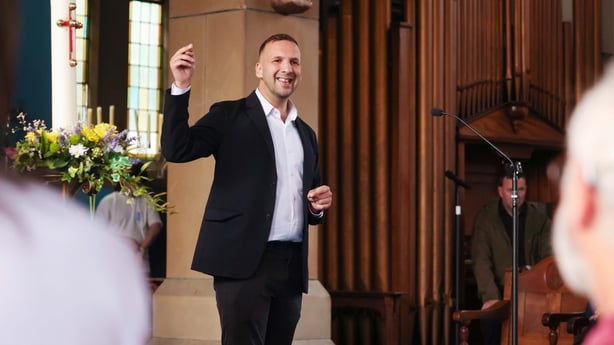
The British are not alone in their quest for this particular Holy Grail.
But their politics have been unusually disturbed by its pursuit.
Friday’s election results showed how far the disturbance has gone. And Wales was the epicentre of the disturbance.
Labour has dominated this land since David Attenborough was in nappies.
They held power in the Welsh government through a Senedd majority since the chamber was established in 1999.
But on Friday night they ended up with fewer than 10% of the seats - 9 of 96 - with First Minster Eluned Morgan becoming the first serving British premier to lose her seat.
Plaid Cymru came first with 43 seats, six short of a majority.
Reform UK was next on 34, then Labour’s 9 and 7 Conservatives, 2 Green and one Liberal Democrat.
In a multi-party democracy, Wales at least had the advantage of a proportional representation system, so the chamber is pretty representative of the voters’ choices, and the new Government - led by the nationalist Plaid Cymru - will have to take those views onboard, most likely through an arrangement with Labour.
There appears to have been some tactical voting to keep Reform from becoming the biggest party, but some in Reform privately admitted that actually winning and having to govern would probably have been damaging to the party’s quest for power at Westminster.
Finishing second and leading the opposition suits them just fine.
In trouble in Scotland
In Scotland, a partly proportional system saw another potential coalition arrangement with the Scottish National Party (58 seats) and the Scottish Greens (15 seats, a separate party from the English and Welsh Greens), while Labour - so long dominant in Scotland too - shared third place with Reform UK, both on 17 seats. The Conservatives won 12 and the Liberal Democrats 10.
In Scotland 73 members are elected in single member constituencies, where 56 are elected on regional party lists.
Reform didn’t win any Constituency MSPs - all their seats came from the PR party list.
The leader of the Scottish Labour Party, Anas Sarwar - who became the first major figure to call for Mr Starmer to resign over the Mandelson affair in February - failed to get elected in a constituency but got his seat via the party list.
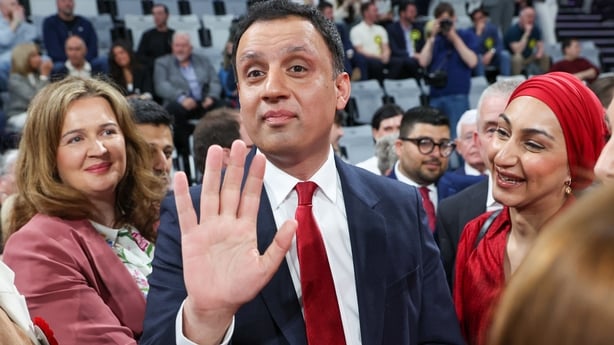
In the English local elections, covering 136 local authorities, Reform UK emerged as the biggest party, increasing their number of elected councillors by 1,451 to finish with 1,453 seats.
Labour lost 1,496 seats to finish with 1,086 seats. The Liberal Democrats were third with 844 seats - a gain of 155. The Conservatives were in fifth place with 801 seats, losing 563.
The Green Party surged winning 441 additional seats to finish on 587.
Some journalists have been told by their Downing street sources that the results were "existential" for the Labour Party.
After all, Labour had obliterated the old Liberal Party in the last century.
Labour could vote in a new voting system
Times Radio presenter Tom Newton-Dunne posted the notion that Labour could save itself by using its massive Commons majority to legislate proportional representation for the next election. He said no referendum was needed, just push the bill through parliament.
Such a move would ease some of the tensions in the system that comes from trying to shoehorn a multi-party democracy - which Britain has well and truly become - into a first-past-the-post electoral system that works for two big parties that alternative government formation between them.
The long-touted benefits of such a system are that it produces a clear-cut result on the night of the election.
The disadvantage is that governments can be formed that don’t reflect how a majority of people actually voted.
The massive majority that Mr Starmer won in 2024, getting some two thirds of the Commons seats, was delivered by winning 34% of the vote.
So, two thirds of the electorate voted to not have a Labour government, but that's exactly what they got.
It must feed into the discontent of the population who often talk about not being listened to or represented by their government.
Perhaps a PR system for national elections would give a truer picture of Britain’s fractured political landscape.
Which is another way of saying the UK is following the same path as pretty much every country in Europe in having multi-party politics.
But if they stick with the first past the post system, what will be the result?
According to Professor Michael Thrasher on Sky News, using Friday’s results as the basis for a projection, a general election would result in a hung parliament, with Reform the biggest party, but still short of a majority by about 40 seats.
Under the models Reform would win around 26-27% of the vote, the Conservatives on 20%, Labour at 15% would be third (but would pick up more seats than the Tories), while the Liberal Democrats and the Greens would each win about 14%.
Prof Thrasher added that it was possible that Nigel Farage could become the next prime minster because the system "is so uncertain now and so volatile".
But getting close to the EU, investing in defence, and maybe changing the electoral system are medium to long-term answers to deep seated questions.
In the short-term the question being asked by politicos and those who write about them is whether Keir Starmer should stay, go or be forced out.
A trickle of backbenchers had come out against him by Saturday evening, including one-time shadow Northern Ireland secretary Louise Haigh.
But the bigger beasts were keeping their cards close. Others in the party said that multiple changes of leader didn’t work out too well for the Conservatives.
With much of the attack on the leader being led by opposition parties and newspapers, there is a natural instinct in political parties to circle the wagons and protect the leader.
There is also a self-preservation instinct at play: the sight of such a prodigious bloodletting as we have just witnessed will give anxious backbenchers pause for thought, fearful that changing leaders will hasten the day the next general election is called.
Sticking with the current leader may buy them time, and you never know what will happen with time.
The podcaster and former Conservative minster Rory Stewart said Labour now has a Joe Biden problem - an unpopular leader who doesn’t want to go, and nobody in the party will tell him to go.
His advice was for Labour to run a proper, managed leadership election campaign, so as to avoid the Kamala Harris situation the Democratic Party faced in America.
But right now, Mr Starmer probably has another chance to turn it around, if he can.
Writing about the election result in the online edition of The Guardian he said: "The right lesson is to listen to voters. To represent the majority who want a government that will confront the big challenges they face with real answers. That is how we will deliver the change people are desperate for".
The relaunch starts tomorrow.
He might make that European Political Community meeting in Ireland yet.
But the questions will persist.