
The Battle of Waterloo took place on 18 June, 1815 – so naturally the powers that be in Britain couldn't resist picking 18 June as polling day in the Makerfield bye-election.
The downfall of an Emperor? The rise of a new Prince? Or just a bloody shambles – there are multiple potential outcomes on this 211th anniversary.
Of course the only reason this bye-election is taking place is to try and get the Mayor of Greater Manchester, Andy Burnham, elected as a Member of Parliament: it is the only way he can challenge Keir Starmer for the leadership of the Labour Party – and with it, the position of Prime Minister.
So is he the rising Prince (like the Duke of Wellington, made Prince of Waterloo by the Belgians – and who indeed went on to become UK Prime Minster), or the Napoleon figure, who almost wins it all, but then loses it all – all in the same day? Will the soundtrack be Oasis or Abba on Friday, 19 June?
Of course, Waterloo was the Battle for Europe: Makerfield is the battle for the 'burbs and small towns south of Wigan.
Home territory for Mr Burnham, who first represented a large swath of the current constituency when it formed a chunk of Leigh, the place he used to be MP for. They know him here, and he did really well in the elections for Mayor of Manchester in all the wards in the new constituency.
But the new constituency voted in favour of Brexit by two to one, not the 52/48 national split. And in the local elections a fortnight ago, Reform UK swept the boards, winning 50.4% in the eight wards, compared with Labour’s 22.7% of the vote.
Which is why some are trying to pitch the Makerfield bye-election as a new Battle for Europe – at least for the right to dictate British policy towards Europe (or more correctly, the EU).
A proxy referendum, some would have you believe, pitting Nigel Farage's finest against a Labour Party that has become overtly friendly towards the EU, admitting that Brexit had done a lot of avoidable economic damage, and trying to edge away from the worst aspects of the "hard Brexit" settlement.
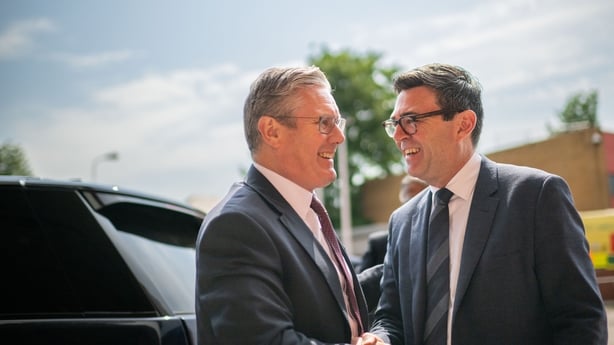
The Prime Minister himself set out the Labour position on the EU early in the week:
"What I've done in two years is to completely reset our relations with our EU partners, to really improve on that deal, which is what I did last year.
"This year we have another summit with the EU where we're going to take a really, really important leap forward in terms of the relationship. Bring us closer to Europe. It's really good for businesses, really good for the country.
"So that's what I intend to do, not get lost in a debate about what may happen years down the line. I'm grounded in the job that I'm doing, which is to make sure we are closer to the EU and doing the hard yards of making sure that we establish the relationship to make that work, get that relationship with the EU into a better place."
Read more: Starmer to campaign for Burnham in UK bye-election
'Truly historic shift in UK politics,' says Farage
Starmer 'not going to walk away' despite election losses
The Brexit impact
Given the Brexit-driven hit to growth in the UK and the consequent underperformance of government revenues from taxes, and the subsequent need to cut government spending instead of raising it, anything that helps to lift growth is, rationally, in the UK’s interest.
Hence, the Starmer agenda of "getting closer to the EU" - but not talking about trying to rejoin it.
Wes Streeting, his former health secretary, has no such inhibition.
He made a speech last weekend in which he said he will be a candidate in a Labour leadership contest (if there is one – officially at least there is no contest until somebody gets 81 MPs to sign up to mounting a heave, according to party rules).
It was the first answer to the first question after his speech.
The second was to state unambiguously that he wants Britain to rejoin the EU – a policy he will pursue if he becomes prime minister.
Was it the kind of plain speaking from a politician that everybody says they want to hear more of?
Now clearly identified as the rejoin the EU candidate, does Mr Streeting see a confrontation with Reform over the EU as a fight that cannot be put off any longer?
Or was his declaration, as the more conspiratorially minded would have it, a hospital pass for Andy Burnham – his main rival for the leadership – who does not see any percentage in talking about the EU in what has become a pro-leave/vote Reform constituency.
For these Burnham supporters, Mr Streeting's EU line was poison, designed to undermine Mr Burnham, make him fall at the first hurdle – the Makerfield bye-election.
On Monday, Mr Burnham was a keynote speaker at an investment conference in Leeds, where he was forced to take a position on EU membership.
"I am not proposing that the UK considers rejoining the EU. I respect the decision that was made at the referendum and it's going to undermine everything I've said about strengthening democracy, if we don't respect that vote," he said.
"My view is that Brexit has been damaging, but I also believe the last thing we should do right now is re-run those arguments. Britain will be stuck in a permanent rut if we're just constantly arguing and people are pulling away from each other.
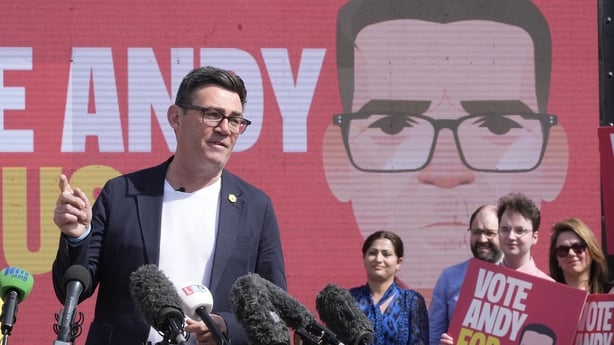
"It is time, surely, to bring people back together, to focus on what we've got in common, to get the growth coming to all places, so it's felt there. That is what we need in this moment."
The opening shots in the latest battle for Europe have been fired, the manoeuvering to avoid a bloody shambles and strive for victory is well under way.
That is just inside one of the rival armies taking to the (Maker)field of battle.
Because this is of course a Labour Party civil war, first and foremost.
But it has potential spillover effects, not least for Ireland and the rest of the EU: because a Burnham defeat in Makerfield would likely bring a sudden stop to Starmer's plans to get close to the EU.
If the next EU-UK summit does happen in early July, it could be an early casualty of the Irish Presidency’s ambitions for a meaningful improvement in the economic relationship with the UK (to run alongside the already flourishing security and defence relationship).
If Mr Starmer is later thrown overboard by a mutinous parliamentary party, what then? Mr Streeting – if he wins the leadership – would take the helm of a party that had just been given a big slap in the face over its EU plans – almost certainly ending his ambitions to lead the UK back to Brussels, and giving Mr Farage momentum going into the next general election.
So like it or not – and clearly he doesn’t - Mr Burnham’s bye-election will have consequences in Britain's battle for Europe.
Which is why he is trying to keep the focus away from Europe – the first job is winning the bye-election: everything else comes second.
‘A change bye-election'
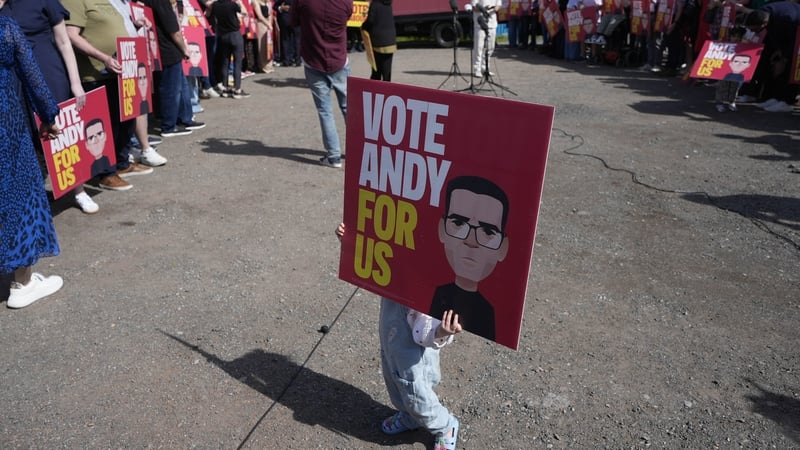
The campaign slogan is "For Us", as the mayor tries the American political trope of playing the outsider, attacking Washington/Westminster as the centre of all that is wrong, and the locality as the source of all that is good.
It is standard enough retail politics, which, when combined with Mr Burnham’s very high national profile, his local track record, and personal popularity in the region, ought to make him a favourite to succeed in the task.
So, he promised them change:
"This is not business as usual, this is not more of the same. This is a change bye-election.
"Politics in this country, British politics, is tired. It needs a new script, and over the next four weeks, the people of Makerfield are going to write that script, and it's great that they're going to get that chance.
"This bye-election will force Westminster to focus on the places it usually looks past.
"It will put the political parties on the hook to tell the people of Hindley, Hindley Green, Platt Bridge, Abraham, Ashton, Oral, Winstanley, what are they going to do for people in those places, and so they should be forced onto that hook, because no one has done enough.
"We have had 40 years of policies that have hurt the high streets of this constituency, 40 years of policies that have left people struggling to afford the everyday basics of their lives, policies that took away the good jobs that were once in these communities and have not done anything to replace them or put them back.
"Policies that have left people here struggling to afford a good home.
"This bye- election is a clarion call for change, change for people in this part of the world, a place I love so much.
"Change to the economy, change to education, change to housing, change to transport, change to care, and yes, to make it all possible - change to politics.
"We need change to the economy, so we don't have an economy run for people far away from here, for whom life is already good, but works every day for people here, and we take action to lower their energy bills, their water bills, make everyday life more affordable for people, action to reindustrialise these communities with future facing jobs - good jobs."
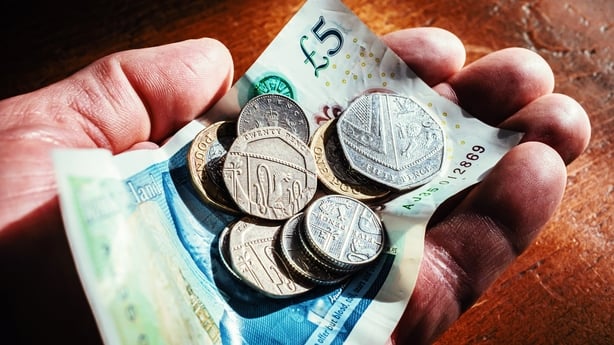
Housing crisis
The big idea in Mr Burnham’s forward facing nostalgia is to build a lot of council houses.
"If we're going to solve the housing crisis, this country needs the biggest programme of council house building since World War II.
"But a new generation, a new generation of council homes, homes that are cheaper to rent and cheaper to run, so that is a real answer to the cost of living crisis that people are experiencing, and yes, in this borough, shifting the burden of development away from Greenfield to the local centres of this constituency, building more homes there that people can truly afford, and reviving the high streets of the Makerfield constituency."
Later in an interview with the BBC, he said the money to pay for this surge in social housing provision was largely there, in the form of £39 billion (€45bln) the UK Finance Ministry has been able to squirrel aside through careful management of resources.
He justified lobbing the whole lot at building council houses by claiming "you get the maximum return from that in terms of reduction in spending in the benefits system, and of course you give people good modern homes as a result, which reduces pressure on other public services.
"It’s actually the opposite of what people are saying – I would say the money is there – I would just make sure that it is there to support council house building, because that gives you the maximum return," he said.
There is certainly a pressing need for lower cost housing in the UK.
Research published this week by Hamptons, an estate agency, reported on the impact of ten years of a change to the way the UK charges stamp duty.
The change was intended to reduce the number of homes being snapped up by private investors seeking buy-to-let properties, and put more of the housing stock in the hands of first time buyers.
The policy, Hamptons found, has succeeded in that aim: first time buyers are now mostly outbidding buy-to-let investors, who cannot make the sums work above a certain price point because of a punitive stamp duty burden.
In a worked example, Hamptons economists say "The current stamp duty bill on a £350,000 home is £25,000 for an investor or second-home buyer. This compares with £2,500 for a first-time buyer, and £7,500 for someone moving up the ladder."
But it has had another, no doubt unintended consequence – it has greatly reduced a major source of finance for developers who want to build the kind of town and city centre apartment schemes that are easiest to rent, and so are most sought after by buy-to-let landlords.
At least they were until the new tax regime came into place.
The upshot has been a big undershoot in the output of housing units.
Hamptons estimates the shortfall at about 800,000 units over the past decade.
They say the number of people that could have been accommodated by the private rented sector might have gone as high as 7.4 million, but because of the effects of the stamp duty regime, it has remained at 5.2 million, a slight decline on where it was a decade ago.
"Since 2016, the average rent has soared by 44.1%, and the supply of homes to let has shrunk – by an average of 25.4%," Hamptons say in its latest quarterly Market Insights report.
This is the background against which Mr Burnham’s tactics of avoiding the battle of Europe and fighting on the home front must be seen.

So far, he has been lucky with his enemies, with the Green Party having to get rid of its candidate within hours of selection when a social media post was discovered, in which he claimed an arson attack in March on four ambulances owned by a Jewish Charity in Golders Green, North London, was a "False Flag" - in other words a staged event.
The Reform candidate Robert Kenyon, also ran into some flak over his social media history, including being a "Facebook Friend" of a follower of Oswald Mosley, the former head of the British Union of Fascists.
So far, he seems to be toughing it out and letting the gravitational field of Mr Burnham’s launch dominate the airwaves and newsprints.
New skirmishes await in the run in to 18 June.
Nigel Farage is already on the ground with Mr Kenyon, no doubt aware that this battle for Europe could also be his Waterloo.
A Brexit Party splinter faction, Restore Britain, is also standing a candidate that may bleed off some of the Reform UK vote, and it was the Conservative Party that released the details of Mr Kenyon’s Facebook posts – they too have a candidate, as do the Liberal Democrats.
The Greens are expected to name another candidate on Monday, though the central party are unlikely to mount much of a campaign in support, fearful of splitting the left vote and letting Reform claim victory.
Reassuringly, there is also an Official Monster Raving Loony candidate, Alan "Howling Laud" Hope.