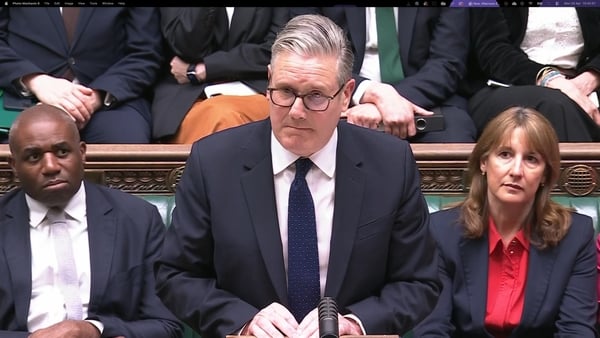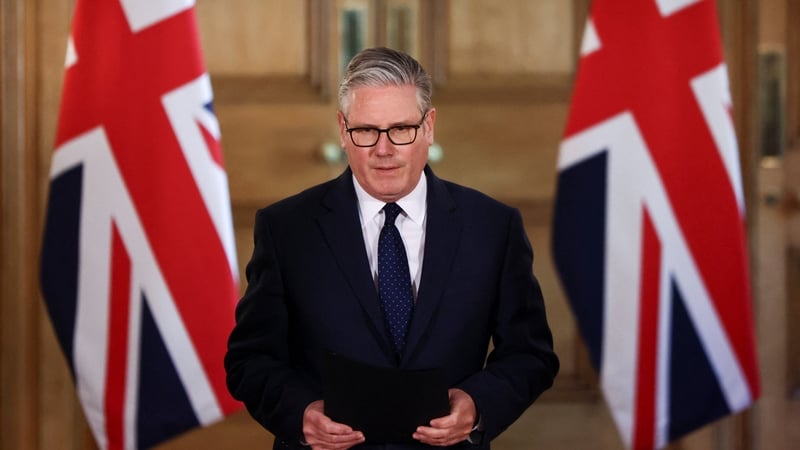

Such is the electoral kicking the UK Prime Minister and his Labour Party is expected to receive on Thursday night that it has attracted its own nickname: "Starmergeddon".
It encapsulates both the scale of damage expected to be visited on the UK's ruling party, and the person who is expected to bear the brunt of the blame for it.
The devolved parliaments of Scotland and Wales, and some 5,000 English local authority seats are on the line, with Labour set to lose.
The only question is by how much.
And when that question is answered, the next questions are what does it mean for the British government and its leader, Kier Starmer?
What does it mean for British politics in general? And what does it all mean for Ireland and the EU?
For make no mistake - the spillover consequences of Thursday’s vote go far beyond who gets to allocate funding for pothole repairs.
Government parties rarely do well in these sorts of "midterm" elections: the main opposition party usually hoovers up seats and local authority control, a launch pad for their bid for national power at the next parliamentary election.
Case in point is Labour in 2022, when these seats were last in play.
Then, at the height of the 'Partygate' controversy that undermined the Boris Johnson premiership, Labour won 35% of the national available vote, took control of local authorities and set itself up to sweep into power in Westminster in 2024.
But this time it's different - very different.
Because the Conservative Party is also in for a hiding on Thursday. And the longstanding 'Third Party' of Britain, the Liberal Democrats, are only expected to make modest gains.
This time the anticipated big winners are going to be the insurgent parties: Reform UK and the Green Party.
The old pattern of metronomic power swings between the Conservatives and Labour may be shattered on Thursday, as multi-party politics tries to assert itself inside the straitjacket of a two-party electoral system.
Remember, at the last general election two-thirds of the electorate did not vote for the Labour Party, yet they ended up with a Labour government with a massive majority - 63% of the seats in the House of Commons.
Discontent happens when people do not get what they voted for.
London is where the two big established parties are facing the squeeze on their flanks that may well make the traditional power structures unworkable for them.
Reform could do enough damage to the Conservatives to stop the party winning back traditional bastions like Westminster and could even put an end to Tory rule in Bromley in the southwestern suburbs.
For Labour, the threat comes from the left, and a newly invigorated Green Party, which appears to have attracted a significant chunk of the activists and electorate that used to back the former Labour leader Jeremy Corbyn.
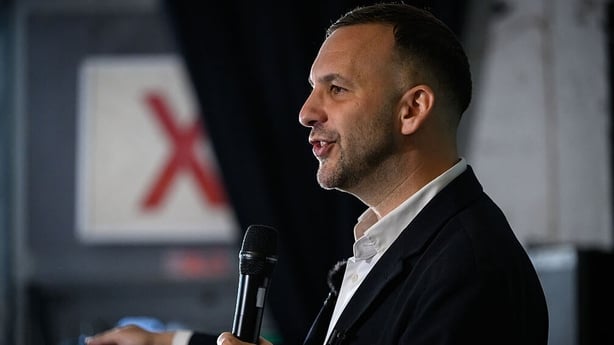
The war in Gaza, a younger and more ethnically diverse electorate and a housing and cost-of-living crisis may well see surges of Green support, the party even in the running to take control of the red heartland of Hackney.
At the last election there Labour won 45 seats, the Conservatives six and the Greens just three. The fact that the Greens are in with a chance of ending half a century of Labour control in Hackney is a sign of just how much trouble the party is in in some parts of the country.
Nowhere illustrates this more starkly than Wales, where the 96 seat Senedd is up for election (with a party list PR system of voting).
Wales has been a Labour bastion for a century, the devolved parliament under a Labour first minster since its foundation in 1999.
Yet the polls consistently show Plaid Cymru and Reform UK neck and neck to be the biggest party.
Labour and the Conservatives are now scrapping to see who finishes fourth.
A tracking "poll of polls" by Pollcheck.co.uk shows Plaid Cymru on 28%, Reform UK on 27%, Labour on 15%, the Conservatives on 11% and the Liberal Democrats on 6%.
At the last election Plaid came third after the Conservatives. Reform UK did not exist.
For the first time, Wales may end up with a nationalist First Minster, as a coalition is expected to oppose a Reform-led government in the Principality. Such is the radically changing face of British politics.
Scotland, where the mould of traditional UK party politics was broken 20 years ago, is expected to return the Scottish National Party to power.
Even if it falls short of an overall majority, a nationalist majority is assured by the Scottish Greens, who are expected to pick up a couple of seats in the 129 member chamber.
If the results go as expected, Scotland, Wales and Northern Ireland could all have nationalist First Minsters - for the first time ever.
When it comes to the wider electorate - and what these elections may mean for national politics – the big numbers are in England, where there are elections for local authorities.
Not all of them by any means, but some of the big population centres are in play.
Notably all 32 London boroughs - where the Greens are expected to surge at Labour’s expense - the midlands and many of the 'Red Wall' metropolitan boroughs in the north of England, where Reform UK is expected to make strong gains, mainly from Labour, which had won back the 'Red Wall' seats in the 2024 general election, helping it to a massive parliamentary majority.
Again, the polls say Reform UK is on track to emerge as the biggest party in the local government seats in play on Thursday.
Of the 5,013 seats up for election, Labour is defending 2,557 of them, the Conservatives 1,362, the Greens 142 and Reform UK just two seats, according to pollsters YouGov.
Projections based on opinion polling suggest Reform could go from two seats to somewhere in the region of 1,500.
Labour could lose well over a thousand seats. In a worst-case scenario, the party could lose three quarters of its seats. The Conservatives are going to lose too.
Reform's leader, veteran Brexit campaigner Nigel Farage, who is 27 years in electoral politics, wrote in the Mail on Sunday that "the famous 'Red Wall' of safe Labour seats in the north of England is about to be reduced to a smouldering pile of rubble".
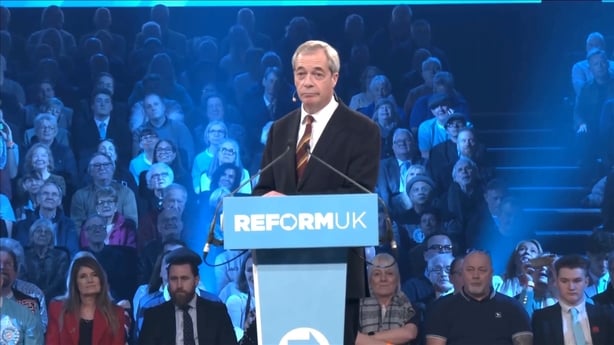
Mr Farage wrote that Labour’s Red Wall victory was based on the promise of change, but "almost two years later, the main change people have noticed under Labour is that things have gotten even worse", citing crime, immigration, tax increases and the cost-of-living.
Read more: Will Nigel Farage and Reform's run continue in England's local elections?
Mr Starmer himself came out fighting in a major interview for the BBC on Saturday, offering both a diagnosis of the electorate's disenchantment, and vision for the party to rally around.
All way too late say his critics.
The Conservative friendly Sunday newspapers were full of speculation about a leadership heave in the aftermath of Thursday’s vote (though most agreed there was little prospect of a challenger doing any better).
The context, Mr Starmer argues, is that just as the economy is coming around in the UK, the country was hit hard by the fallout from the Israel-US war on Iran, particularly the oil trade.
Voters 'frustrated' that they haven't seen changes they want, Starmer says
"My strong view", Mr Starmer told the 'Today' programme, "is that many, many voters, many people across the country, are frustrated that they haven't seen the change they want to see".
"In this country, we flatlined for the best part of 20 years, and I'll tell you why I think that is: because each time we have a crisis like this, whether it's the financial crash, whether it's Brexit, Covid, the government of the day aspires to get back to the status quo as quickly as possible," he said.
"But the status quo wasn't working, and therefore we cannot do that again. We have to take a different course in response to this crisis."
The interviewer intervened: "Let me be clear. You are comparing this crisis with Covid, with Brexit, with the crisis caught by Ukraine. It is that big.
"You're warning people now because we saw the Bank of England warn the other day that inflation could be more than 6% by the start of next year.
"Now a lot of that depends exactly what happens when the Strait of Hormuz opens or doesn't, but that's what you're preparing for?"
"I am," replied the UK Prime Minster, adding: "And the reason is because we've got a war on two fronts, I think we obviously have to pull together countries to get the Strait of Hormuz open, and that's what I'm doing in the coalition I'm leading with [French] President [Emmanuel] Macron.
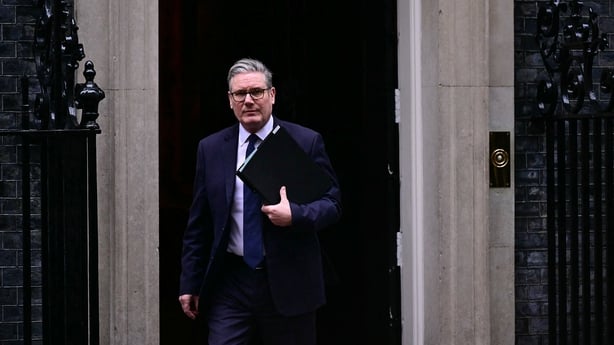
"But even when that happens, I don't want anybody to think that once the Strait of Hormuz is open, it all returns to normal. It won't be like that. There's then the war in Ukraine, and all the indicators are that the world is going to get more volatile, not less volatile."
Having described the malaise, Mr Starmer offered his vision for the cure: "The response, then, has to be, not the status quo, I'm absolutely clear in my mind about that, but a changed Britain, a stronger Britain and a fairer Britain."
In practice that means three things, according to Mr Starmer.
These are getting closer to the EU, collectively strengthening European defence and expand the UK’s energy sector to lower prices of the fundamental driver of the economy.
All of which sounds like the agenda for the Irish EU presidency from July onward, including a meeting of the European Political Community - UK prime minister and all - in Dublin in the autumn.
But the prospect of political instability in the UK - along with Ukraine, the Middle East and an increasingly irascible US President Donald Trump - is not something Irish and other EU leaders would want.
Mr Starmer’s top-level analysis may be correct, but it sounds like he is talking past too many voters in the congested aisles of retail politics in Britain.
And the central message of his analysis - thing are going to get worse - is really not what the voters want to hear. It is yet another reason why the chattering classes here are talking about 'Starmergeddon'.
And we have not even mentioned the Epstein Files, Peter Mandelson and the former Prince Andrew.
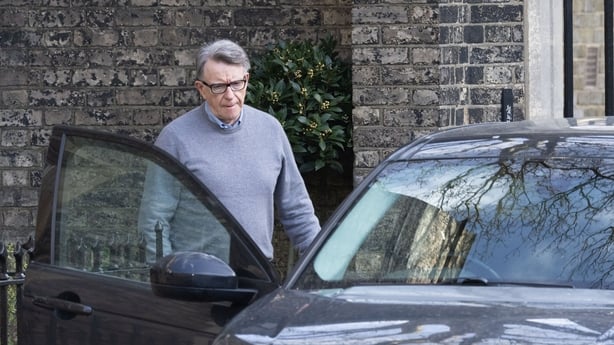
That was done by one of Mr Starmer’s predecessors, as former Labour prime minster Gordon Brown, who has written the cover story for the current edition of the Labour leaning New Statesman magazine, called 'The Cover Up? The prince, his protectors, and the questions that must be answered'.
Mr Brown said nine UK police forces need to investigate information about alleged sex trafficking into or through the UK that has emerged from the Epstein Files - including the use of two RAF bases by Epstein’s private jet.
With more parliamentary reports on Mr Starmer’s appointment of Epstein friend Mr Mandelson as US ambassador due to drop after the election, the road to summer looks particularly rocky for the current British government and its leader.