

Analysis: Labour and Conservatives will lose numerous council seats in May's election, but a number of factors may hinder the continuing rise of Reform
Elections across Britain have become increasingly volatile over the last couple of decades, the fortunes of the two largest parties have varied wildly since the 2016 Brexit referendum. In the 2017 General Election, the combined vote share for the Conservatives and Labour parties stood at 82.3%, which was the highest since 1970. However in the 2024 election, the two parties jointly received 57.4%, which was lower than at any time since 1918.
Since 1922, which was the first election after Irish independence, elections in Britain have been dominated by these two parties. The first-past-the-post electoral system rewards the candidate with the most votes in each constituency with a seat. As a result Labour won 63.2% of the seats in 2024 in the House of Commons with only 34.7% of the vote, which was the most disproportionate outcome on record.
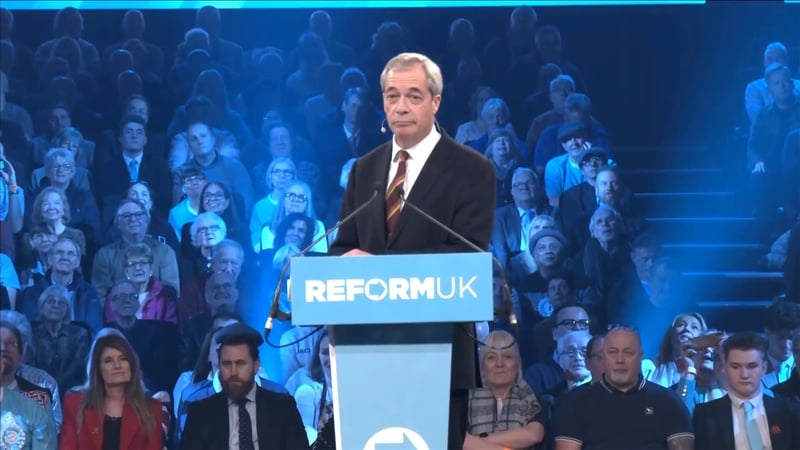
The Reform party, led by Nigel Farage, was key to this disproportionality. Despite securing third place in terms of votes with 14.3%, Reform won only five of the 650 available seats (0.8%) but came second in another 98 constituencies. In many of these cases, they pushed the Conservatives into third which played a critical role in Labour winning a higher proportion of seats.
We need your consent to load this rte-player contentWe use rte-player to manage extra content that can set cookies on your device and collect data about your activity. Please review their details and accept them to load the content.Manage Preferences
From RTÉ Radio 1, could Nigel Farage become the next British prime minister?
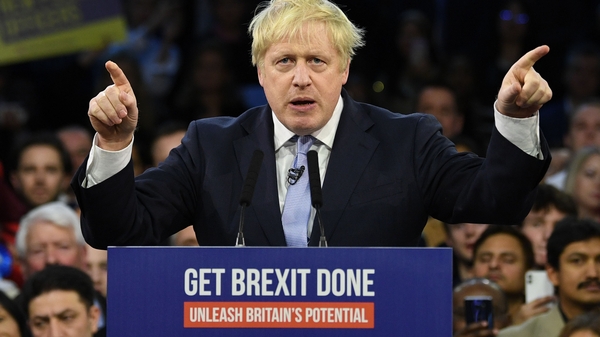
In fact, 24% of Reform voters in 2024 voted for the Conservative Party in the 2019 election. This was where the Conservatives won a majority with Boris Johnson as leader with his promise to 'get Brexit done' and take the UK out of the EU without a negotiated deal if necessary.
In England, local elections are held on different cycles so that elections are held every year but only apply to particular types of councils (e.g. city or county councils). In 2025, Reform won 677 of the 1,641 seats available and took overall control of 10 out of 23 councils. The party also won two out of six directly elected mayor competitions with Labour retaining three and the Conservatives winning one.
Local elections on 7 May in England are a critical electoral test for Reform, as opinion polls have consistently placed them as the most popular party since May 2025. The natural expectation from the opinion polls has to be that Reform will repeat the successes of 2024 and will take seats from both Labour and the Conservatives.
We need your consent to load this rte-player contentWe use rte-player to manage extra content that can set cookies on your device and collect data about your activity. Please review their details and accept them to load the content.Manage Preferences
From RTÉ Radio 1's Morning Ireland, Professor of Politics at Queen Mary University of London Tim Bale discusses increasing pressure on UK prime minister Keir Starmer's future after the furoroe over the appointment of Peter Mandelson as US ambassador
But there are a number of factors that may hinder their chances. On this occasion 5,014 council seats are being contested with six mayoral contests scheduled. Many of the seats being contested are in urban areas including all London boroughs. These are historic Labour heartlands where they hold the majority of seats and may be more challenging for Reform to win than in the more rural councils where elections were held in 2025. As opinion polls are taken on a national basis, regional differences may impact their results in local elections.
The urban seats where Labour may be most vulnerable to the Reform challenge are towns and cities in the North West of England as these 'red wall' areas voted strongly in favour of leaving the EU, with a number having voted in Conservative MPs in recent general elections after being held by Labour for decades.
Reforms efforts to win council seats in these areas may be hindered by the growth of the Green Party under new leader Zack Polanski. He took over the party in September 2025 and has overseen an increase in party membership of over 83,000 in six months. The Greens are squeezing the Labour vote from the left and have won a number of council by-elections ahead of Reform, as well as a Westminister by-election in Manchester in February 2026.
We need your consent to load this rte-player contentWe use rte-player to manage extra content that can set cookies on your device and collect data about your activity. Please review their details and accept them to load the content.Manage Preferences
From RTÉ Radio 1's Morning Ireland, Green Party's Hannah Spencer wins by-election in the previously rock-solid Labour constituency of Greater Manchester
The fortunes of parties ran by Reform's Farage in the past have been mixed. The Brexit Party was polling ahead of the Conservatives and Labour from late May to mid June in 2019, following the resignation of Theresa May as prime minister and leader of the Conservative Party. But in the December 2019 election, the Conservatives under Johnson won a large majority and the Brexit party failed to win any seats with only 2% of the vote.
While it is extremely unlikely that such a drop off will happen before the May elections, there is no guarantee that Reform will be able to sustain their polling position until the next scheduled general election in 2029, particularly if the traditionally dominant parties change leaders or policy direction in the meantime.
Another issue that Reform are facing is their record in the councils that they do control
Several councillors elected for Reform have left the party following accusations of bullying. In other areas, issues have arisen regarding their ability to deliver promised efficiency savings that would allow them to deliver council tax cuts without impacting service delivery.
What seems more certain is that both Labour and the Conservatives will lose numerous council seats, with some national opinion polls now placing them behind Reform and the Green Party. If recent electoral volatility continued and the current opinion poll trends were replicated in a general election then the two historically dominant parties could jointly receive less than 40% of the vote, taking them below even the historic lows seen in 2024.
Follow RTÉ Brainstorm on WhatsApp and Instagram for more stories and updates
The views expressed here are those of the author and do not represent or reflect the views of RTÉ