The meeting of more than 40 EU and continental leaders in the Armenian capital Yerevan has concluded, with participants hailing a thaw in tensions in the South Caucasus as an inspiration for peace efforts in the Middle East.
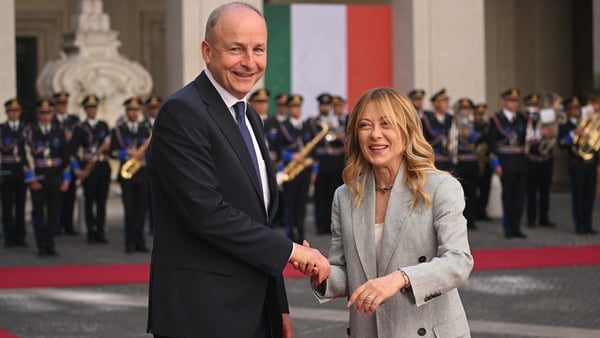
In a closing ceremony, Armenia's prime minister passed on the baton of the European Political Community to Taoiseach Micheál Martin, who will host the next summit in Dublin in November.
Earlier, Mr Martin welcomed a US plan to escort ships from the Strait of Hormuz.
Arriving at the intergovernmental European summit, Micheál Martin said: "Anything that leads to an easing of the blockade is welcome and I do observe the sense that there's work under way in terms of back channels between Iran and the United States.
"It's essential that the Strait of Hormuz is opened up for the world economy and for all of the people of that region, so I welcome what appear to be tentative moves in the right direction.
"I would urge all parties to engage more intensively in dialogue to bring about a permanent cessation to hostilities in the region."
Mr Martin held bilateral meetings with Canadian Prime Minister Mark Carney and Swiss president Guy Parmelin on the margins of the European Political Community (EPC) summit.
The Taoiseach said Ireland should "examine seriously" energy options like nuclear power in light of the impact of fossil fuels on climate change and of the current energy crisis caused by the Iran war.
"We should explore all avenues," he told reporters. "We've witnessed over the last 50 years periodic moments of volatility and energy insecurity because of our over reliance on imported fossil fuels…
"But we certainly should look and examine seriously options like nuclear power, simply examine the advances in technology that have occurred."
The Taoiseach said Ireland had made "really significant" progress on solar and wind energy, with planning permissions and auctions under way relating to offshore wind, which, he said, will put the country in a strong renewables position in the early 2030s.
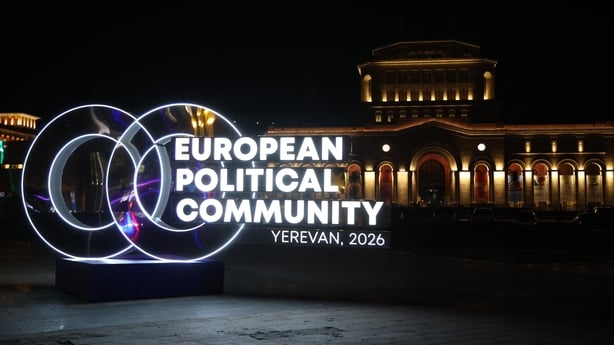
The eighth summit of the European Political Community marked the first time EU leaders gathered in the South Caucasus.
The summit was dominated by the Russian war in Ukraine and the conflict between the United States, Israel and Iran.
Given the proximity of the war, the Gulf conflict and energy crisis were high on the agenda as some 48 continental heads of state and government broke off into bilateral and multilateral meetings.
Those huddles were organised around themes, such as democratic resilience and hybrid threats, as well as connectivity, economic security and the green transition.
Mr Carney is the first non-European leader to attend the summit.
There is a growing meeting of minds between Canada and the EU on geopolitical threats, not least given the ongoing estrangement from the Trump administration.
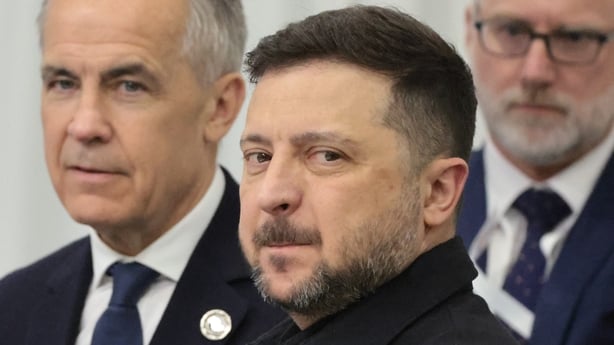
The Taoiseach attended a meeting on support for Moldova and as well as a number of bilateral meetings on cross border crime and drugs trafficking.
Mr Martin also said the Government would work with the Ukrainian community in Ireland in relation to the phased withdrawal of housing support, adding that the issue should be seen in the context of the economic impact on Ukraine's economy of the "sheer numbers" of people who had left the country.
He said: "We're changing direction. Most people would accept that the utilisation of commercial premises and so on like that, was always meant to be a short term measure.
"No one anticipated war would go on for five years. But we will work with the Ukrainian community in Ireland in terms of the change of direction that has been signalled by the Cabinet subcommittee."
He said a more detailed set of proposals would be issued in due course and that the change would be gradual.
"Clearly we had to change direction in terms of fairness and equity, and also in terms of working with the Ukrainian government in terms of its need for people, as well in terms of restoring its economy.
"That's a factor that has perhaps been overlooked in terms of the sheer numbers of people that have left Ukraine, which has had a detrimental impact on Ukraine economically as well.
"The original approach was very much an emergency response in the first instance, in terms of the securing of hotels and in certain rural areas and so on."
The next meeting of the European Political Community will take place in Dublin in November during Ireland's EU presidency.