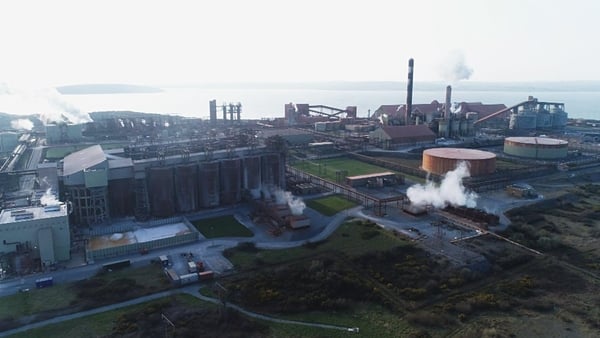

On 24 March, a consortium of European investigative media outlets reported that the Shannon-based Aughinish Alumina was shipping a majority of its alumina exports to Russia, and that raw material was making its way into aluminium-based weapons such as the ballistic missiles that have rained death and destruction on civilian targets in Ukraine.
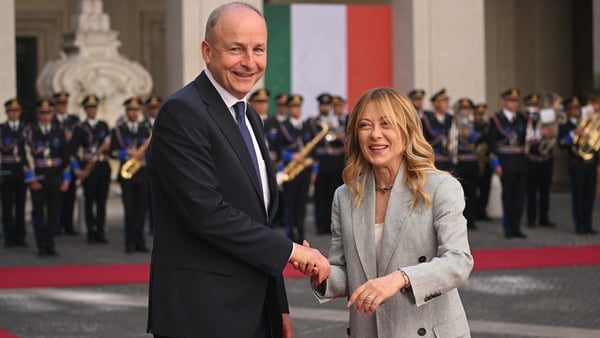
It was an unsettling claim. Taoiseach Micheál Martin expressed "concern" in the Dáil and announced a review of the company's operations by two government departments; the Belgian foreign minister Maxime Prévot said the findings were "extremely disturbing".
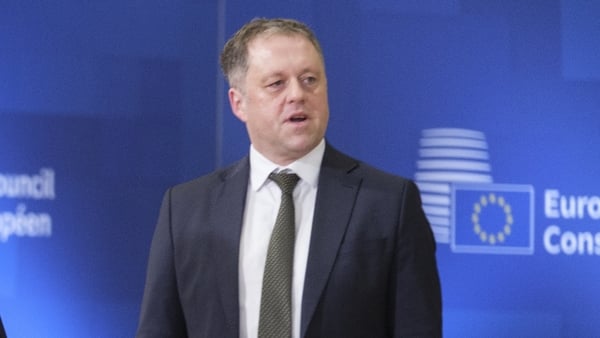
On 29 March, David O’Sullivan, the EU’s sanctions envoy, told RTÉ Radio 1 it was "very worrying" if alumina from the Limerick plant was making its way, "however indirectly", into the Russian war machine.
Both the Government and Aughinish Alumina pointed out that alumina exports to Russia are not currently under EU sanctions.
The company said it was "in strict compliance with all applicable European Union laws, including sanctions, export control measures and trade regulations".
However, as Ireland’s EU presidency approached, the controversy was drawing unwelcome heat.
On 6 May, the European Parliament's Vice President Pina Picierno wrote to the European Commission demanding that alumina exports be included in the next round of EU sanctions.
It was "unacceptable that, while the EU funds Ukraine’s defence, a Russian-owned company operates undisturbed within a member state, supplying the Kremlin’s military industry", she said.
Watch: Sanctions on Aughinish Alumina would harm EU more than Russia - Martin
Separately, 39 MEPs from 12 countries wrote to the EU’s foreign policy chief Kaja Kallas and Trade Commissioner Maroš Šefčovič, demanding an end to alumina exports to Russia.
The Government warned that over 700 fixed and contract jobs, as well as 1,000 support positions, could be at risk.
The Taoiseach said sanctions would be "devastating", they "were never designed to punish Europe, or indeed to punish Ireland, more than Russia".
Yet, the report by the Organised Crime and Corruption Reporting Project (OCCRP), of which the Irish Times is a member, appeared damning.
Aughinish was bought in 2007 by the Russian conglomerate United Company Rusal, then the largest aluminium company in the world.
It was founded by the Russian billionaire Oleg Deripaska, long a close confidant of Russian President Vladimir Putin and the target of repeated Western sanctions.
Mr Deripaska had turned a small local smelting company in Sayanogorsk, in south central Russia, into the world’s biggest aluminium concern following the chaotic collapse of the Soviet Union.
Aluminium is extracted from alumina (aluminium oxide).
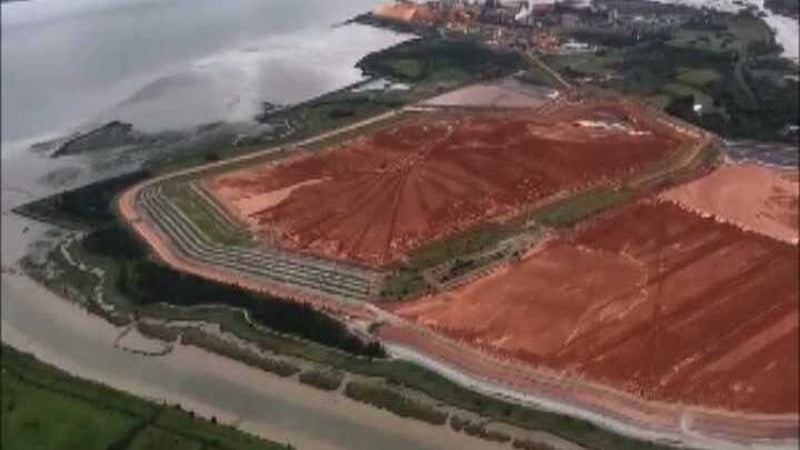
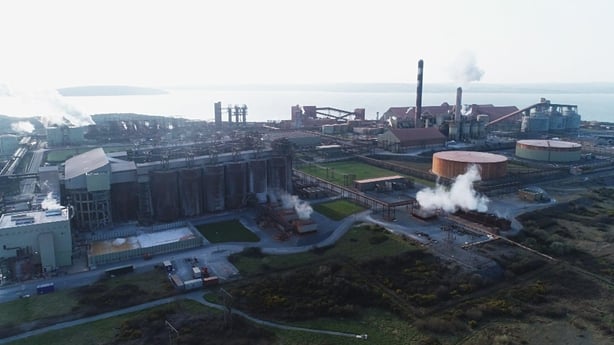
Citing customs and trade data, as well as leaked documents, the OCCRP traced the shipment of bauxite from one mine in Brazil and three in Guinea to the Limerick plant, where it is converted into alumina before being shipped overseas to aluminium smelting plants.
According to the report, shortly after President Putin invaded Ukraine, Aughinish began increasing its shipments of alumina to a number of Russian smelting plants, including Mr Deripaska’s home base of Sayanogorsk, and one in Krasnoyarsk, Siberia.
In 2024 alone, "Aughinish sent around half of all its refined alumina produced that year - worth around $400 million - to Krasnoyarsk and Sayanogorsk, accounting for nearly 40% of the alumina imported by the smelters".
Both smelting plants, as well as the three bauxite mines in Guinea, are owned by the Russian company Rusal.
Aughinish’s parent company also has a 10% stake in Glencore, which owns the Brazilian mine.
Once the alumina was converted into aluminium, according to the OCCRP report, the Moscow-based trader ASK paid Rusal $650 million for thousands of tonnes worth, in turn selling it on "to clients that include dozens of EU-sanctioned Russian weapons manufacturers".
Many of these companies are owned by the Russian defence conglomerate Rostec, which produce weapons including anti-aircraft missiles, rocket systems, and long-range bombers," said the report.
"Weapons made by these firms have levelled entire city blocks in Mariupol, struck a children’s hospital in Kyiv, and blown open an apartment building in western Ukraine, according to EU sanctions listings, Ukraine’s military intelligence, and the London-based Royal United Services Institute (RUSI)," the report concluded.
The controversy went quiet until this week.
On Thursday, the opening moves in the process to agree the 21st sanctions package against Russia got under way.
European Commission officials met diplomats from each member state in individual "confessionals", the highly confidential meetings where potential sanctions on Russian individuals, entities or commodities are discussed.
The delicate process aims to nail down the most effective sanctions, without causing blowback for the European economy.
Given the spotlight on Aughinish, there were strong expectations that either the European Commission or member states would raise the prospect of some kind of sanctions.
"It's undeniable it will be on someone’s radar," said one official ahead of the meetings.
Watch: Dutch MEP Bart Groothuis speaks to Six One News about sanctions against Aughinish Alumina
We need your consent to load this rte-player contentWe use rte-player to manage extra content that can set cookies on your device and collect data about your activity. Please review their details and accept them to load the content.Manage Preferences
However, the process is tightly controlled, given the risk that a potential sanctions target could take evasive action if he or she gets wind of an imminent listing.
"We cannot comment on details of ongoing sensitive sanctions discussions," a spokesperson for Latvia’s Permanent Representation to the EU told RTÉ News.
"However, Latvia has continuously supported strong sanctions against Russia," they said.
One option was that Aughinish itself could be "listed" in the sanctions package, meaning it would no longer be allowed to ship alumina to Russia, or to any intermediary country that might pass on the material.
The company, in this scenario, would be given time to find alternative customers to offset the loss of business in Russia.
In the 20th sanctions package, for example, the EU listed Yangzhou Yangjie Electronic, a Chinese semiconductor manufacturer, after components were found in drones and glide bombs, which have been killing civilians on a large scale in Ukraine.
Despite that, there were expectations that Ireland would use its veto to block any reference to alumina exports to Russia.
Indeed, the company itself was already lobbying the Irish Government.
In a letter to Minister for Enterprise Peter Burke, Aughinish’s managing director Ciaran Kelleher warned that any attempt to restrict shipments of alumina would do more harm to Europe (and the local Irish workforce) than to Russia.
"[R]estricting the export of alumina from the EU to Russia would give rise to the unintended consequence of the closure of the refinery at Aughinish, have no material economic impact on Russia and potentially stoke inflation in commodity markets in Europe," the letter warned.
A briefing document that accompanied the letter went further.
Not only were hundreds of jobs at risk, there was also a threat to the national electricity and gas grids.
It said that excess energy from the processing of alumina was channelled into the national electricity grid, providing enough power for around 200,000 households.
Furthermore, Aughinish donated €25 million each year for the "maintenance" of the national gas grid.
"These are fixed costs for Gas Networks Ireland which would need to be socialised if Aughinish were unable to continue in operation," the briefing document stated.
In other words, restrict the shipment of alumina to Russia, and the Irish taxpayer will have to pick up the tab.
The company was adamant that the plant would close if there was any restriction in the sale of alumina to Russia.
While the briefing document rejected the OCCRP claim that Aughinish shipped a majority of its alumina to Russia, it did admit that 45% of exports went to Russia, while the remaining 55% went to European and global aluminium smelters.
Senior EU sources have questioned why the company would need to close the plant if it can no longer sell alumina to Russia.
"That argument doesn't actually hold water," says one source.
"If Aughinish only exports 45% to Russia and you tell them they have to phase out exports over two years, presumably they can find alternative markets? It’s 45%. It’s not 90%," they said.
Ireland is not the only country that has shipped alumina to Russia.
In March 2022, the Australian government banned all exports, saying it would support "exporters and peak bodies that will be affected by the ban to find new [markets] and expand existing markets".
The main exporter, Queensland Alumina Ltd, was 20% owned by none other than Oleg Deripaska.
He fought an ultimately futile battle in the Australian courts to recover his share of the company, which had been absorbed by the mining conglomerate Rio Tinto.
For Aughinish Alumina, diversifying away from Russia does not appear to be an option, either for genuine commercial or technical reasons, or because Rusal would not dare go against the Kremlin on the issue.
"Any trade flow restrictions on alumina would leave Aughinish in a position where a significant portion of its alumina production would need to be curtailed, reducing efficiency and increasing unit costs," said the company.
The company has said the OCCRP report "mischaracterised" its shipments to Russia operations.
"Aughinish has received a warranty from Rusal that aluminium made from alumina from Aughinish is exported and not used in military applications," said the document.
"This is not neutrality. One must take a side, and you can't pick Russia's side" - Bart Groothuis
The company’s lobbying efforts were described as "blackmail" by Dutch MEP Bart Groothuis, one of the signatories of the letter seeking a ban on alumina exports to Russia.
"I'm wondering what Irish neutrality actually means," he told RTÉ News.
"This is not neutrality. One must take a side, and you can't pick Russia's side.
"Aren't there any other solutions? Of course, there are, and if they need help from the European Commission to offset [the loss of exports to Russia], or to find other customers - but I have seen no movement at all to look for such opportunities.
"Maybe the board of directors would visit Kyiv for a day to see what it looks like, or the Donbas, to see how it feels when aluminium hits your head or your children’s head."
In the event, four well-placed sources said that during the confessionals on Thursday, a number of member states raised the issue of Aughinish.
However, RTÉ News understands that the Commission held back from recommending action against either the commodity or the company.
According to one source, the Commission felt that the risk to the business model of the European aluminium sector was such that more thought and time were needed.
Aughinish appeared to be banking on that very factor.
The company's two biggest customers are Europe’s largest smelter, Aluminium Dunkerque, in France, which gets 68% of its alumina from Aughinish (nearly 400,000 tonnes in 2025), and Sweden’s Kubal Smelter, which bought around 250,000 tonnes (it is also owned by Rusal).
Both companies produce aluminium for a range of European industries, including automotive and aerospace, a fact which recalls the last entanglement Aughinish had with sanctions.
On 6 April 2018, the US Treasury Department imposed sanctions on Rusal’s owner, Oleg Deripaska, accusing him of "threatening the lives of business rivals, illegally wiretapping a government official, and taking part in extortion and racketeering".
The sanctions were extended to Rusal and its parent company EN+.
Clients were given 30 days to cease buying supplies before dealings in dollars were banned. Any individual or company that failed to comply faced being shut out of the global financial system.
Prices for aluminium across the globe shot up by 15 % and the knock-on effect on the Aughinish plant was immediate.
Rusal began to dismantle its supply chain to avoid the impact of sanctions, including suspending deliveries from Aughinish to the Dunkirk plant to avoid payment being seized by the US authorities.
There followed an extraordinary pan-European lobbying effort by metals manufacturers, Airbus, the automotive sector and EU governments, including Ireland, to get Washington to drop the sanctions.
The impact on the aluminium market, on the production processes of vital industries, and on jobs could be severe, they warned.
On 13 April 2018, Irish officials complained to US Treasury Secretary Steve Mnuchin that the Aughinish plant could close with the loss of hundreds of jobs.
There were similar efforts by the German, French and Italian governments regarding their own industries.
On 23 April, just ten days later, Washington extended the grace period from 30 days to six months.
Sanctions would be eased altogether if Mr Deripaska agreed to relinquish control of EN+, Rusal’s parent company, in which he held a 70% stake.
The impact was swift: aluminium prices fell by 10%.
Lobbying and legal action continued until 18 December 2018, when the US Treasury finally dropped sanctions on Rusal and EN+, and by extension Aughinish Alumina.
The sanctions on Mr Deripaska himself remained, legal wrangles continued for several years, but the news was welcomed by the Irish Government.
Ireland’s Ambassador to the United States Dan Mulhall, who had been central to lobbying efforts, said in a statement he had "absolutely no sympathy for the individuals who were targeted by the sanctions".
However, Rusal owned Aughinish Alumina, which employed hundreds of people in Co Limerick, "an area many Americans will know from landing at Shannon Airport and from visits to the nearby Cliffs of Moher".
In January 2019, Congress approved the delisting of Rusal and EN+ after more heavy lobbying by European governments.
But that was then.
"The point was they were not selling to Russia [in 2018]," recalls one source familiar with discussions.
"They were selling at that time to a range of smelters in Europe and so there was a lot of support [from other member states] because there are several factories in the EU that are dependent on the exports from this company."
Massive increase in alumina exports to Russia since invasion of Ukraine
The awkward fact for Aughinish and the Irish Government now is that the company began shipping alumina to Russia as early as 2020, exporting 396,000 tonnes that year (not long after it was de-listed from US sanctions).
By 2024, that volume had risen to 826,000 tonnes, an increase of 55% compared to 2022 when Russia invaded Ukraine, according to the OCCRP report.
Could a massive increase in alumina exports to Russia at the height of the Kremlin’s massive boosting of defence spending to fuel its war effort be a pure coincidence?
That is a question that remains to be answered.
On 3 April this year, the refinery posted record pre-tax profits of €103.4 million for 2024. Directors of the plant attributed the increased profits as "primarily due to higher market alumina prices".
"The problem," said the EU source, "is that supplies to Russia have gone up. They're still not a massive part of their overall sales, so the question arises very simply: why is it such a catastrophe if they can't sell to Russia?
"They just diversify, they find other customers, like lots of other companies have had to do with sanctions."
There was one footnote from the 2018 saga.
While Rusal and EN+ were frantically trying to avoid US sanctions, Russia’s Trade and Industry Minister Denis Manturov, who had railed against the sanctions for weeks, was reported as saying that if the companies did not succeed, then Russia would have to focus on the domestic aluminium market instead.
"In other words," a source told Reuters at the time, "part of the aluminium will go to [the state repository] Gokhran and up to two million tonnes will be processed internally and meet the needs of the military-industrial complex."