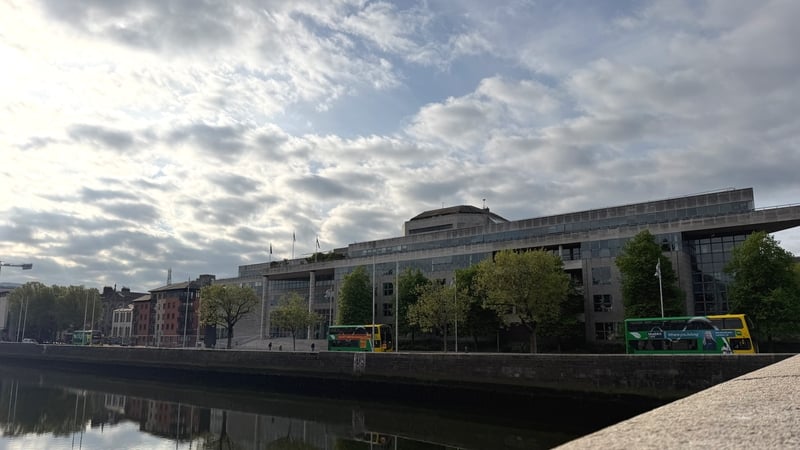

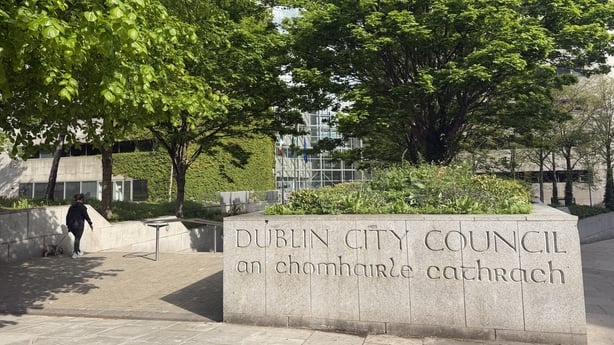
Moving Dublin's Civic Offices from Wood Quay is a "bold" but "pragmatic" move because bringing the buildings up to environmental standards would not have been a good use of public money, according to the CEO of Dublin City Council.
Richard Shakespeare said the council is examining if the offices, which were controversially constructed on a Viking settlement several decades ago, can be now be repurposed for housing, but said it may make more sense to demolish them.
There was shock and surprise late last year when it first emerged that Dublin City Council was considering moving from Wood Quay to the former DIT campus on Kevin Street, given the long and controversial battle between the council and protesters in the 1960s and 1970s over constructing the Civic Offices on the Viking settlement.
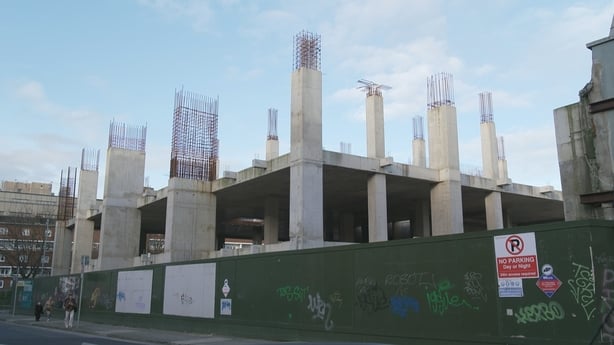
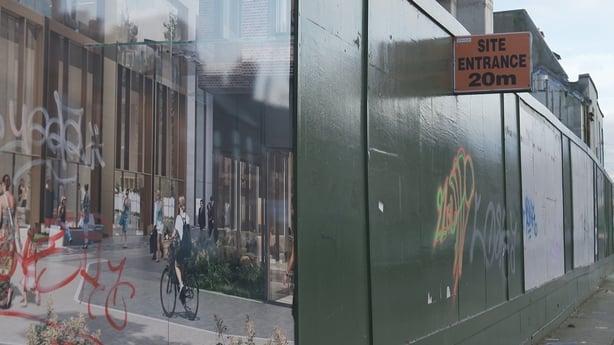
However, the council proceeded with plans to purchase the partially developed office and apartment complex on Kevin Street in Dublin's south city, now known as Camden Yard, which had been in receivership, for €90 million plus VAT.
Mr Shakespeare said the decision is "bold" but "pragmatic" and offers better value than just retrofitting the existing offices.
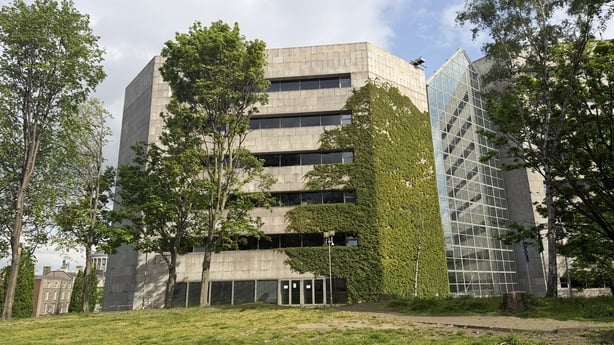
He said the idea of moving from Wood Quay emerged last October after a consultants' report suggested that the cost of retrofitting the existing council headquarters had risen from an estimated €250m to €450-500m.
"Wood Quay would be one of our biggest energy emitters. As a public servant, spending €450 million on myself and delivering nothing else, other than a nice spruced up, energy efficient office, didn't seem to me like good public value," he said.
The CEO said that Camden Yard has planning permission "for approximately 407,000 square foot of office space, and 299 apartments".
He said the council decided that having spent €90m plus VAT acquiring the site, and with the estimated cost of developing at €581m, "we came to the conclusion that what would deliver better public value, would be a move to Camden Yard and a new civic campus there.
"The other benefit is that we then have a site here, in Wood Quay, that we can redevelop, and maybe respect the Viking heritage at the site a little bit more than it has been to date."
Watch: DCC's Richard Shakespeare says moving to Camden Yard would be better for the council's operations
DCC estimates that 800 homes could be delivered on the Wood Quay site, but has not yet established if this can be done by repurposing the existing office space or by completely demolishing the civic offices and redeveloping the whole site, which still includes an area that has not been archaeologically excavated.
Mr Shakespeare said in terms of urban regeneration it might be more advantageous to clear the site, but said the council is keeping an open mind, adding, "if we're able to strip it back and retrofit with housing, retrofit with a museum of some description celebrating the Viking heritage site well, that's the way we'll go.
"Over the next couple of months, we'll be workshopping the entire site with the Councillors to see what opportunities there are there."
It was revealed in recent weeks that €10 million of the council's budget has been set aside for the existing buildings, but Mr Shakespeare said this was necessary to allow for any emergency works that may be needed in the ageing office block over the next three to four years while Camden Yard is being developed.
Subject to Government approval, Dublin City Council hopes to begin work on Camden Yard next year; to move there by 2030 and to have housing fully developed on Wood Quay by the mid 2030s.
Mr Shakespeare said developing Camden Yard while staying at Wood Quay will mean less disruption to council services, 800 of which, he said, are delivered on a daily basis in the city.
He also rejected suggestions that the Camden Yard site would be better to develop housing and that the current space on the banks of the Liffey is a more suitable civic space for the council's headquarters.
Mr Shakespeare said he thinks that Kevin Street is "ideally located in terms of public transport".
"You've got bus corridors, a five minute walk to the Luas station and you know, is this really connected to the centre of the city, Wood Quay? It's not. It might be on the Liffey, but it's far enough down the Liffey that you couldn't call it in the centre.
"Will people thank me for spending 250, 350, 450 million [euro] tidying up these offices to bring them up to modern standards? No. Because where's the public value? It'd be seen to be the greatest exercise and self aggrandisation of a workforce, and that's not what we're about.
"We're about a citizen-focused organisation that wants to do the best we can for the people that we're here to serve. We have a housing problem, and we have an urban regeneration problem and this gives us an opportunity to address both of those," said Mr Shakespeare.
Gerry Cahill, who lectured in the UCD School of Architecture for 40 years, served on the Board of the Sustainable Energy Authority of Ireland and is currently a director of Cahill McQuillan Architecture said he believes Camden Yard is more suitable to develop housing and that the civic offices should stay on Wood Quay.

"I think that site is perfect for the civic centre of Dublin. In previous archaeological investigations, that site is shown from the 11th Century onwards, and even earlier, to be the centre of the city. I think there's something very powerful about that idea of it being, the core of our urban heritage, the core of our capital."
He said that "given the history of what happened on this site", it would be "a shame to just let that go now and... to demolish something that took so much blood, sweat, and tears to get to built in the first place."
Mr Cahill described Camden Yard as being in a "fantastic part of the city in terms of existing communities".
He said the framework is there to turn the site into "a really, really good housing scheme to be enhanced and extended, and just to become much more of a kind of a place of community".