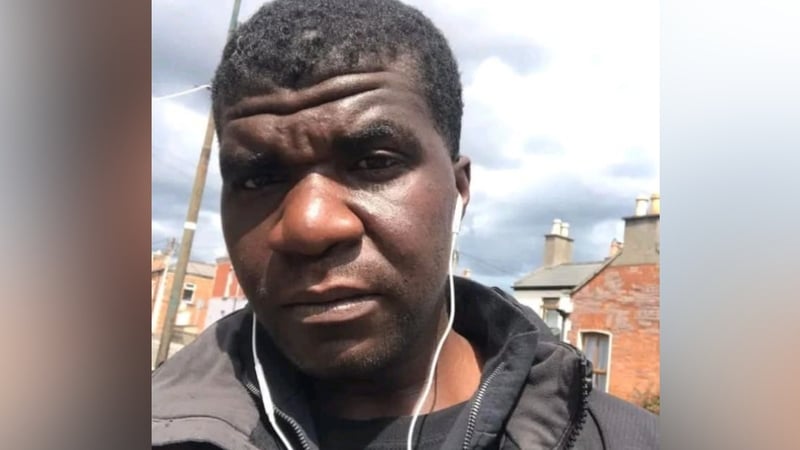

Black Coalition Ireland has called for more answers about the death of a Conglese man following an alleged shoplifting incident in Dublin last Friday.
It said political discourse has fuelled a climate of hostility towards migrants, asylum seekers and communities of colour in Ireland.
Meath-based Fine Gael Councillor Yemi Adenuga, who is also a spokesperson for the coalition, called for a full and transparent investigation into Mr Sakila's death and said politicians must be held to account for the language they use.
"In 2024 there were 4,800 shoplifting incidents in Ireland. Not one of those people lost their lives before reaching a garda station," she said.
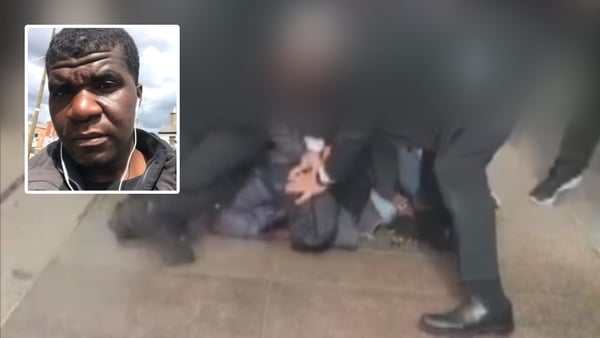
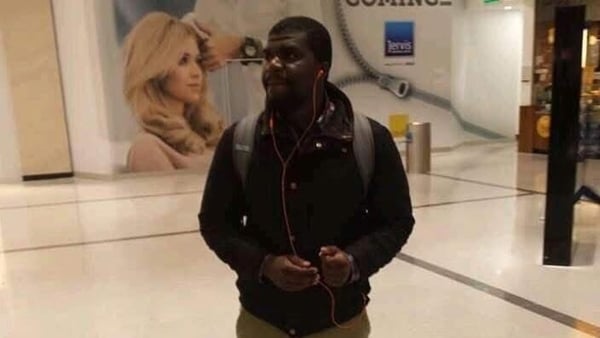
"So today we ask the question, why did Yves have to die? Yves Sakila was 35 years old. He had lived in Ireland since he was a teenager. He had just celebrated his birthday. He had a community who loved him. In spite of his challenges, he was pinned to the ground on a busy Henry Street in Dublin, and he never made it back home," she said.
She added: "When we have political leaders who fuel a climate of hostility towards migrants, asylum seekers, and communities of colour, when they use their influence intentionally or otherwise to stoke fear and hatred for the purpose of gaining a vote ... the result is a society that believes that certain people don't belong, and so must be removed.
"We cannot then be surprised when people are treated as though their lives matter less. Words have consequences, rhetoric have consequences. Yves Sakila may have suffered those consequences."
Ms Adenuga said the group was seeking justice for Mr Sakila.
She said that as a mother, she carries a fear that no parent should have to carry.
"That my four children and my three grandchildren might not come home safe one day. That fear is real and it is exhausting," she said.
"Yves Sakilah is someone's son, or sadly he was someone's son. That could have been my son, could have been your son."
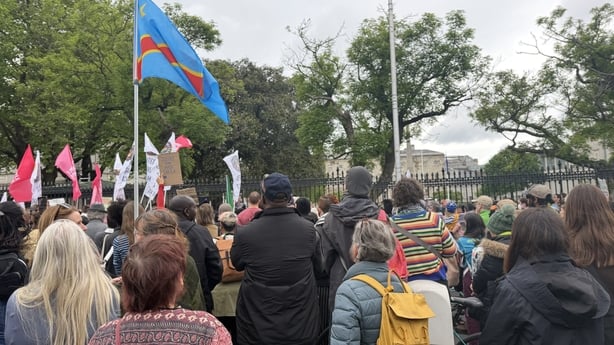
A demonstration is taking place outside Government buildings in response to Mr Sakila's death.
Activist Emer O Neill addressed the crowd and sung a song in Irish in his memory.
The rally was attended by a number of groups and members of the Congolese Community who shouted "Justice for Yves and dignity for all".
Leon Diop from the Black and Irish group also paid tribute to the man in his 80s who was injured in the incident and called on the crowd to use this moment to "build a better Ireland for everyone".
John Gerard Cullen, a solicitor for the Sakila family, said Mr Sakila had lived in Ireland since 2004 and his family still live in the country.
He said he had been homeless and had issues with drug addiction, but the loss of his life over what he said was the alleged theft of a bottle of perfume appears disproportionate.
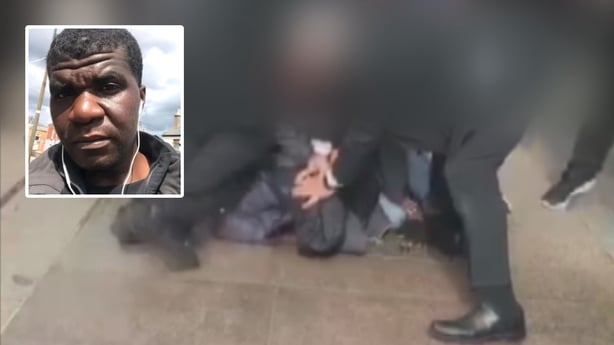
He said he has concerns about the amount of information the family are receiving from gardaí, describing it as "sketchy", adding that the results of the post-mortem examination have not yet been made available to them.
In a renewed witness appeal issued today, gardaí said the results were not being made available for operational reasons.
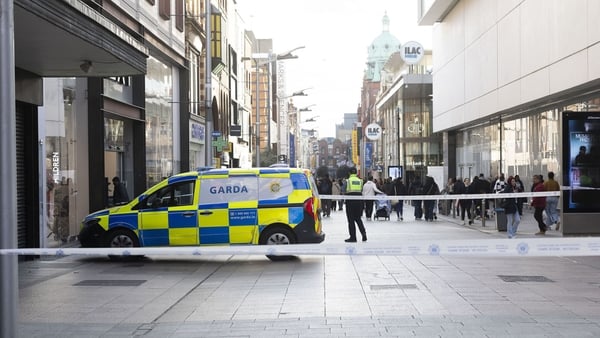
They also said they had recovered footage from CCTV and social media of the incident and were now looking to speak with anyone who was on Henry Street between Moore Street and Coles Lane between 5pm and 5.25pm on Friday 15 May.
A Senior Investigative Officer has been appointed to lead the investigation by the Serious Crime Unit in Store Street, and an incident room has been set up at Store Street Garda Station.
A Family Liaison Officer has also been appointed to Mr Sakila's family.
Anyone with information is asked to contact Store Street Garda Station on 01 666 8000, the Garda Confidential Line, or any garda station.
Mr Cullen questioned why members of the family were asked to provide DNA samples as part of the investigation and said he wants to ensure the "disproportionate use of violence is investigated and is dealt with in accordance with the rule of law".
Director of the Irish Network Against Racism Shane O'Curry said Mr Sakila's death happened in the context of increasing hostility towards migrants.
"We have to look at the context of a growing anti-migrant movement and a growing context of hatred and unfettered hostility towards migrants and minority people in Ireland, enabled by comments and poor leadership from from political figures," he said.
"We also have poor leadership in relation to the implementation of the national action plan against racism, which has provision for protecting people from acts of violence because of who they are.
"All of these things are enabling of the far right and the dehumanizing discourse that is increasingly normalised. What we're calling for is leadership - leadership from the Government, from the Taoiseach, from the Minister for Justice, from An Garda Síochána and from Fiosrú in their investigations into all the circumstances of the death of Yves Sakila."
The CEO of GORM, an organisation that promotes unity and belonging through intercultural media and education, said she believes social cohesion is fragile.
"We have to be able to name two truths at the same time," said Dr Mamobo Ogoro.
"The first truth is that racism exists in Ireland. Black and ethnic minority communities have long faced concerns about stereotyping, racial profiling, disproportionate scrutiny and unequal treatment. We cannot build trust if these concerns are continuously minimised or diminished.
"The second truth is that fear and uncertainty also exist more broadly within Irish society during periods of rapid change. If those fears are not engaged with honestly, responsibly, and compassionately, they can be exploited by division, misinformation, and hostility.
"This is why intercultural communication is so vital right now. We cannot build cohesion by demonising migrant and ethnic minority communities. We cannot build trust by treating all local voices as hateful, and equally, we cannot build trust by ignoring racism when it emerges."
A spokesperson for the Congolese Community in Ireland said the incident has caused deep distress within the Congolese community here.
Lisette Lubungu said young people in particular are "deeply distressed".
"Especially our young people who are born and raised here, who call Ireland home, who, for the majority of them, don't know any other country but here Ireland," she said.
"However, the situation has exposed a painful truth - that our acceptance here is conditional. We feel welcome when we are winning medals, when everything is going well, but the moment the crisis arrives, that illusion of safety is quickly shattered and vanished.
"Suddenly we are met with suspicion, silence, and indifference. Our sense of belonging and identity is being shattered by the climate of hostility that has been created deep inside."