
Europe is the fastest-warming continent on Earth, with temperatures rising at roughly twice the global average rate.
Climate change is loading the dice. Warmer oceans, altered atmospheric circulation and a steadily rising global temperature baseline mean that when favourable weather patterns develop, they now produce more extreme outcomes than they once did.
That is precisely what happened during this week's extraordinary mini-heatwave.
For 29 years, Ireland’s May temperature record stood at 28.4C, set at Ardfert, Co Kerry, on 31 May 1997.
Records are normally broken by tiny margins - perhaps 0.1C or 0.2C. Instead, Ireland’s long-standing May record was exceeded by more than two degrees.
The first sign came at Shannon Airport, where temperatures reached 28.6C. Twenty-four hours later, the same location recorded 30.5C.
Such a leap is remarkable. Climate scientists say an event of this magnitude would have been virtually impossible without the influence of human-caused climate change.
Ireland was not alone. Across the UK, long-standing May temperature records were also broken. At Kew Gardens in London, temperatures reached 34.8C before climbing to 35.1C the following day. The old UK May record of 32.8C had stood since 1922.
New May records were also set in Wales and Northern Ireland. In Cardiff, temperatures jumped from 27.4C on Monday to 32.9C on Tuesday. In Co Fermanagh, Thomastown reached 24.5C.
The UK Met Office said such temperatures would be exceptional even in midsummer, let alone in May.

What made the event especially striking was not simply the intensity of the heat, but its timing.
The heatwave arrived while Europe was still in meteorological spring. Heat dome events are normally associated with the height of summer, particularly July and August. They are rarely seen in May.
Peter Thorne, Director of the ICARUS Climate Research Centre at Maynooth University, described the temperatures as "mind-boggling" and "crazy".
The event was driven by a powerful heat dome. Warm air moving northwards from Africa became trapped beneath a strong area of high pressure over western Europe. As the air sank, it was compressed and heated further, allowing temperatures to soar across a wide area.
For many people, the heat was welcome after a prolonged spell of cool, cloudy weather.
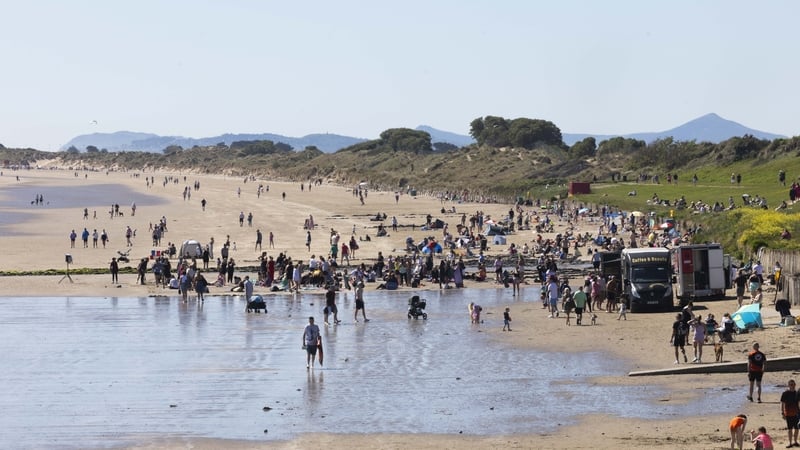
Images of packed beaches, crowded parks and ice cream queues dominated television screens and newspaper front pages.
Yet climate scientists see another side to the story.
The heatwave was linked to a number of fatalities.
At least nine people died in drowning and water-related incidents in the UK. In France, seven people died, including five through drowning and two from heat-related causes while competing in sporting events.
Even elite athletes struggled. World number one tennis player Jannik Sinner was forced out from the French Open in Paris after suffering dizziness and lethargy in temperatures approaching 33C.
These impacts highlight a reality that is often overlooked. Heat is not merely uncomfortable. It places stress on the human body.
As temperatures rise, the heart and cardiovascular system must work harder to maintain safe internal body temperatures. Prolonged exposure can worsen cardiovascular disease, respiratory illness, diabetes and kidney disease.
Simon Stiell, Executive Secretary of UN Climate Change, said the science is clear: human-induced climate change is making heatwaves more frequent and more intense. He described recent events as "a brutal reminder of the cost of global warming".
Scientists are concerned not only because temperatures reached record levels, but because they did so - so early in the year.
People, buildings, transport systems and healthcare services are generally less prepared for extreme heat in spring than in mid-summer.
Read more:
Latest climate stories
There is also a risk of cascading impacts. Early-season heat can dry soils, warm coastal waters, increase wildfire risk, place pressure on infrastructure and lead to elevated night-time temperatures that prevent people and buildings from cooling down. London experienced precisely such conditions last week when temperatures remained above 20C overnight in a rare tropical night.
Met Éireann warns that prolonged heat can pose risks for people with chronic illnesses, children and outdoor workers. Livestock can suffer heat stress, water demand can rise sharply and soil moisture can decline rapidly, reducing grass growth and increasing wildfire danger, particularly in upland areas.
For climate scientists, these wider impacts are why this week’s mini-heatwave matters.
The concern is not that people enjoyed a few days of sunshine. The concern is that temperatures once considered exceptional are becoming less exceptional, arriving earlier in the year and affecting larger areas.
What happened this week may have felt unusual. The fear among scientists is that, in a warming world, it may increasingly become the new normal.