The European Commission this week issued a preliminary finding against Meta, accusing it of failing to prevent children under 13 from using Instagram and Facebook.
The commission said shortcomings with Meta's operating system are in breach of the Digital Services Act (DSA).
It added that the measures did not adequately prevent children under 13 from accessing the services, nor promptly identify and remove them if they had already gained access.
Meta said it disagreed with the preliminary findings.
"We're clear that Instagram and Facebook are intended for people aged 13 and older and we have measures in place to detect and remove accounts from anyone under that age," a spokesperson said.
The announcement from the commission has once again put a focus on social media bans and the various age restrictions that are being considered by governments around the world.
Australia
It all started with Australia.
The world's first social media ban for under 16s came into force there in December last year.
Platforms including TikTok, Instagram, Facebook and YouTube were required to block underage users or face fines of Aus$49.5 million (€28 million) if they failed to take "reasonable steps" to comply.
In March, Australia's eSafety Commission said platforms had blocked around five million social media accounts due to age restrictions but warned that "major gaps" remained in how tech companies were complying with the law.
The commission accused the platforms of "failing to obey" the rules and found a "substantial proportion of Australian children" were still accessing banned social media apps.
Watch: Australia 'taking back control' from tech giants with social media ban
There are widespread reports of children finding ways around the various age verification measures being used by platforms.
In its report, the eSafety Commission said social media companies were enabling under 16s to repeatedly attempt age verification so as "to ultimately obtain a 16+ outcome".
"Australia's world-leading social media laws are not failing. But big tech is failing to obey the laws," Communications Minister Anika Wells said in March.
"Australia will not let the social media giants take us for mugs," she added.
While the Australian ban is far from perfect, governments around the world are hoping to introduce similar measures.
Right now, around 14 European countries are considering some form of age restrictions.
France
France is among the European nations leading the charge.
In January, the lower house National Assembly passed a law banning social media access for under 15s but political disagreements have arisen over how exactly it will be implemented.
The right-leaning Senate adopted the bill in March but attached several conditions and changes, including a suggestion that platforms be categorised into a two-tier system.
France had hoped to have the ban in place by September but it is feared the disagreement could delay its implementation.
Spain
In February, Spain unveiled plans for a social media ban for under 16s.
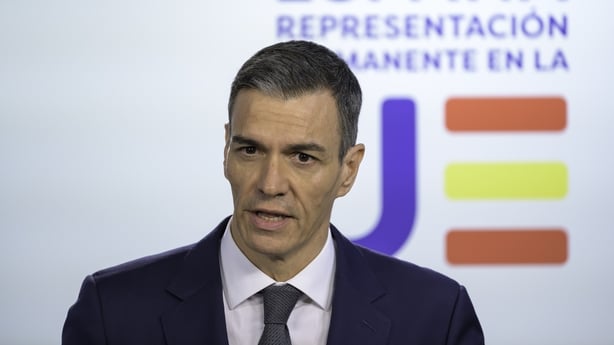
Prime Minister Pedro Sánchez said the measures would protect children from the "digital Wild West".
"Today, our children are exposed to a space they were never meant to navigate alone," Mr Sánchez said, describing social media as a place of "addiction, abuse, pornography, manipulation and violence".
The proposed measures would also make tech company executives responsible for "illegal or harmful content" on their platforms.
The Spanish announcement, however, was criticised at the time for lacking details of how the ban would work in practice and how it would be enforced.
Austria
Austria has proposed one of the lower age limits.
In March, the government there announced plans to ban social media access for children up to the age of 14.
At the time, Austrian Vice-Chancellor Andreas Babler said there was no consensus among the three parties in the ruling coalition regarding the verification method that will be put in place.
A draft bill is expected to be ready by the end of June.
Norway
Just last week Norway became the latest European country to announce a social media ban for under 16s, with legislation expected by the end of the year.
The government there said it would make technology companies responsible for age verification of young users.
"We are introducing this legislation because we want a childhood where children get to be children," Prime Minister Jonas Gahr Stoere said in a statement.
"Play, friendships and everyday life must not be taken over by algorithms and screens."
The bill is expected to be introduced in the Norwegian parliament by the end of the year.
Ireland
In Ireland, the Government is working on a digital wallet which will verify a user's age based on their PPS number.
The Department of Public Expenditure is in charge of the roll out.
It recently said that an early version of the wallet has been technically developed and is ready for testing with the Irish public, who will be invited to provide feedback on its design and features.
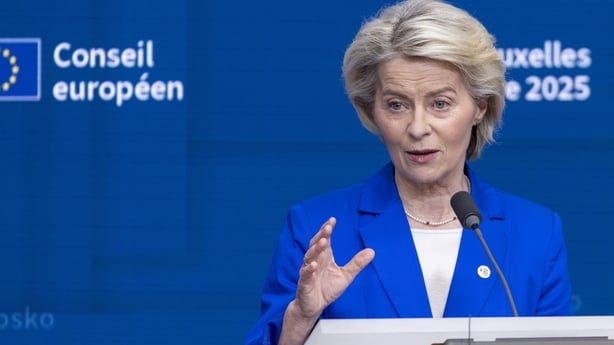
Last month, European Commission President Ursula von der Leyen said the EU's age verification app for online platforms is technically ready and will soon be available to use.
Ms von der Leyen listed Ireland as one of the member states that are "frontrunners" and "making great progress" along with France, Denmark, Greece, Italy, Spain and Cyprus.
"They are planning to integrate the app into their national wallets," she said.
The Department of Public Expenditure said it has been engaged with the European Commission, to ensure the Irish digital wallet is aligned and interoperable with the EU age verification app.
"The EU age verification feature will work as a seamless feature within the digital wallet, which will be part of the public pilot test being launched," a spokesperson said.
Privacy campaigners in Ireland have expressed concerns about the use of PPS numbers.
The Irish Council for Civil Liberties (ICCL) and Digital Rights Ireland (DRI) have described such a move as a disproportionate response that veers into the realm of authoritarianism.
They have warned of the dangers of handing over sensitive personal data to get access to the internet.
Minister for Communications Patrick O'Donovan has insisted that this information would not be held by online platforms, but rather by a third party.
He also previously said that no right should trump the right of a child to be protected online.
Other European countries
In February, Germany's ruling conservatives passed a motion to ban social media use for under 14s and introduce more stringent digital verification checks for teenagers.
However, under the country's federal system, media regulation is a state‑level responsibility and agreement will need to be reached on consistent nationwide rules.
Denmark, Italy and Portugal are all exploring legislation or formal consultations on age limits.
Consultations are also continuing in the UK but last month MPs voted to reject a social media ban for under 16s for the third time.
In April, Greece announced it will ban under 15s from social media from January 2027.
Slovenia is drafting a law that would prohibit children under 15 from accessing social media.
Poland's ruling party said in February that it is preparing new legislation to ban social media for children under 15 and to hold platforms responsible for age verification.
US court cases
In March, a California jury found that Meta and Google were liable for designing platforms that are addictive.
The lawsuit involved a 20-year-old woman known in court by her first name Kaley.
She said she became addicted to Google's YouTube and Meta's Instagram at a young age and that this addiction had harmed her mental health.
The jury found that Google and Meta were negligent in the design of their apps and had failed to warn about their dangers.
Both companies said they disagreed with the verdict and are appealing.
Snapchat and TikTok were also defendants in the trial but both settled before it began.
The Los Angeles verdict came a day after a jury in New Mexico found Meta liable for misleading users over the safety of its platforms for children.
We need your consent to load this rte-player contentWe use rte-player to manage extra content that can set cookies on your device and collect data about your activity. Please review their details and accept them to load the content.Manage Preferences
The company was ordered to pay $375 million but Meta has vowed to appeal.
Meta, Google, Snapchat and TikTok are facing thousands of lawsuits in US courts over claims that the designs of their platforms have damaged the mental health of teens and young people.
The outcomes of the cases in California and New Mexico were seen as landmark verdicts.
Up to now, social media companies had been protected by a defensive shield that allowed them to argue that they are not legally responsible for the material posted on their sites.
The recent court cases, however, looked at the design of the platforms, rather than the content posted on them.
European regulators have also begun to highlight issues with the inner workings of social media apps.
In February, the European Commission accused TikTok of creating an "addictive design" in its app which could harm the physical and mental wellbeing of minors and vulnerable adults.
TikTok rejected the findings and has vowed to challenge them.
One week off social media: Would an Australia-style ban work here?
Are bans the answer?
Many campaigners believe that banning children is not the answer and instead social media companies should be forced to make their platforms safer.
Alex Cooney, CEO of online safety charity CyberSafeKids, is also concerned about the different approaches being taken by various countries.
"We're supposed to be working under harmonisation rules, so if there is going to be a minimum age, it should be a clear minimum age across Europe that is the same," Ms Cooney said.
"That is not happening. We've heard 14, 15, and 16, touted in different countries.
"Some countries have moved ahead already to put that legislation in place."
She added that the current situation is confusing and is not bringing about the reforms that are needed.
"It is the design of the platforms that is the problem. Children and young people are saying don't ban us, ban the bad features.
"I do think we need to listen to that and really look at the business model, the problems that it poses to young people, and change it," she said.
Whether it is rule breaches in Australia, political rows in France, or privacy concerns in Ireland, age verification is complicated and difficult to police.
Rather than banning children from accessing platforms, perhaps banning toxic algorithms and addictive design features would be a far more effective way of making social media safer for all.