
Europe is the fastest-warming continent on Earth, the European State of the Climate Report for 2025 has found.
From the Mediterranean to the Arctic Circle, its climate is shifting in ways that are no longer subtle, no longer gradual, and no longer distant.
The consequences are cascading across Europe's environment, economy, and ecosystems.
With hotter air, warmer seas, shrinking ice, drying soils, and stressed ecosystems, the warning signals are screaming from every part of the climate system.
Europe has been warming at a rate of 0.56C per decade throughout the past 30 years. This is more than twice as fast as the global average, which is 0.27C per decade.
The only part of the world warming faster than Europe is the Arctic, where the rate of warming is 0.75C per decade.
With its rapid pace of warming, Europe is beginning to look like a testing ground for what accelerated climate change looks like in real time, and for how quickly societies can respond.
This is the stark picture painted by the report, jointly published by the European Centre for Medium-Range Weather Forecasts (ECMWF) and the World Meteorological Organisation today.
The report confirms that at least 95% of Europe experienced above-average temperatures last year, with several northern countries recording their warmest - or second warmest - year on record.
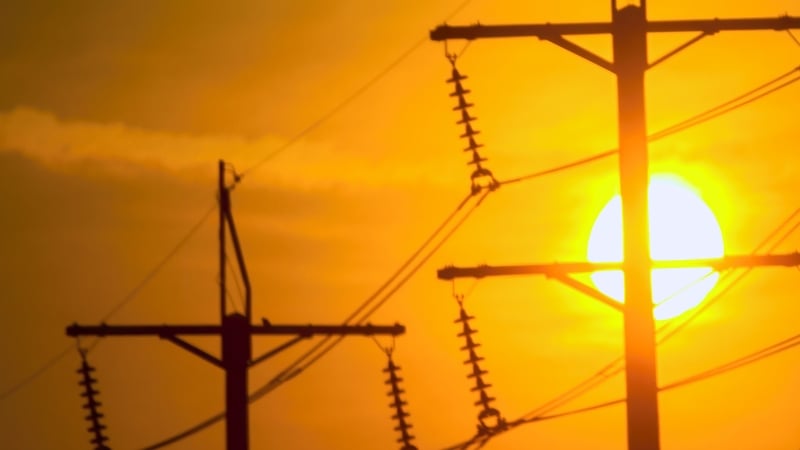
A three-week heatwave gripped sub-Arctic Fennoscandia, with temperatures exceeding the extraordinary level of 30C inside the Arctic Circle.
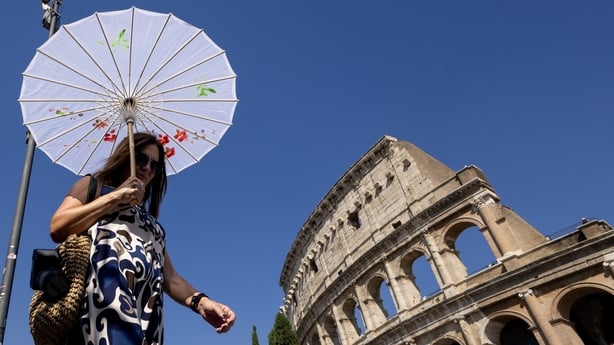
Europe also experienced its second most severe heatwave on record, with impacts stretching from southern Europe deep into northern latitudes.
The reason why Europe is the fastest-warming continent is complex but increasingly well understood.
The report says it is due to a combination of shifts in atmospheric circulation, increased solar radiation, cleaner air allowing more sunlight to reach the surface, shrinking snow cover, and the geography of Europe, which includes some very cold regions close to the warming Arctic.
All these factors together serve to amplify the rate of warming.
Glaciers across every European region recorded a net loss of mass in 2025, with Iceland experiencing some of the most severe declines.
Snow cover was 31% below average in March, and the end-of-season snow extent ranked among the lowest ever recorded.
Meanwhile, the Greenland Ice Sheet lost 139 billion tonnes of ice, equivalent to one and a half times all the ice contained in the glaciers of the European Alps.
Europe’s seas are also changing rapidly.
The annual sea surface temperature across the European ocean region reached its highest level on record, while the Mediterranean recorded its second-highest.
A remarkable 86% of European seas experienced at least "strong" marine heatwave conditions.
The report also highlights how these changes are reshaping marine ecosystems.
One example is Posidonia Oceanica, a seagrass unique to the Mediterranean that covers around 19,000 square kilometres and underpins coastal biodiversity and fisheries.
Over the past 50 years, the extent of this seagrass has declined by 34%, reflecting the combined pressures of warming seas and human activity.
While parts of Europe experienced storms and flooding, 2025 was, overall, a dry year.
It ranked among the three driest years for soil moisture since 1992.
A broad swathe from northwestern to eastern Europe recorded below-average rainfall. At one point in May, 35% of Europe was in extreme agricultural drought.

The impact on rivers was equally stark. 70% of European rivers saw below-average annual flows, with river levels running low for 11 months of the year.
These drying trends, however, are not uniform.
The report highlights significant hydrological contrasts, with intense rainfall in some regions, prolonged drought in others, making the management of water resources more complex and more critical.
Although extreme precipitation and flooding were less widespread in 2025 than in recent years its impact was still significant.
Storms and floods claimed at least 21 lives, affected more than 14,500 people, and left communities dealing with damage and disruption.
Europe is projected to see some of the largest increases in flood risk globally in the coming decades.
Wildfires burned over one million hectares, the largest area on record, with particularly severe outbreaks across the Iberian Peninsula.
In several countries, including Spain, Cyprus, Germany, the Netherlands and even the United Kingdom, wildfire emissions reached record levels, driven in part by the interplay between drought and heat.
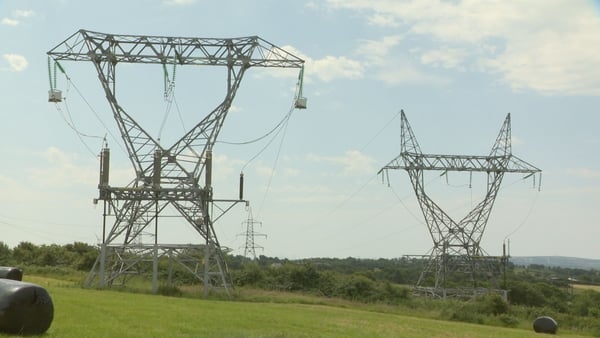
On a more positive note, the report highlights evidence of structural change in Europe’s energy sector and progress in terms of climate mitigation.
In 2025, renewables supplied 46.4% of Europe’s electricity, nearly half of total generation. Wind contributed 18%, hydropower 15.9%, while solar reached a record 12.5% share.
Fossil fuels accounted for 27.5%, continuing their gradual decline.
We need your consent to load this rte-player contentWe use rte-player to manage extra content that can set cookies on your device and collect data about your activity. Please review their details and accept them to load the content.Manage Preferences
Globally, 2025 was the third-warmest year on record. Average temperatures are now around 1.4C above pre-industrial levels.
At the current rate of global warming, the 1.5C limit set under the Paris Agreement could be reached before the end of this decade, more than ten years earlier than anticipated when the Paris Agreement was signed.
Strategic Lead for Climate at ECMWF Samantha Burgess said: "The pace of climate change demands more urgent action. With rising temperatures, and widespread wildfires and drought, the evidence is unequivocal; climate change is not a future threat, it is our present reality.
"In confronting the impact on biodiversity loss, we need to match the speed of adaptation happening in the clean energy transition and at the same time, ensure robust science continues to underpin our policies and decisions."
Principal Adviser for Digital Green Transition at DG Clima Dušan Chrenek said: "The climate change signal remains unequivocal across Europe, and the European State of the Climate 2025 report is a stark reminder that we must sustain and accelerate both adaptation and mitigation efforts.
"This edition provides compelling evidence of the profound impacts of climate change on intensity of extreme weather events, biodiversity and economy, while reinforcing Europe’s strategic ambition to further strengthen its Earth observation capabilities by harnessing cutting-edge technologies."