



On This Week: Irish moments from history (23rd - 29th March)
Welcome to On This Week, where we delve into the standout stories from the years gone by, featuring standout news stories, major sporting events, and pop culture highlights that helped shape Irish life. Here's your dose of Irish history from 23rd - 29th March.
This week in Irish life and news
1969: Being Irish in Britain in the 1960s
On this week 56 years ago, RTÉ television aired Horizon: The Other Man's Grass, a look at the plight of the Irish in Britain. The second part of the Horizon series looked at the housing problems faced by the Irish emigrating to Britain.
This excerpt from the programme visits the Irish Centre in London. which was opened in the 1950s by a group of priests and lay men. The centre acts primarily as a welfare centre, helping Irish people to find jobs and providing somewhere to live.
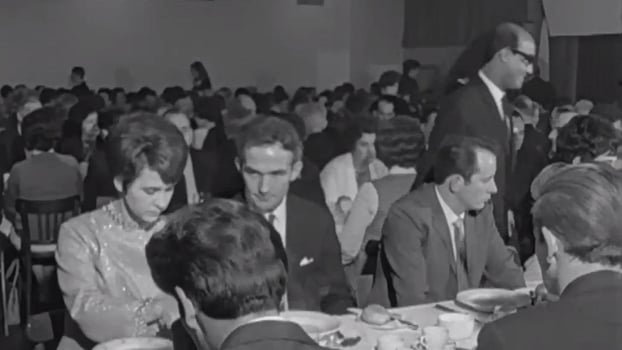
The Irish Centre had a number of hostels where short term accommodation can be provided. The normal charge for a "boy" to stay at the hostel was four pounds a week, which included meals. The charge for a "girl" was less. The hostel was used as a stop gap until the emigrants get used to living in the city of London.
The Irish Centre also acted as a social setting for the Irish community living in London and organises events to bring them together. This excerpt includes a group of men, including a priest, talking about the future of the Irish Centre and the plans for expansion. One of the commentators featured in this extract is Father Eamonn Casey, director of the Catholic Housing Aid Society, who talked about the loneliness of life in London. The programme aired on March 26th, 1969.
1979: a home-made "wall of death"
In the 1970s, two motor cycle enthusiasts built a "wall of death" in Granard, Co Longford, in which motorbikes could race around until they were travelling horizontally.
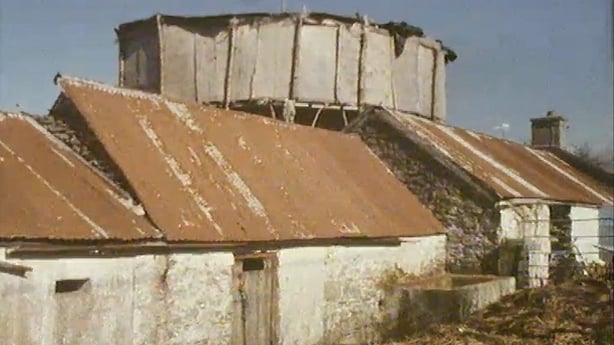
In March 1979, reporter Pat Kenny talked to Michael Donoghue and Connie Kiernan for the magazine series P.M. about how the wall of death came about, and what it was like to live next to it.
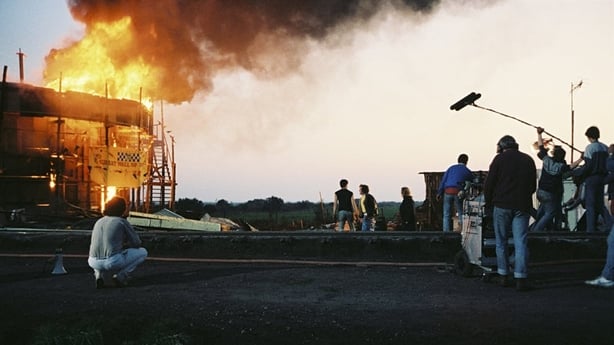
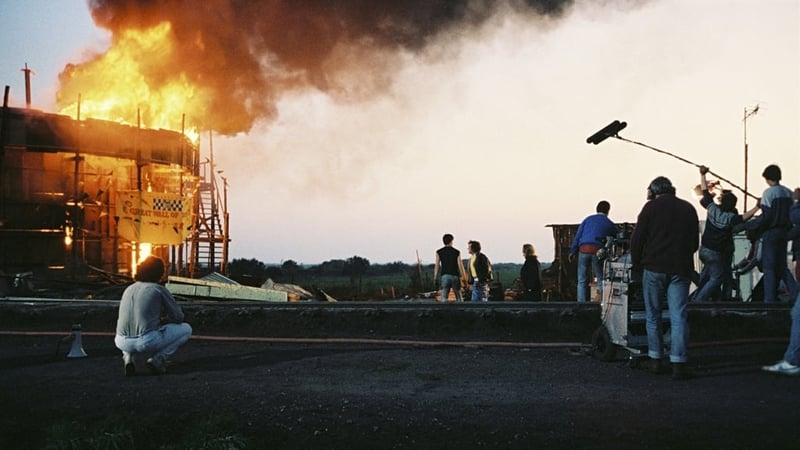
The Granard 'Wall of Death' inspired the 1986 film Eat the Peach. The movie tells the story of two young Irish men transfixed by an Elvis Presley film in which a carnival cyclist performs an act on the wall of death and decide to put together their own wall of death. Pat Kenny went on to star as a reporter in the film.
This episode of P.M. was broadcast on 27th March 1979. P.M. was a magazine series reporting on aspects of Irish life with interludes for music from Irish performers. P.M. first began on Tuesday, 20th September, 1977 and ran until Thursday, 12th April, 1979.
1981: Smashing the Queen Victoria fountain
A memory of Ireland's colonial past, the Queen Victoria fountain in the south county Dublin town of Dun Laoghaire was damaged in an attack on this week in 1981. The Victorian cast iron fountain in Dún Laoghaire was raised by a winch and smashed. A group claiming they were protesting for H-Block prisoners have since claimed responsibility for the action.
A previous attack last March saw vandals attack the monument with a sledgehammer and damage one of its eight legs. The latest damage inflicted means the shattered memorial is beyond repair.
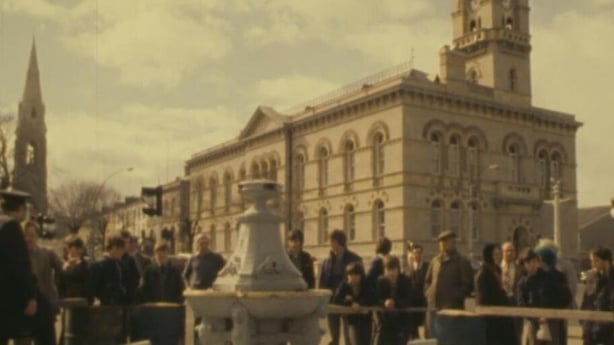
In this report by Brendan O'Brien, which aired on March 25th 1981, one resident told RTÉ News he prefered not to have to see the fountain anymore,
It brings back relics of a thing called the tyranny of England.
Acts of destruction like this one cannot be condoned, but monuments like this are part and parcel of our Ireland's history, says another Dún Laoghaire resident,
I don't like what it stood for, you know...but you can't deny it, it is our history, isn't it?
Queen Victoria was widely welcomed in what was formerly Kingstown when she visited Ireland in April 1900. The Urban District Council decided to commemorate the occasion with an ornamental cast iron drinking fountain, built by the Walter McFarland foundry in Glasgow.
The monument was part of the town’s heritage, even if that does not sit well with everyone, Cathaoirleach of Dún Laoghaire Borough Margaret Waugh pointed out,
Perhaps we don't like that part of our history so much, but... you can't get away from your history.
This week in arts and entertainment
1981: Ireland gets ready to host Eurovision
On 23rd March 1981, Charlie Bird reported from the RDS Simmonscourt where preparations were under way for the 1981 Eurovision Song Contest. Ireland was hosting the contest for the second time - the 1971 Contest was held in the Gaiety Theatre following Dana's 1970 win. Johnny Logan triumphed in 1980 with 'What's Another Year', but this time the event was going to be even bigger. For RTÉ staff it was the biggest ever single setting outside broadcast costing over £250,000.
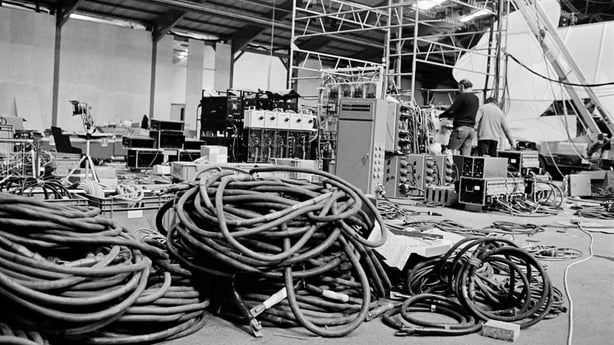
The lighting requirement on the night will be 1.25 million watts. The venue will seat over 1,400 guests. Executive Producer of the show, Noel Greene, speaks to Charlie Bird about the challenges of staging an event of this proportion. Greene says that the biggest problem was finding a suitable venue for the show that could host the audience, media and production crews saying, 'You need a massive space."
This report showed a model of the set that was being built and was based on the Celtic Torc. The set was designed by RTÉ Head Designer Michael Grogan.
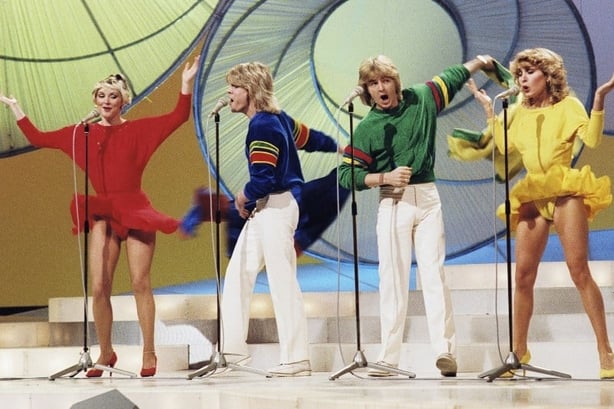
The 1981 Eurovision Song Contest took place on 4 April 1981 at the Simmonscourt Pavillion in the RDS, Dublin. The show was presented by Doireann Ní Bhriain. Ireland was represented by Sheeba who performed the song 'Horoscopes' coming in fifth place. The United Kingdom won the 1981 contest with Bucks Fizz performing 'Making Your Mind Up'.
1990: Oscar glory for Ireland as My Left Foot triumphs at the Academy Awards
36 years before Jessie Buckley became the first Irish woman to win the Best Actress prize at the Academy Awards, on 26 March 1990, fans, friends, supporters and members of the cast of the Irish film My Left Foot gathered at Ardmore Studios to await the announcement of the Oscar winners. My Left Foot had been nominated in five categories and won two with Daniel Day-Lewis taking the Best Actor gong and Brenda Fricker as Best Supporting Actress.
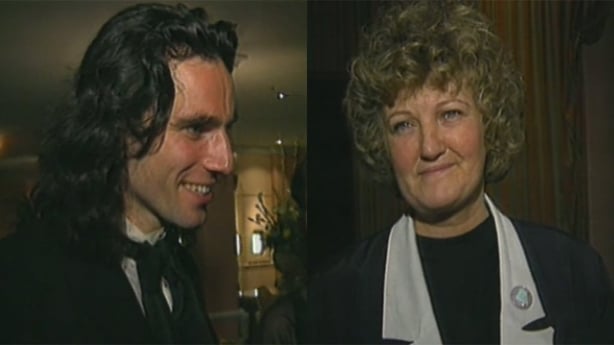
Scenes of celebration followed the announcement, which were watched on TV live from Los Angeles. For an RTÉ News report which aired on March 27th, Cathy O'Halloran spoke to members of the cast Julie Hale, Owen Sharpe and Phelim Drew. Among those celebrating the Irish success was former Oscar Winer Josie MacAvin. Josie won an Oscar for Set Design on the film 'Out of Africa', and spoke about to RTÉ News about what it means to win an Oscar and the opportunities it offers.
This week in sports
1984:
In 1984, the children's programme Anything Goes met an aspiring young footballer caller Niall Quinn, who was an apprentice at Arsenal.
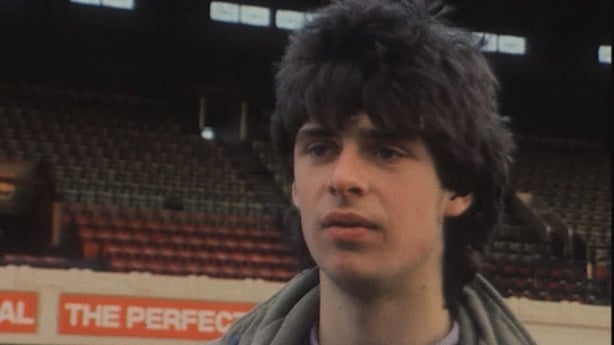
Niall Quinn was playing for Manortown United when he was spotted by an Arsenal scout. After a series of trials and a visit where he was impressed by the setup, he signed for Arsenal.
in the report, which aired on March 24th, fellow Irish man and Arsenal player Dave O'Leary recalled what life was like for him when he joined the club, including the adjustment required coming from youth football in Dublin and the work required to get to the top of the game.
Both O'Leary and Quinn would head to the World Cup in Italy in 1990 as members of the legendary Republic of Ireland team. Both would score iconic goals - Quinn's equaliser in the match against the Netherlands took the team into the second and O'Leary's score penalty against Romania that took the team into the Italia 90 quarter finals.
1984: Training for the Women's Mini-Marathon
Some well-known journalists laced up their runners and hit the Dublin seafront for a training session when the Women's Programme reported on the second Women's Mini Marathon in 1984. This was the second year the event had been run and it inspired women to go out training in groups all over Ireland. The mini-marathon was hugely successful and continues to be held annually on the Monday of the June bank holiday weekend.
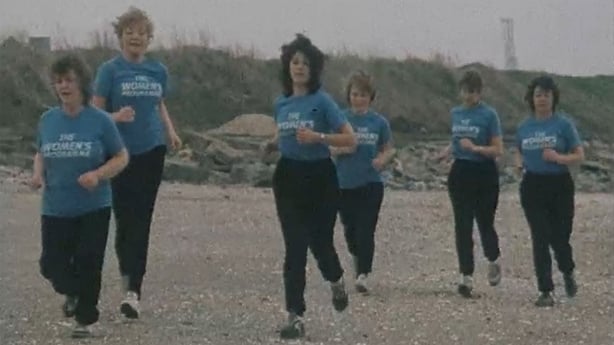
The women of Kingswood Heights in Clondalkin tol Marian Finucane that training makes them burst with energy. One runner told the reporter that
"I get out to relieve tension and boredom from housework and that kind of thing."
The group in Salthill in Galway liked that their training sessions were comprised of all women and declared that they were on a high afterwards.
Then it was time for the team behind 'The Women's Programme' to get running. Producer Claire Duignan set the stopwatch for Nell McCafferty, Nuala O'Faolain, Marian Finucane, Doireann Ní Bhriain and Thomasena Corrigan all running by the seafront. This episode of The Women's Programme was broadcast on 26 March 1984.
What was Number 1 in Ireland this week?
1979: 'I Will Survive' by Gloria Gaynor
The disco classic was a chart topper for four weeks in March 1979.
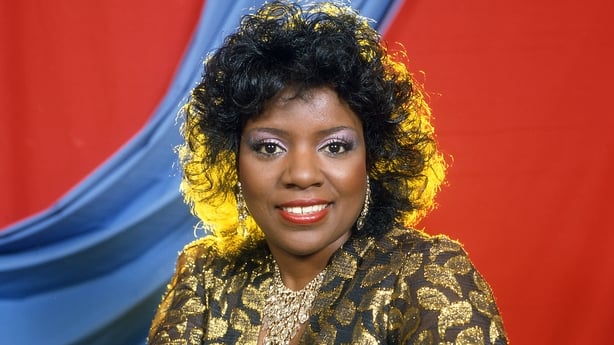
47 years later, it's still a karaoke classic.
1981: 'Vienna' by Ultravox
The new wave ballad stayed at the top of the Irish charts for a single week 45 years ago.
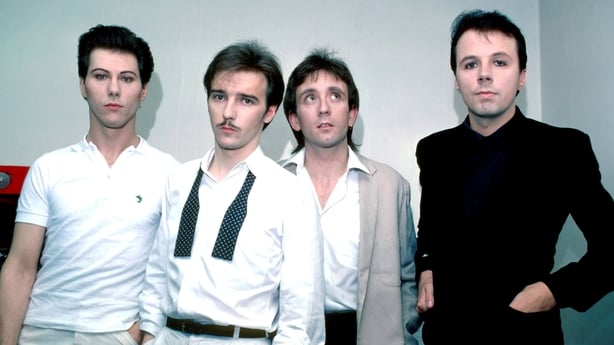
The dramatic song featured vocals by co-writer Midge Ure.
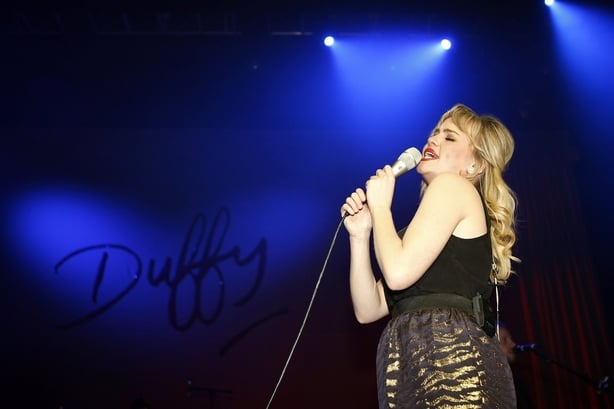
2008: 'Mercy' by Duffy
This retro pop song with a hint of Northern Soul had an unusual chart journey in 2008. Having topped the charts in February of that year for a single week, it returned to number one two weeks later.
Famous Irish names celebrating birthdays this week
Martin McDonagh
The director and playwright turns 56 on March 26th.
Charlene McKenna
The actor turns 42 on March 26th.
Patrick McCabe
The writer will be 71 on March 27th.
