





On This Week: Irish moments from history (May 25th - 31st)
Welcome to On This Week, where we delve into the standout stories from the years gone by, featuring standout news stories, sporting events, and pop culture highlights that helped shape Irish life. Here's your dose of Irish history from May 25th - 31st.
This week in Irish life and news
1971: Pocket-sized Gaeltachts in County Cork
In this 'Féach' report, Breandán Ó hEithir visited the Cúil Aodha and Baile Bhuirne Gaeltachts in the west of the Muskerry Gaeltacht region, County Cork. These pocket-sized Gaeltachts could easily be be forgotten or dismissed as semi-Gaeltachts, without insider identity and external encouragement. But the Baile Bhuirne Festival and the Cúil Aodha Gathering planned to make a public declaration of the identity of the area.
The report said that Cúil Aodha might be small, but it had its own school and strongly maintained household traditions.
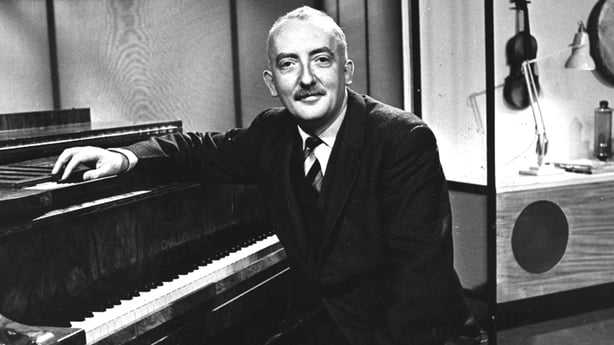
Recognition was also given to the composer and arranger of Irish traditional music Seán Ó Riada, who moved to the region in 1963. His presence and work were important aspects of the community. Cór Chuil Aodha (Coolea Choir) and the Mass in Irish have found national fame. During this clip Ó Riada plays the traditional air ‘Aisling Gheal’ ('Bright Vision') on the piano.
This Breandán Ó hEithir report for Féach was broadcast on 31 May 1971.
1984: Staff protest University College Galway's honouring of Ronald Reagan
When it was announced on this week in 1984 that President Ronald Reagan would be given an honorary doctorate by University Colleage Galway on his visit, not everyone in the college was pleased. On May 28th, Dr Richard Gault, University College Galway UCG, spoke to RTÉ News about his opposition to the conferring. Dr Gault felt that the conferring sent out a negative impression that staff at the university supported President Reagan and his policies. He argued that this is very much not the case and said that less than half of the academic staff would attend the conferring, thereby making a stand against President Reagan and his policies.
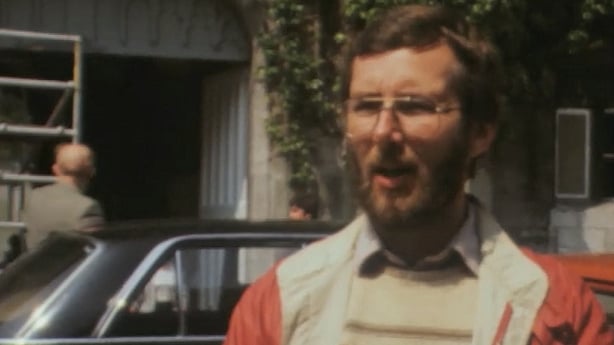
Dr Richard Gault also mentioned Bishop Eamon Casey and Michael D Higgins as keen opponents of Reagan's activities in Central America. He saw President Reagan's visit to Ireland as an opportunistic attempt to rally electoral support from the Irish in America.
UCG student Gerald Lenihan supported the visit and the conferring of President Reagan arguing that Ireland needed as much US support as possible from an economic and employment perspective. However, fellow student John Fannon opposed Reagan's foreign policies and felt that his visit was inappropriate.
The reporters were Jim Fahy and Alan McCullough.
1986: The Donegal disco doubling as a nuclear bunker
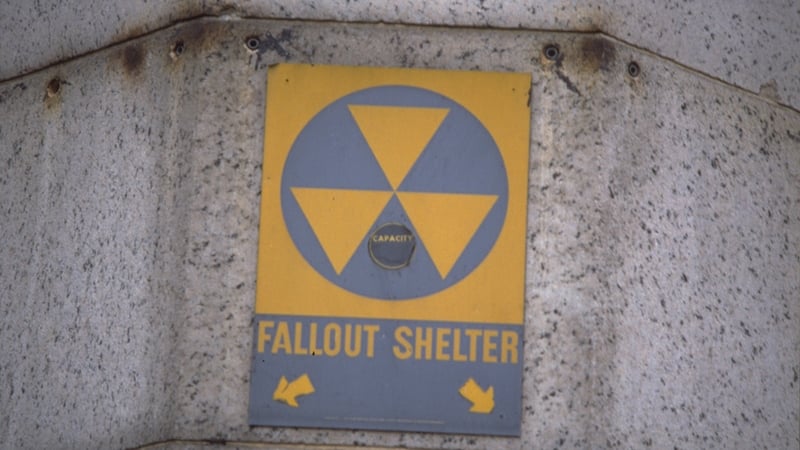
On this week forty years ago, a Donegal hotel prepared for nuclear disaster and hoped to make some money in the process. Jackson's Hotel in Ballybofey, County Donegal was making an underground disco available as a nuclear shelter at a price of £250 a head.
In a 'Morning Ireland' report broadcast on 29 May 1986, Barry Jackson, manager of the hotel, described the facilities on offer and believes that the disco could hold 400 people comfortably in the event of a nuclear accident.
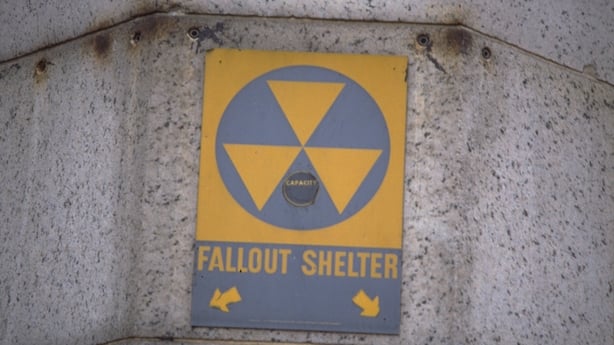
He rejected the notion it was cashing in on people's fears as a result of the then-recent Chernobyl disaster. When asked about the public interest in his venture Barry Jackson says,
We've had nobody paying up front yet.
The reporter was Cathal MacCoille.
1995: The end of the Irish Press
Once the most popular paper in the country, after 64 years in print The Irish Press newspaper shut down on this week 31 years ago. The Irish Press published its last issue on 25 May 1995. Once part of Ireland's most popular chain of newspapers, circulation had fallen to just 38,000 a day, half of its 1989 figure. The Irish Press was founded by Éamon de Valera and first published on 5 September 1931.
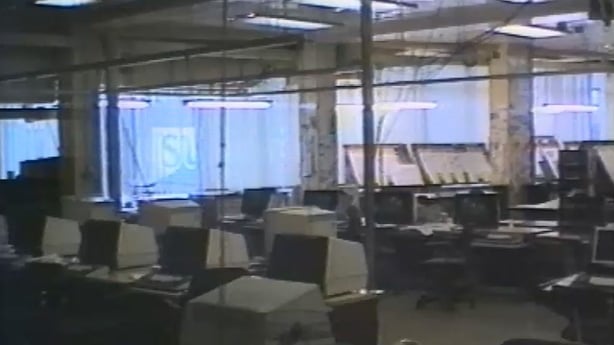
Work at the newspaper came to a standstill when staff heard that management had dismissed business editor Colm Rapple for writing what they regarded as a disloyal article in The Irish Times. Attempts to mediate ran into the night as staff waited to see how management would respond. Earlier that day, the newspaper suffered a double blow, when the Supreme Court overturned a High Court order that American businessman Ralph Ingersoll pay The Irish Press group £6 million in damages. The financially precarious newspaper group would now have to pay Ingersoll £4 million.
In this 'Prime Time' report from 25 May 1995, Ursula Halligan visited The Irish Press offices as it became less and less likely that a new issue will be printed the following day.
This week in arts and entertainment
1979: Busking in the Dandelion Market
On May 29th 1979, the programme Aisling Gheal reported on musician Justin O'Mahony as he busked in the laneway into the legendary Dandelion Market at Gaiety Green in Dublin.
The Dandelion Market Dublin moved to Gaiety Green next to Saint Stephen's Green in 1973 where it remained until the development of the Saint Stephen’s Green shopping centre got under way.
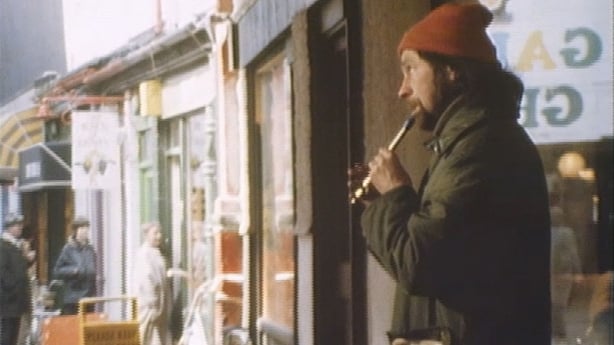
In this clip, traditional musician Justin O'Mahony plays his own composition on the tin whistle, a reel entitled `Oíche sa mBridewell' in the lane on the way into the Dandelion Market. The song’s title can be translated as 'A Night in the Bridewell Garda Station’. The melody came to him one night when he was held in the Bridewell and had nothing else to do but come up with a tune.
Justin O’Mahony died a few months after the filming of this footage.
1991: The opening of IMMA, the Irish Museum of Modern Art
On this week in 1991, one of the oldest buildings in Ireland became the home of our newest museum. Declan McGonagle, Director at IMMA, talked to Mary O'Sullivan about art in the modern world and the role that IMMA would play. McGonagle has already forged links with locals in Kilmainham through a community based mural project, an approach he used to get local people involved in art while he was Director at the Orchard Gallery in Derry.
Prior to opening, young artists like Ken Hardy were invited to take up residence at the museum for four weeks. Ken Hardy used the walls of his room to recreate elements of our social history, an example of which was an eviction scene. He described the context for his work at the Royal Hospital as part of our post-colonial inheritance. The work he has illustrated directly on the wall was ephemeral and would be simply painted over after it has been exhibited.
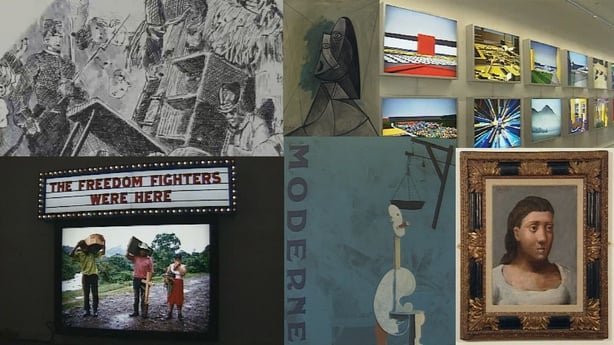
Another artist in resident Marie Foley worked on a smaller but more permanent scale creating tiny sculptures from porcelain, wood and slate. She described how having artists in residence allows visitors to see how they work in a studio environment. Meanwhile Tyrone artist Finbar Kelly found his use of colour was heavily influenced by his residency at Kilmainham.
The report said the works of these artists in residence would be on display to the public along with other more permanent collections and temporary exhibitions. According to McGonagle the opening exhibition emphasised diversity with loans from two European museums along with donations, providing visitors with a full experience of a series of moments in art in the twentieth century.
We have an enormous public responsibility to speak to as broad a spectrum of the public as possible... to present the highest standard of art to the broadest range of people possible.
This episode of Summer Express was broadcast on 28 May 1991. The reporter was Mary O'Sullivan.
This week in sports
2001: Samba soccer comes to Ireland
On 28th May 2001, World Cup winner with Brazil Jairzinho gave some young Irish players tips on the beautiful game at a Samba Soccer launch.
Hundreds of thousands of youngsters would take part in sports summer camps and training camps all over Ireland in the coming weeks.
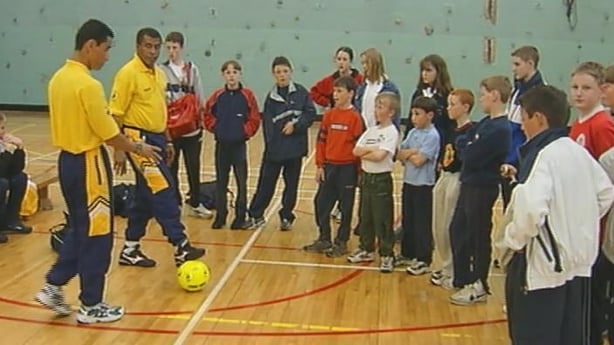
The Samba Soccer School based its courses on Brazilian training techniques. And in Dublin 25 years ago, Jairzinhno (Jair Ventura Filho) a former Brazilian international and member of the team that won the 1970 FIFA World Cup was passing on his street football skills to Irish kids. He said,
The Brazilians are very natural soccer players...this is what we do.
Soccer in Ireland has become very competitive, said Ronnie Carroll from Samba Soccer, but the emphasis here is on enjoying the sport.
Samba soccer is completely focused on...lots of fun throughout the whole week.
An RTÉ News report broadcast on 28 May 2001. The reporter was Gareth O'Connor.
1988: Horse-racing nuns
On this week in 1988, Sister Anne Neylon galloped to victory on Sweet Devine in world's first Nun Run at the Trim Pony Races. Thousands of people came to see nuns swap their habits for riding breeches and try their hand at being jockeys at the Trim Pony Races in County Meath. An anonymous donor has given £1000 prize money for the first nun past the post in the one and a half mile flat race, and the proceeds will go to local charities and a Dublin inner city youth programme.
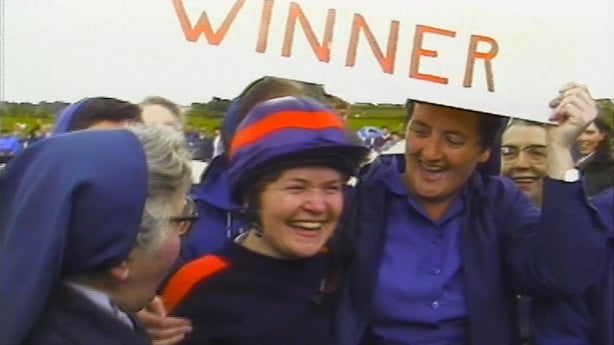
Prior to the race, a nun on her pony Holy Moses declared herself to be
confident as Moses passing over the Red Sea.
The race was won by the bookies' favourite, Daughter of Charity Sister Anne Neylon from Raheny in Dublin. She galloped across the finishing line on her pony Sweet Divine to win the Nun Run Perpetual Trophy. Before entering her religious community, Sister Anne worked as a stable girl in the Captain Stone stables in Ashtown, County Meath.
The reporter was Gerry Reynolds.
What was Number 1 in Ireland this week?
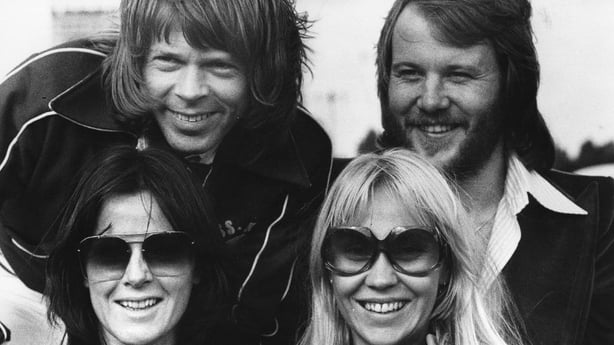
1976: 'Fernando' by Abba
The Swedish fourpiece dominated the Irish charts in the mid-1970s. 'Fernando' was at the top of the charts for six whole weeks in 1976.
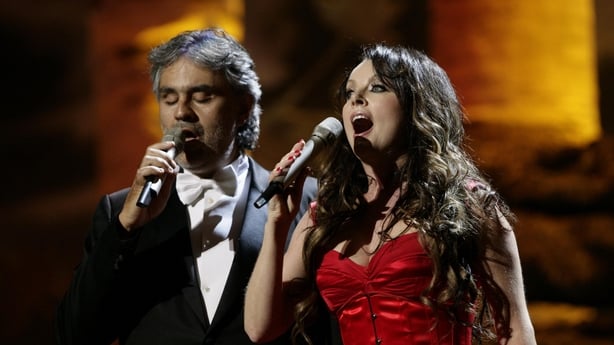
1997: 'Con te partiro (Time to Say Goodbye) by Sarah Brightman and Andrea Bocelli
This operatic song was number one for two weeks 29 years ago.
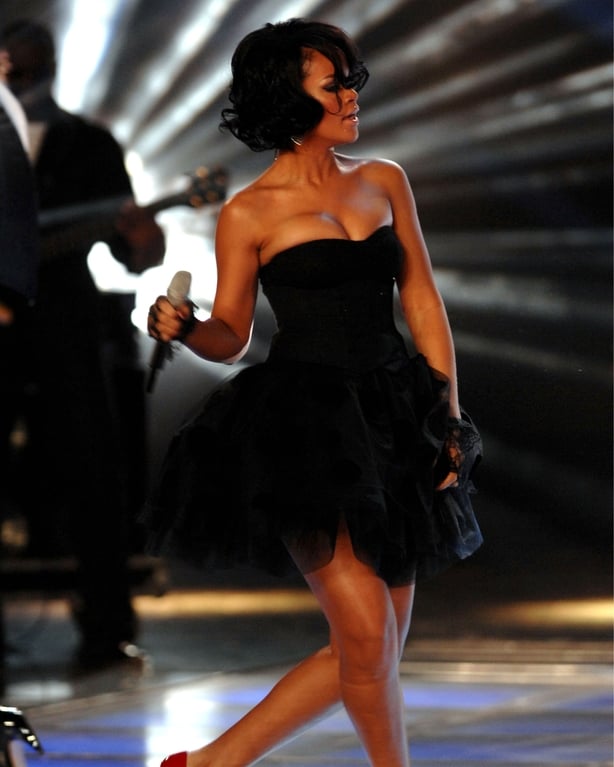
2007: 'Umbrella' by Rihanna featuring Jay-Z
This memorable song was a massive hit for Rihanna 19 years ago, staying at the top of the charts for eight weeks.
Famous Irish names celebrating birthdays this week
Philip Treacy
The iconic milliner turns 59 on May 26th.
Ryan Tubridy
The broadcaster celebrates his 53rd birthday on May 28th.
Colm Meaney
The actor will be 73 on May 30th.
