Government sets national carbon dioxide limit for industry. If exceeded, companies face financial penalties.
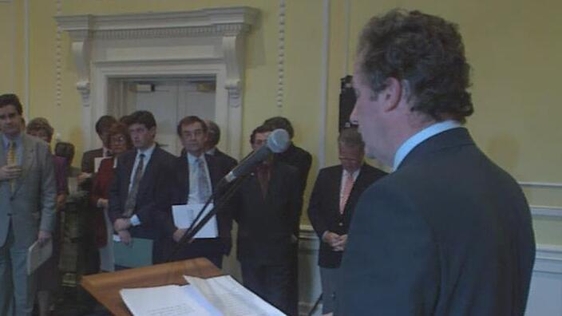
A system of regulating how much carbon dioxide Irish industry can produce, before risking financial penalties, has been published by the Environmental Protection Agency.
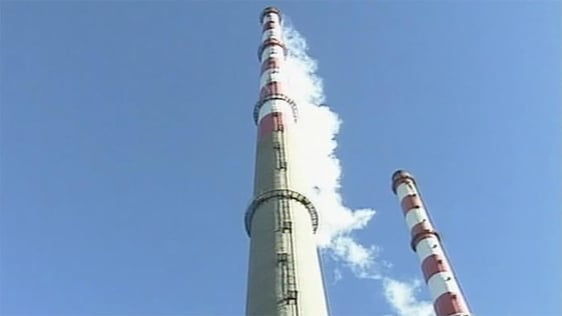
Burning fossil fuels produces carbon dioxide, known as CO2, which increases global warming.
Global warming causes unpredictable weather patterns such as floods and droughts. Under the Kyoto Protocol, Ireland promised to keep CO2 production at 13 per cent above 1990 levels. However, these promises are proving difficult to keep, with levels currently at 16 per cent.
The government strategy for industry is to set a national CO2 limit, which becomes operational in 2005 and will run for three years. The Environmental Protection Agency (EPA) has also set an individual cap on emissions for the top 100 companies. Companies exceeding these limits face a financial penalty. Through carbon trading, those that exceed their cap will be forced to buy carbon credits from companies which came under the limit.
Environmentalists have claimed that industry is not going to pay enough and the cost will go to the taxpayer if Ireland fails to abide by the Kyoto Agreement. Pat Finnegan of the Greenhouse Ireland Action Network says that the taxpayer could face a bill of €275 million every year from 2008 onwards. Donal Buckley, IBEC, says that Minister for the Environment Martin Cullen has addressed some of the issues around competitiveness but warns that businesses could face significant costs.
An RTÉ News report broadcast on 23 February 2004. The reporter is Paul Cunningham.