


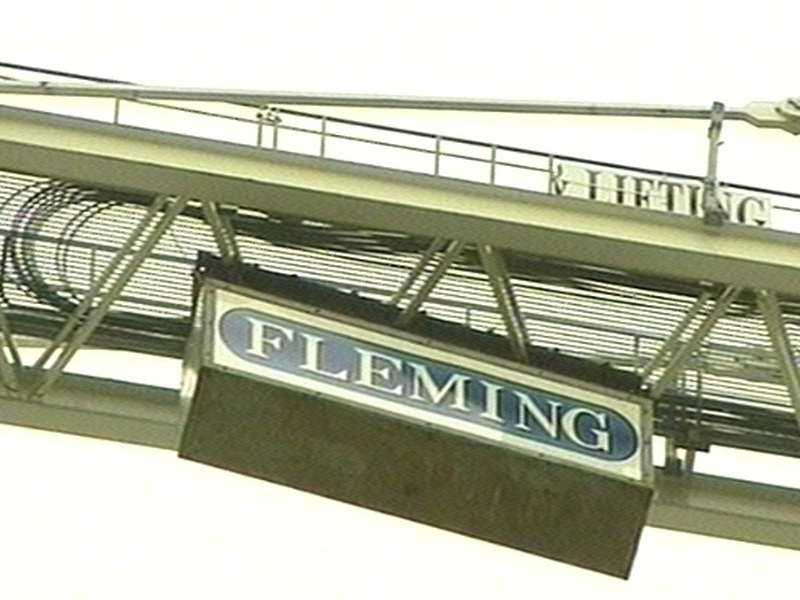
The future of 137 jobs at the Fleming construction group are under threat, after the Supreme Court overturned a decision by the High Court to approve a survival plan for the Cork based building group.
Today's unanimous decision by five judges of the court comes on foot of an appeal taken last year by Dutch owned ACC Bank against the High Court's ruling in relation to John J Fleming Construction, JJ Fleming Holdings and Tivway. They collectively have debts of over €1 billion, including €260m owed to Anglo Irish Bank.
ACC is owed €21.5m by the group, which is controlled by Cork developer John Fleming. Last July, the companies applied for and received High Court protection, when ACC moved to recoup its money.
An examiner then devised a scheme of arrangement aimed at securing the future viability of the companies. That plan, which had the backing of all the companies' creditors, except ACC, was then approved by the High Court last November.
But ACC challenged the decision in the Supreme Court in December, arguing that the plan contained no commitment of continuing financial support from its bank creditors, and amounted to a personalised NAMA.
This morning the Supreme Court granted that appeal.
In a 30 page judgement delivered by Ms Justice Susan Denham, with which the four other judges concurred, the court found the three schemes of arrangement for the three companies do not provide for the survival of each as a going concern.
Rather, it said, the schemes provide for the survival of the companies in a holding plan over the next ten years in the hope that during that time the property market will improve and the banks will support continued construction of their projects.
This, according to the Supreme Court, does not meet the legal parameters of the legislation.
The court said that the active part of John J Fleming Construction, which it describes as the engine of the group, will be sold, and will no longer be within the company. The remaining undertaking, it said, is moribund as a consequence of the property crash.
It would be held for ten years in the hope that the property market would improve. This, the court found, is an aspiration based on hope, and therefore it found the company has no prospect of survival.
It also found that Tivway is insolvent, has not plans to finish building out its properties, and no longer has the promise of sufficient investment to realise its plans.
It says that while it is understandable that the companies and the banks would prefer to hold a land bank with the hope of some return over ten years, and unsecured creditors would prefer the hope of some return rather than none, that is not the test to be applied by the court in permitting an examinership.
The court also points out that the examiners said the third company, which is a holding company, has not future if the other two cannot survive.
In conclusion, Ms Justice Denham said that the facts of the case are bleak and epitomise the consequences of the recent property boom.
