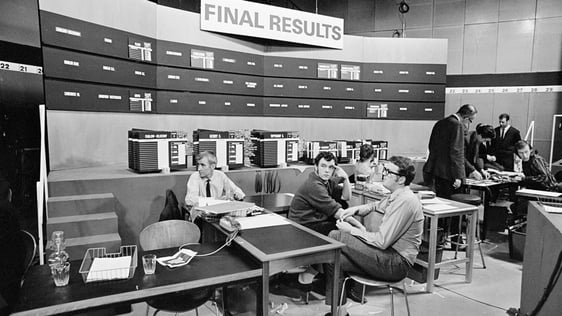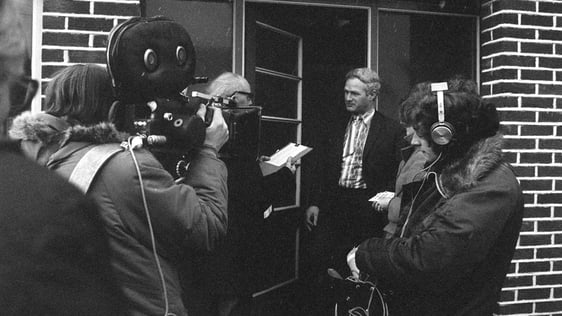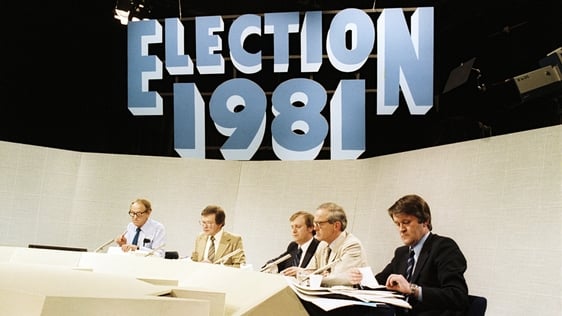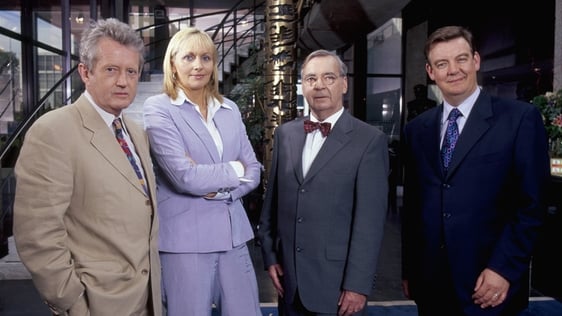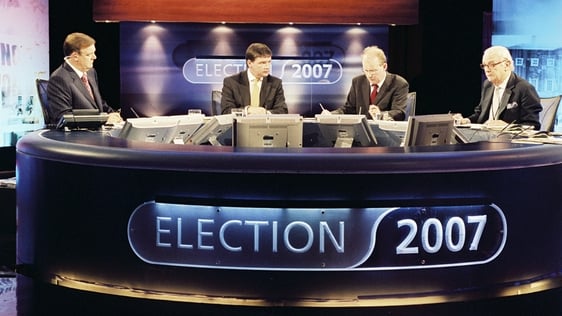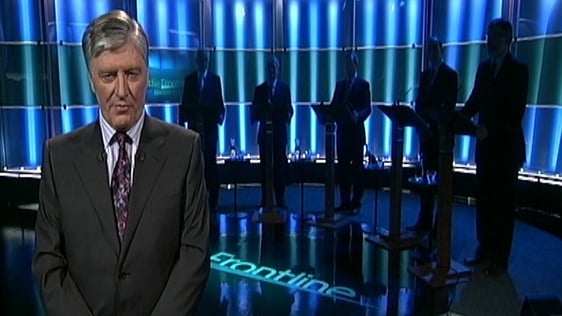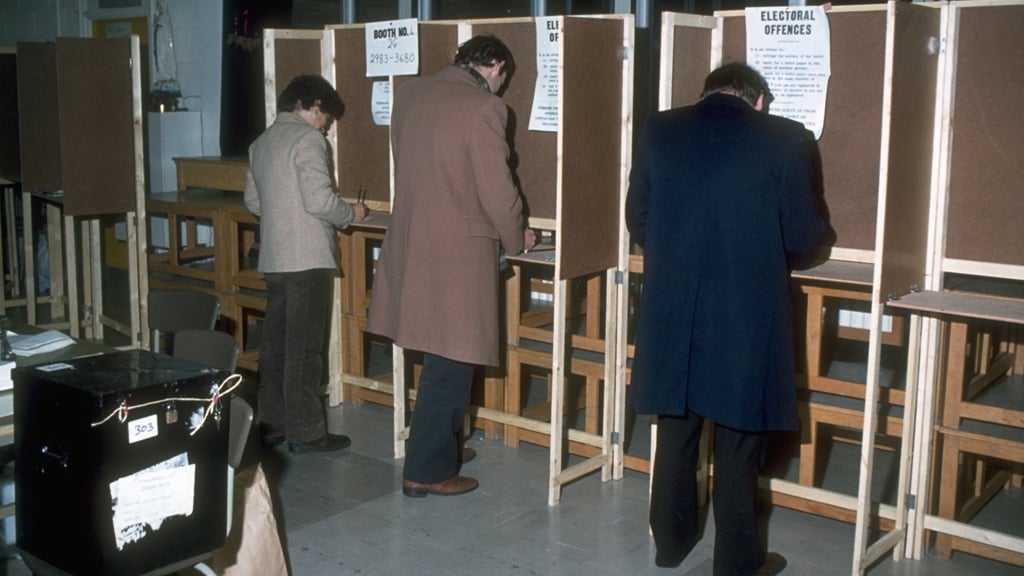
Television and radio coverage of the 1965 General Election signalled the start of a new era for political reporting. Television was a potentially powerful tool for election candidates to use in promoting their policies, but it was a new means of communication and one that had yet to be mastered. Now for the first time, the Irish electorate could see and hear politicians as they campaigned. Analysis, comment and reaction to election results created a new spectator sport as RTÉ television gave over its entire day's output to covering the count.
Radio too for the first time devoted over eight hours of its schedule to results and analysis. One commercial traveller wrote to the RTV Guide, "I was glued to my set all day, and I'm afraid that my business was nearly pushed into second place". Election junkies were now guaranteed their fix.
Extensive coverage of the build-up to a general election and the results from the counts are now an essential part of RTÉ output. Since 1965, RTÉ audiences have watched and listened to generations of politicians make and break promises and debate with their adversaries. Cameras and microphones have been there to record the reaction of the victorious and the vanquished as political careers are born and die.
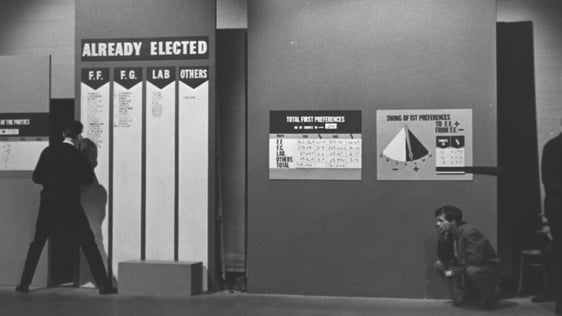
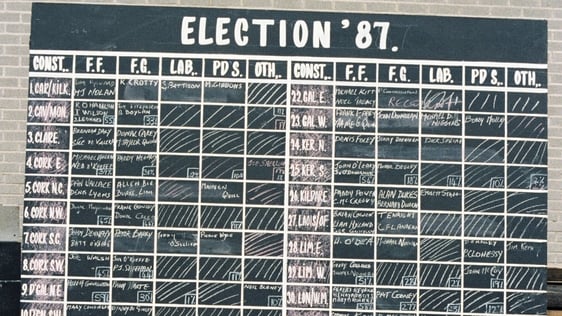
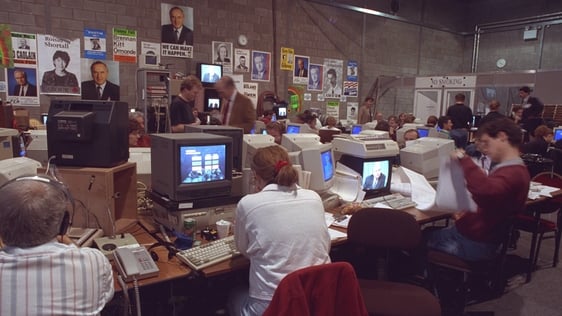
Politicians have moved from addressing rallies at church gates to blogging online. RTÉ has moved from using chalk and blackboard to providing detailed computer analysis of results that are delivered on air, on screen and online.
Revisit moments of drama, entertainment and history from RTÉ television and radio coverage of the last twelve general elections.
Compromise is difficult for the supporters of both Labour and Fianna Fáil as the parties look to form a coalition government.
Candidates give their reaction to the electronic counts on 'Morning Ireland'.
Anne Butler tells Marian Finucane and 'Liveline' listeners how she lost her job as a presiding officer in Bruff after being photographed shaking hands with Bertie Ahern.
Early morning commuters give their reaction to the previous night's televised debate between John Bruton and Bertie Ahern.
Dr Mossajee Bhamjee became the first Muslim elected to the Dáil when he was elected as a Labour deputy for Clare. Cliona O'Flynn's radio documentary the 'Indian from Clare' looks back on the election of the popular psychiatrist.
With difficulties again arising in the formation of a government Liam Cahill reports on the Dáil debate on the election of a Taoiseach.
The Sunday Independent newspaper runs a competition offering £250,000 to anyone who can predict the election results.
On the "News at Six-Thirty", political correspondents Sean Duignan and Michael Mills discuss the choices for the Labour Party after the election and the position of Haughey as leader of Fianna Fáil following Des O'Malley's call to "let the hare sit".
Albert Reynolds of Fianna Fáil and Ted Nealon of Fine Gael give their opinions on who will lead the country on the morning of the election of the Taoiseach.
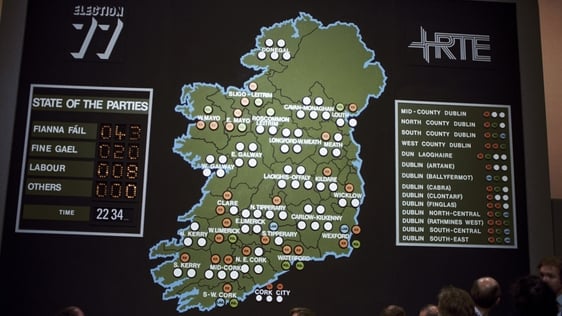
On 'Election '77 Special', Eoin Ryan, director of elections for Fianna Fáil, explains his hopes that the song would get young people interested in the election. Richie Ryan and Seamus Scally, the directors of elections for Fine Gael and Labour, are not impressed with Fianna Fáil's attempts to get into the charts.
On the morning of the election of a new Taoiseach, several deputies attended a special mass at the Pro-Cathedral in Dublin. With the issue of who would form the next government still in doubt, a number of deputies offered their opinions.
Des O'Malley leader of the Progressive Democrats a party fighting its first general election is about to be elected and his party will go on to win 14 seats.
Rodney Rice joins candidates campaigning in County Louth and finds that the voters are somewhat sceptical about the promises being made by the politicians.
Radio also recorded politicians as they campaigned at public meetings around the country.
Radio panel discussion on the Leaders Debate between Michael Noonan and Bernie Ahern
With television reporting on an election for the first time, radio took a new approach to its coverage. From 3.00pm on the first day of the count, scheduled programmes were suspended.
The RTV Guide announced that "This re-scheduling of broadcasting is intended to provide listeners with a running story of the election count, with intervals for music when the flow slackens."
Paddy Lenihan of Fianna Fáil canvassing in Kilbeggan for the 1969 general election.
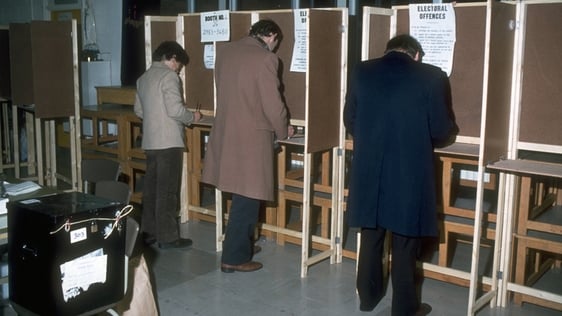
Canvassing the traditional way by addressing mass-goers at the church gates for the general election of 1969.
The general election of 1965 was the first to be covered by television.
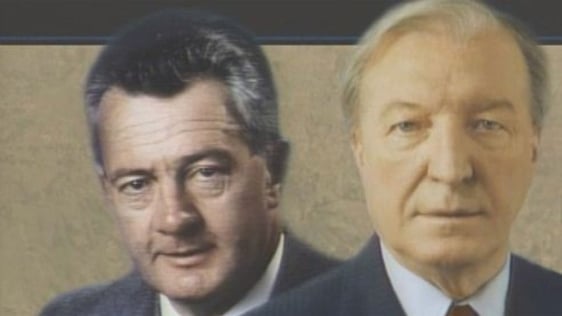
The leaders of the two main political parties face each other for the first time in a televised debate prior to a general election.
Kieran Doherty is elected for Cavan-Monaghan while on hunger strike in the Maze Prison while serving sentences for possession of firearms and explosives, and for hijacking.
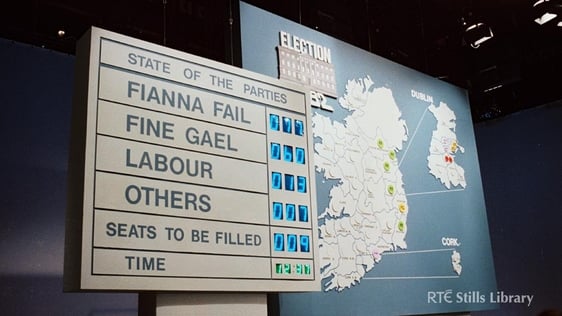
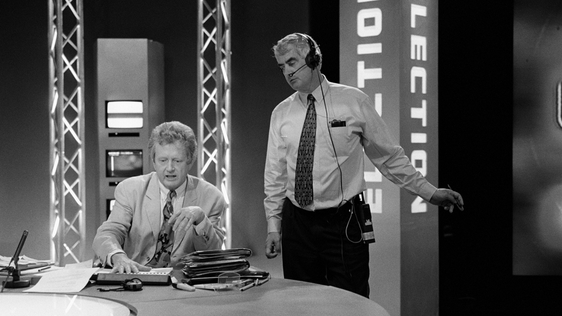
Pat Kenny describes the growing importance of computers in the television presentation and analysis of election results.
A look at the first election campaign for the Progressive Democrats a new politcal party.
When Garret Fitzgerald used the train as his mode of transport at the start of his campaign, it reflected the poor state of the Irish economy and the party coffers.
Chaotic scenes among jubilant Fianna Fáil supporters at an election count centre in Galway.
Taoiseach Charles Haughey speaks out strongly against the H Block activists who attempt to disrupt his election campaign.
Newly elected TD Tony Gregory outlines the problems in his constituency.
Although Northern Ireland and the Anglo Irish Agreement figured in the election debates, the main issues for the large population of youth were unemployment and emigration.
Jim Tunney is elected in Dublin North West and promises the nation and his mother that he and the Fianna Fáil party will do something about rates.
Candidate Sean D. Loftus changes his name by deed poll to ensure Christian Democrat appears on the ballot paper.
Television cameras follow Fine Gael leader Liam Cosgrave on the campaign trail. Cosgrave talks about the growing influence of television on politics and the electorate.
Taoiseach Liam Cosgrave admits defeat in the 1977 general election and that there will be a new government.
A behind-the-scenes look at what goes into covering a general election. This includes what can go wrong, including when a power cut takes coverage of the elections off the air.
RTÉ announces plans for broadcasting coverage of the 2007 general election using radio, television, teletext and the internet.
Such is the scale of the collapse of the Fianna Fail vote in the 2011 general election that when the count is complete it's conceivable that the party will only have one TD in the Dublin area.
With counting almost complete Fine Gael has a record number of seats while the Fianna Fáil vote has collapsed following the 2011 general election.
After the 1997 general election there are only twenty women who have seats in parliament.
Michael O'Riordan is the first person to stand for the Communist Party in a general election since the 1930s.
A look at how people were voting in rural Ireland including a woman who shouts her vote for the general and European elections of 1989.
After the 2011 general election the Green Party had no seats in the Dáil. RTÉ News looks back at the rise and fall of the Greens.
Pupils from St. Mary's National School in Offaly help explain the proportional representation system of voting prior to the 2011 general election.
All political parties had green issues in their manifestos for the 2007 general election. This report looks at the impact of the party campaigns on the environment.
Labour leader Dick Spring held his seat by just four votes after a total recount.
Nearly 40 years after television first covered a general election, the sheer scale on which Irish politics was now being reported is obvious from this report for 'The Week in Politics'.
Unlikely partners the Progressive Democrats and Fianna Fáil from a coalition government.
How important are election posters? Are they worth the cost? What impact do they have on the electorate?
Michael McDowell of the Progressive Democrats and John Gormley of the Green Party clash on the streets of the Dublin suburb Ranelagh.
With Fine Gael winning only 31 seats Michael Noonan is left with little choice but to resign as leader of the party.
Brian Lenihan of Fianna Fáil tops the poll in Dublin West, and becomes the first candidate elected by electronic voting in Ireland.
As the count in the Dublin South East constituency drags on John Gormley of the Green Party says it is time for computerised voting.
With over a third of the electorate in Dublin, 'Marketplace' follows five candidates in five city constituencies.
With electronic voting to be used for the first time in three constituencies, 'The Late Late Show' audience members debate the pros and cons of electronic voting as they see them.
Results take longer to emerge from the new electronic counting system than has been originally anticipated. This adds to the tension in the constituencies of Meath and Dublin North.
When the Labour and the Progressive Democrats parties both suffered heavy seat losses in the 1997 general election, the independent candidates and small parties benefited.
A look at two TDs in Waterford who lost their seats in the general election of 1989.
After ten days of counting in Dublin South Central, Ben Briscoe of Fianna Fáil beat Eric Byrne of Democratic Left to the last seat.
Eoghan Harris questions the validity of canvassing for votes door to door during elections in Ireland.
A look at the tallymen, a traditional form of political calculation unique to the Irish election system.
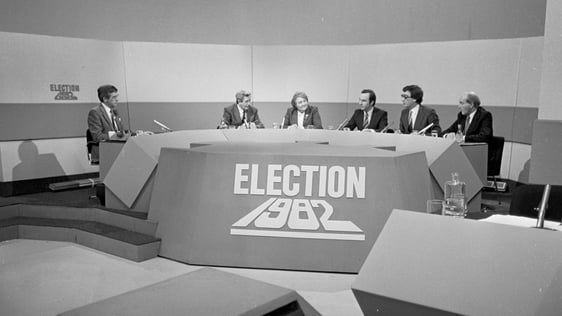
Mary Harney of the Progressive Democrats and Dick Spring of the Labour Party debate live on television.