
A number of people have been issued with fines for driving offences and others cautioned for public order offences during fuel protests in Northern Ireland.
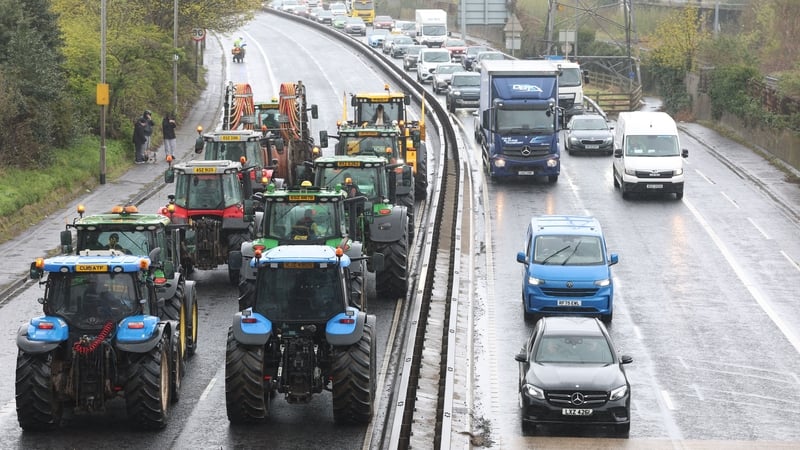
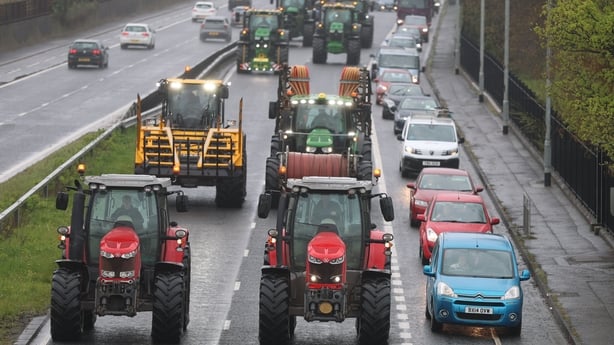
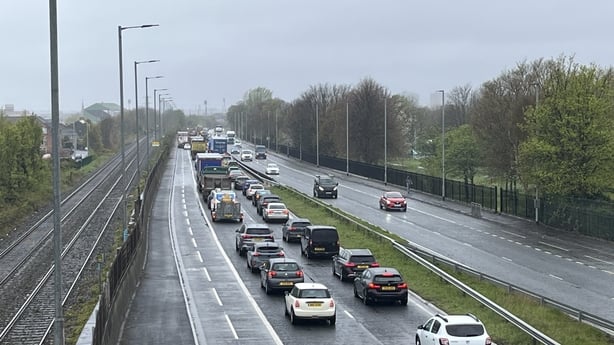
A slow-moving convoy of a dozen tractors caused extensive delays as they moved slowly along the dual carriageway past the Belfast City Airport, with some cars undercutting them on the cycle route to get past on the inside.
Tractors also converged at Sprucefield on the A1, which is the main route for Dublin bound traffic from Belfast and at the Sydenham bypass in the city.
Only one protest remains ongoing this evening.
A convoy is moving slowly in the area of the Ballygawley Roundabout in Co Tyrone. It is part of the main road between Donegal, Derry and Dublin.
The PSNI said it had policed events in a way that would prevent the protests escalating.
Chief Superintendent Norman Haslett said: "Today's policing operation was designed to minimise disruption to the strategic road network, maintain business as usual at critical infrastructure and to prevent escalation and prolonged disruption.
"The right to freedom of speech and freedom of assembly are fundamental human rights which are protected in law and allow individuals to engage in peaceful protest.
"However, these rights are balanced by the need to uphold the rights of others, protect public health and safety, minimise disruption to normal life and by the need to prevent and detect crime.
"An evidence-gathering operation was in place and we will now review the footage gathered in order to consider further prosecution for any potential offences."
The average price of petrol in Northern Ireland is around £1.53 per litre, the equivalent of €1.76.
It has risen around 30p a litre since the start of the Iran war in late February.
Diesel is an average of £1.86 - the equivalent of €2.14 - and has risen 50p a litre since hostilities began.
Agricultural diesel is currently selling at around £1.16p per litre, the equivalent of €1.33.
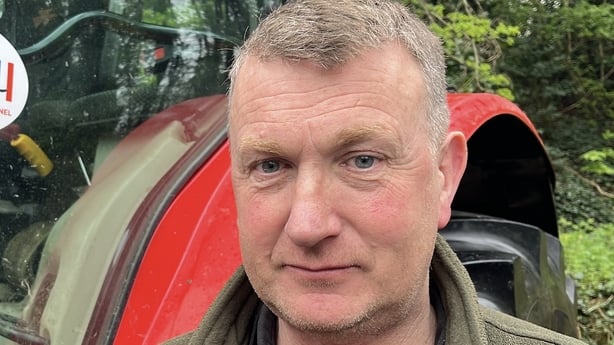
Dairy farmer Sam Hanna was one of around a dozen tractor drivers taking part in the Sydenham bypass protest in Belfast.
He said he had been motivated by the rise in price of agricultural diesel which is up around 50p a litre.
He said: "Fuel's not really that dear. If you take the tax off it. We have money for everything else. We can spend overseas.
"We can help people come into this company. We can't help our own people. We need to sort something out."
Last Friday, Stormont leaders wrote to the British prime minister demanding a financial package to address rising fuel and energy costs.
In a joint letter, First Minister Michelle O'Neill and Deputy First Minister Emma Little-Pengelley urged immediate action to help homeowners, hauliers, farmers and businesspeople.
"Families and businesses cannot continue to absorb these sustained increases without intervention which is why we are calling on the Prime Minister to bring forward a package of measures to support those under pressure," they said.
"This package should include a reduction in fuel duty to ease pressure on both households and businesses, targeted support for hauliers, farmers and SMEs and a comprehensive cost of living support package.
"Given the scale and immediacy of this crisis, we have asked the Prime Minister to act decisively and without delay."
Any reduction in excise on fuel - similar to the cuts in the Republic of Ireland - would be a reserved taxation matter and could only be delivered by the UK government.
Last month, the UK government delivered £17m for a scheme to help low income households in Northern Ireland deal with the spike in the cost of home heating oil.
It was Northern Ireland's share of a wider UK funding package.
The Communities Minister is yet to bring forward the scheme for approval by the Northern Ireland Executive, but there was a report that it could happen this week.
The SDLP, which provides the official opposition at Stormont, called for greater urgency from the Executive, alongside other measures such as
Meanwhile, Northern Ireland's farmers took their calls for support to the Stormont Assembly and Westminster yesterday.
A delegation from the Ulster Farmers' Union lobbied politicians in Belfast before travelling to London.
UFU president William Irvine said farmers were facing a "perfect storm" of rising costs for inputs like fuel and fertiliser combined with adverse weather.
"This latest surge in fuel and fertiliser prices is another serious threat to the viability of farm businesses across Northern Ireland."