
An organisation that has invested almost €1 billion into the Northern Ireland peace process over the decades is to announce a major change in direction, which will impact how future projects are supported.
The International Fund for Ireland has supported close to 7,000 projects in Northern Ireland and the border counties of the Republic of Ireland over the past 40 years.
The IFI will say that the next decade will be its last one and it will use a different approach in choosing things to fund.
Projects will no longer have to meet strict criteria for set programmes.
Instead, groups will be invited to apply through an open funding call, and direct partnerships will be adopted where a specific need has been identified.
People working in areas like social disadvantage, with young people, women, former paramilitaries, and those trying to break down barriers will continue to be supported.
It will also be looking to sports, arts and culture and to people who have not traditionally thought of themselves as peacebuilders.
"Ultimately, the IFI's objective is to ensure that the peace process is self-sustaining; by sharing the insights gained since our inception, we are focusing our efforts on transitioning leadership to local hands to ensure a lasting legacy," said IFI Chair Shona McCarthy.
Established by the Irish and British governments in 1986, most of the money has come from the United States, with the EU, Canada, Australia, New Zealand also contributing.
It has helped with everything from the physical regeneration of towns and villages to empowering people and communities.
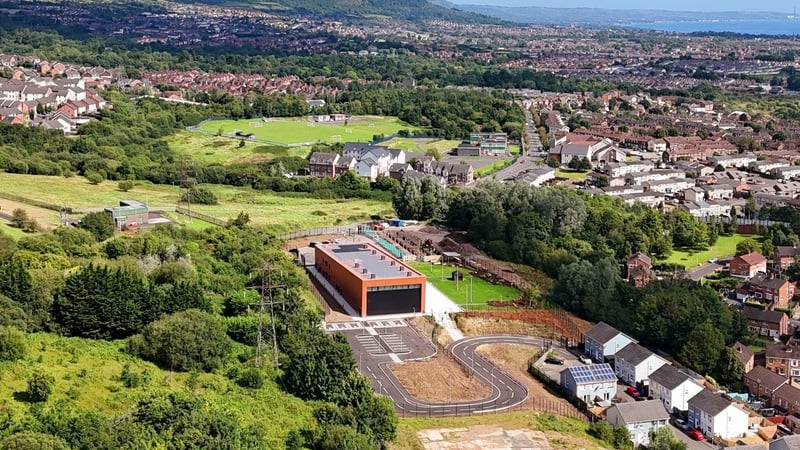
One such project is the Black Mountain Shared Space, a community hub at what was once a dangerous peace line in west Belfast.
A disused factory there had become a sectarian flashpoint. Instead of building houses on the site, the nationalist and unionist communities agreed to build a community space that both could access.
Millions of pounds were spent developing the Black Mountain Shared Space, which runs a series of programmes to improve community relations.
The main centre was built with EU money, and programmes in it are funded by the IFI.
Central to its work are Séamus Corr and Mark Vinton, who overcame initial suspicions of one another to develop a strong bond.
Mr Corr said developing the centre was a slow process which required building contacts and confidence before a brick was laid.
"We didn't want to rush into it, one of the key things was that we had the support and buy in from local people."
Mr Vinton said it took time for him and Mr Corr to trust one another when they began working together first in the mid-2000s.
They gave one another lifts to and from work, but were reluctant to tell the other exactly where they lived and would be dropped short of their homes.
One day, Mr Vinton gave Mr Corr his full address so he could drop down a parcel.
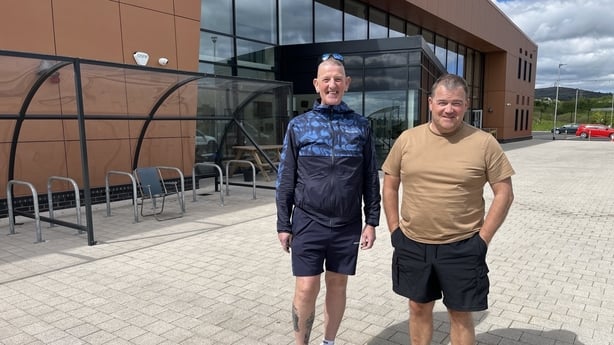
"That was the breaking down of a barrier and from that day on we just started dropping each other off at our own houses instead of around the corner," he said.
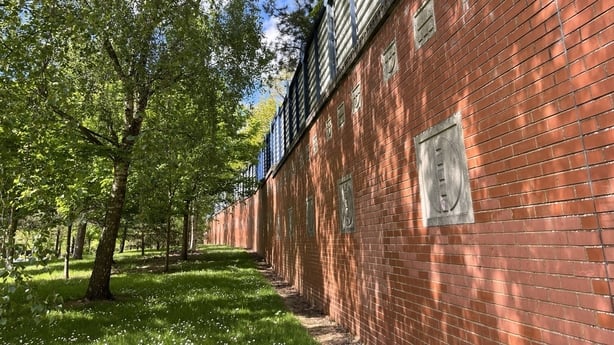
The Black Mountain Shared Space is right beside one of Belfast's biggest peace walls, reinforced in the 1990s and which is now said to contain a million bricks.
It separates two communities, one Catholic and one Protestant.
Mr Corr said taking it down would be a major challenge, but by engaging in cross-community projects the people living in the shadow of the wall are getting around it in different ways.
"The million-brick wall, we always knew that was going to be the big challenge.
"I see it from a different perspective. It's still there but it doesn't serve the same purpose.
"We now have a site, literally a hundred yards from it where two communities circumvent that wall now to come in and meet and participate in our programmes."
We need your consent to load this rte-player contentWe use rte-player to manage extra content that can set cookies on your device and collect data about your activity. Please review their details and accept them to load the content.Manage Preferences