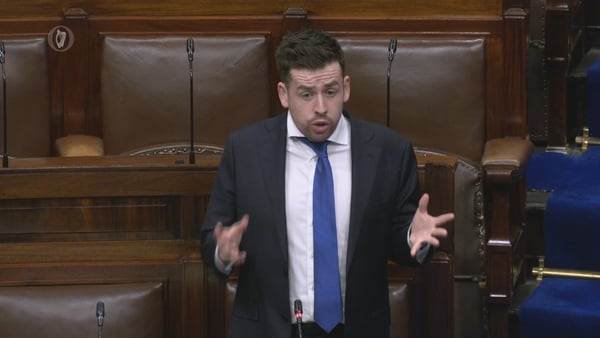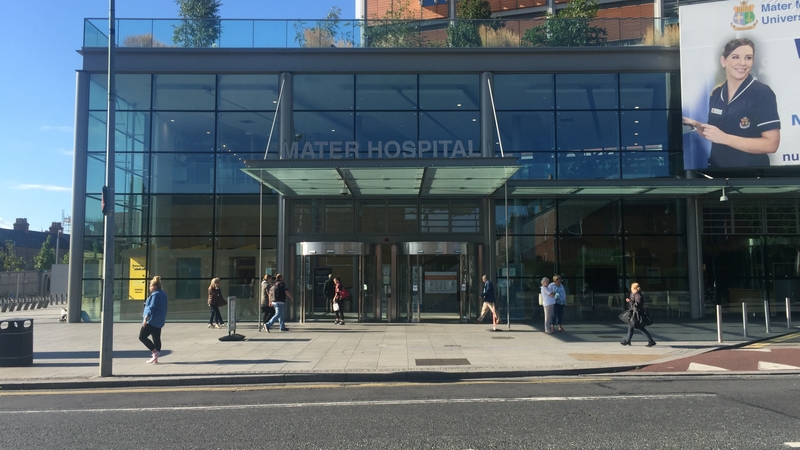

A hospital chief executive has highlighted to the Public Accounts Committee (PAC) what she believes are shortcomings in the way the HSE funds voluntary hospitals.
Chief Executive of the Mater Hospital Josephine Ryan Leacy told politicians that the current funding model was not "keeping pace" with demand or the needs of patients.
This morning, PAC heard from representatives of the Mater Misericordiae University Hospital, St Vincent's University Hospital and Tallaght University Hospital in Dublin.
Ms Ryan Leacy told politicians that the HSE's current annual service arrangement process had a single-year focus and that this was in need of reform.
"We believe the current funding model is not keeping pace with the evolving nature of demand or the increasing complexity of patient needs.
"The current HSE arrangement and funding processes are in urgent need of reform in order to allow hospitals to operate with improved longer-term service delivery and transparency," Ms Ryan Leacy said.
She said last year, if it was not for a "risk-sharing" deal reached with the HSE, allowing the Mater to reach a break-even position, essential patient services would have to have been reduced or suspended.
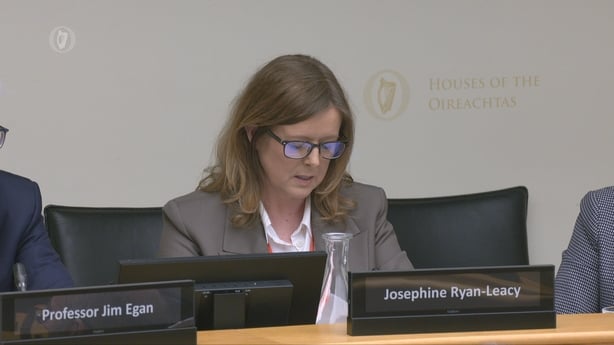
She said despite "clear growth" in demand and activity year-on-year. negotiations with the HSE often begin from the previous year's baseline.
Ms Ryan Leacy said that effective financial planning, workforce recruitment and service development is often undermined as agreements are generally not reached until late in the financial year.
She added that this process does not support the operation of a big, national hospital.
She said there is a "strong case for moving to a multi-annual, activity based funding, linked not only to volume of activity but also to patient complexity, age profile and national referral responsibilities".
Ms Ryan Leacy said this would provide greater transparency, improved multi-year capacity planning, better value for money and improved accountability.
Section 38 arrangements
In 2024, Mater, St Vincent's and Tallaght university hospitals together received more than €1.5bn from the HSE under what is known as Section 38 arrangements.
These arrangements relate to the HSE entering into agreements with non-statutory agencies to provide health or personal social services.
Ms Ryan Leacy said that insourcing has provided "a safe, closed loop system of access for long-waiting public patients and better value for money for the Exchequer and taxpayer".
She told politicians: "The Mater confirms that all NTPF-related activity is fully compliant with NTPF process and requirement.
"We further confirm that no conflicts of interest have been identified involving any staff in relation to NTPF funded activity."
CEO of Tallaght University Hospital Barbara Keogh Dunne told politicians she had noted what she described as an unusual arrangement on outsourcing work for one department.
However, she was unable to name the firm which is contracted due to commercial sensitivities.
She said that around 63,000 patients had attended Tallaght's emergency department last year - an increase of 8% on the previous year and an increase of 11% in the number of patients who presented who are over the age of 75.
She said this trend has continued into the first quarter of this year, adding: "With the 12% increase in attendances and a 6% increase in admissions compared to the previous year, despite improvements in patient flow."
"The hospital runs at an occupancy rate of 110% to 115% resulting in delayed admissions through the emergency department," she said.
"There were almost 205 205,000 outpatient attendances in 2025 and that's an increase of 5.5% on the previous per year," she added.