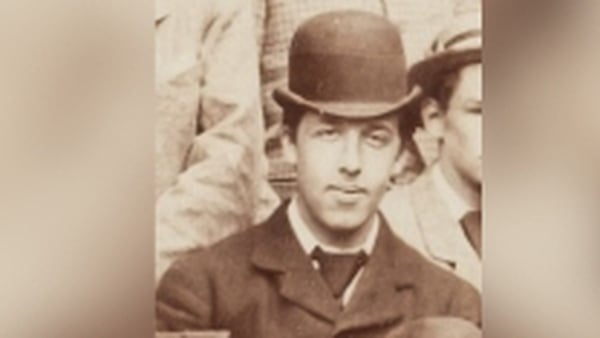
President Catherine Connolly has laid a wreath at the graves of the executed 1916 Rising leaders as part of the annual commemoration ceremony at Arbour Hill in Dublin.
It was the 102nd State commemoration for the executed leaders of the Rising and others who fought in the armed insurrection in April 1916.
The first ceremony took place after the end of the Civil War in 1923, more than 100 years ago and the first State commemoration took place the following year in 1924.
Arbour Hill is the final resting place of 14 of the executed Easter Rising leaders, including the seven signatories of the Proclamation of the Republic.
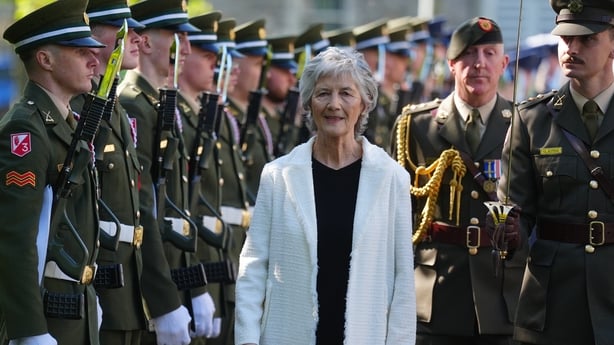
President Connolly, Taoiseach Micheál Martin, Tánaiste Simon Harris and Minister for Defence Helen McEntee attended the ceremony, along with family members of the leaders and others who fought in the Rising.
A guard of honour was formed by the 3rd Infantry Battalion when they arrived, with music provided by the Army band.
Inside the Church of the Most Sacred Heart, a mass was held with interfaith representatives, politicians, dignitaries, and family members in attendance.
President Connolly then laid the wreath at the graves, commemorating all those who died, and a minute's silence was held.
Following the mass, the grave of the leaders was blessed by Auxiliary Bishop of Dublin Paul Dempsey, and prayers and reflective remarks were offered.
Ceremony 'sad but beautiful'
Afterwards family members and descendants of the leaders and those who fought in 1916 spoke of the importance of this annual event.
Lucille Redmond, whose grandfather was Thomas MacDonagh, Rising leader and signatory of the Proclamation, said the ceremony was "sad, but beautiful".
She said: "I remember holding my mother by the hand, she'd always gripped my hand hard when they played The Dead March from Saul.
"She was 13 months old when her father was killed and it came hard on her."
Watch: Families of 1916 Rising leaders speak of importance of State commemoration
Honor Ó Brolcháin, whose grand uncle Joseph Plunkett was also one of the seven signatories of the Proclamation, said she had been attending the annual ceremonies since she was a child.
"My mother told me that when they came first all of the bodies were in the corner of the yard altogether.
"The sergeant when they were being buried went and told the government in the 1930s where they were and what their names were, and their names were on the bodies.
"So we've progressed through all these different stages ... so it's very important I try to get here every year.
"To see it in effect would have been extraordinary. It's odd being a representative but a privilege in every way," she said.
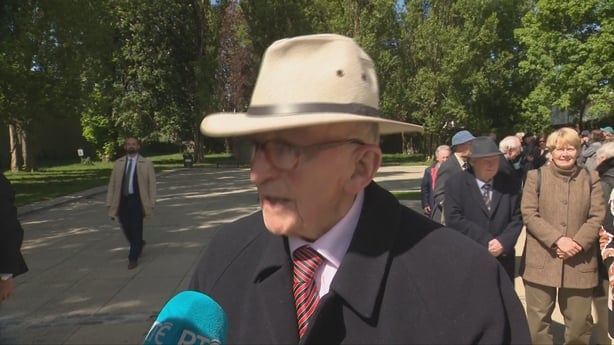
90-year-old Harry O'Hanrahan's granduncle Micheál O'Hanrahan was third in command under MacDonagh and Major John MacBride at Jacob's biscuit factory during the Rising.
He was also executed on 4 May 1916.
"It's very important for my grandchildren and great grandchildren. It's something we should be proud.
"He was a young man, didn't even have time to be married.
"I have great recollections of his sisters, they used to invite us to tea in Dublin and we'd go every year," he said
The event is held on the first Wednesday on or after 3 May of each year and is the longest-running State ceremony to commemorate the 1916 Rising.