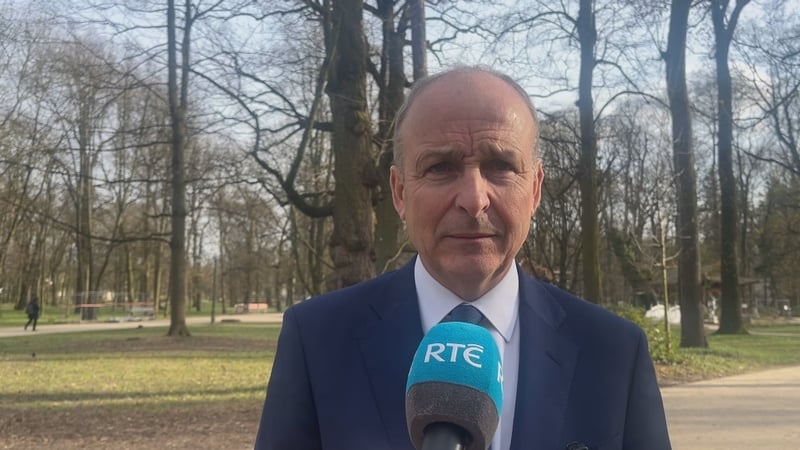

Taoiseach Micheál Martin has said the current energy crisis arising from the US-Israeli war on Iran is "probably the worst ever".
Iran closed the Strait of Hormuz in response to the United States and Israel attacking the country on 28 February.
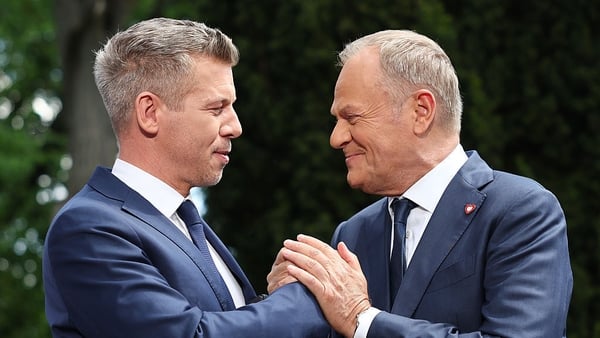
Mr Martin held talks with Finnish Prime Minister Petteri Orpo in Helsinki, before travelling to Warsaw to meet Polish Prime Minister Donald Tusk.
The talks form part of a series of meetings that the Taoiseach is holding with leaders before Ireland takes over the six-month Presidency of the Council of the European Union in July, which he said would be shaped by a focus on the bloc's competitiveness, security and values.
Speaking in Warsaw, Mr Martin urged people to use energy "as wisely as possible".
"The supply shock is probably the worst ever, much more severe than even the 1970s supply shock.
"So, on two fronts, inflation, inflationary impacts of the war, and secondly, of course, the supply implications.
"We've set up a subgroup specifically to look at the supply issue and there will be ongoing advice in terms of the conservation of energy and urging people to use it as wisely as possible and that's being kept under constant review," he said.
In Poland, the government introduced a price cap on fuel, effective from today, and the cap will be set daily by the Polish energy minister.
However, Mr Martin ruled out a similar approach from the Government, adding that Ireland had a different energy mix compared to the Polish market.
"We took one of the largest relief packages last week in terms of helping to ease the pressure that's on people at the pump, and the fuel allowance that will benefit the most needy families.
"We have to be cautious in terms of how we intervene, but we are very concerned in terms of the secondary impacts on the economy. And that's why we would urge that the war would end," he said.
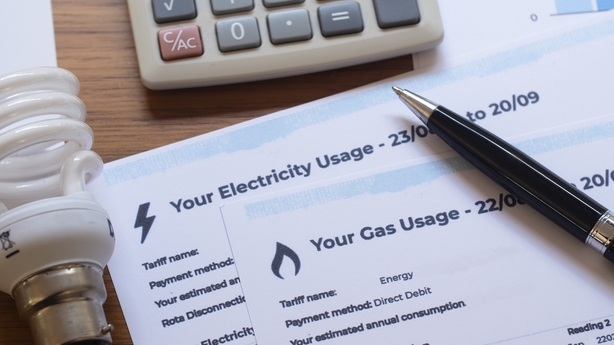
Meanwhile, Minister for Transport, Climate, Energy and the Environment Darragh O'Brien met energy ministers from across the EU in Brussels.
He said the talks took place against a "rapidly evolving geopolitical backdrop".
Mr O'Brien welcomed a letter from European Commission President Ursula von der Leyen "containing a toolbox of solutions for high energy prices".
He said he looked forward to receiving more details next Wednesday on new proposals on network charges and electricity.
"I will continue to engage with our international partners in the EU, and we must include trusted third countries like the UK in our coordination efforts," he said.
Mr O'Brien said Ireland will benefit from measures aimed at relaxing the Gas Storage Regulation requirement to refill gas storage to 80% rather than 90%.
"Although Ireland does not have storage facilities, we see the benefit of this to reduce the demand for gas from the EU, reducing further upward pressure on gas prices for us," he said.
EU says 'necessary' to reduce fuel demand to cope with energy crisis
The EU has urged member states to try to push down domestic demand for fuel and prepare to secure oil supplies, warning of potentially prolonged effects of the Middle East war on energy prices.
"It is clear that the more you can do to save oil, especially diesel, especially jet fuel, the better we are off," EU energy commissioner Dan Jorgensen told a press conference in Brussels.
"We are in a situation that might worsen where indeed, demand reduction is necessary," he added, after video talks with energy ministers from the 27-nation bloc.
The European Commission has repeatedly said supplies are not an issue at this stage for the bloc, but high prices are a matter of concern.
To ease the impact of the war, EU countries have contributed to the release of about 400 million barrels of strategic reserves under the coordination of the International Energy Agency (IEA) - the biggest such release.
But Mr Jorgensen said governments needed to prepare for a "potentially prolonged disruption of international energy trade".
"We need to act already now, and we need to act together," he said.
Additional reporting AFP