Survivors of institutional abuse have called on the Government to end "a pattern of exclusion" across State redress schemes.
Thousands of people remain locked out of compensation, recognition and essential supports according to the Special Advocate for Survivors Office.
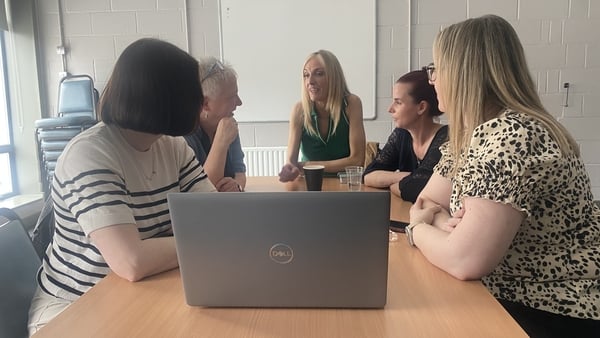
At a press conference this afternoon, concern was raised over survivors being retraumatised by existing redress systems because of eligibility criteria and exclusion.
Those in attendance described a hierarchy of abuse where eligibility rules determine who receives recognition and financial redress and who does not.
The Special Advocate said survivors and people affected repeatedly report difficulties in accessing supports and redress schemes.
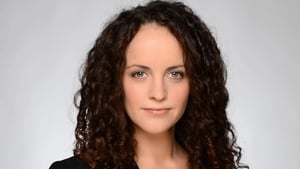
Patricia Carey raised a number of concerns about barriers, lack of awareness, restrictive rules and unequal treatment across different survivor groups.
There was criticism of the Mother and Baby Institutions Payment Scheme's 180-day rule which means individuals who spent fewer than six months in eligible institutions cannot qualify.
Noel Manning, who was born in the Bessborough Mother and Baby Home and later transferred to Temple Hill Institution in Dublin, said he received a determination deeming him "ineligible" under the current scheme.
"I have been excluded from any past and current redress schemes as I did not end up in the right institution for the right amount of time," he said.
Adding: "I am one amongst many that are being discriminated against in this way.
"Back then we were told we were illegitimate. Everyone now agrees that is an awful way to describe children. Yet here we are now again being told by the State we are ineligible."
The exclusion of people who were "Boarded Out" was also highlighted.
It is estimated that between 20,000 and 30,000 children were placed in private homes, farms and households between the 1920s and 1970s.
Many were as young as five years old and experienced "horrific abuse" and neglect.
They were forced to work "as slaves" in farms and houses.
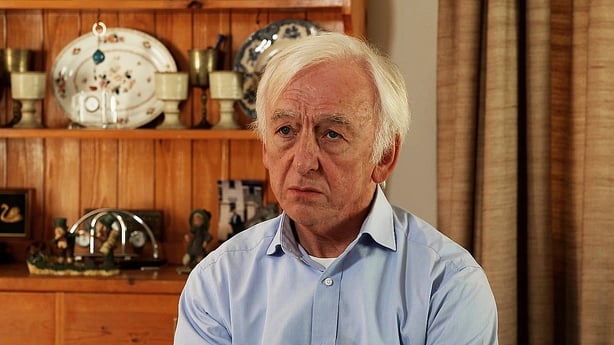
He is now a criminal lawyer and advocates for thousands who were boarded out as children and who remain excluded from State redress schemes.
"People knew what was going on there. But no one ever did anything," he said.
Boarded Out children were mentioned in a recent State apology by the Taoiseach in the Dáil in recent months, however, the Special Advocate Ms Carey said financial redress must now urgently follow.
Ms Carey described an apology without redress as "meaningless".
Poor promotion and advertising of the Magdalene Redress Scheme was also raised.
Only 900 have applied and received redress under the scheme, even though between 10,000 and 12,000 women and girls were incarcerated in the institutions.
Considering that the survivor population is aging, Ms Carey said it was "unfair and exclusionary" to discriminate against those who "through no fault of their own were unable to or unaware of previous redress schemes".
Separately, supports for survivors of Industrial and Reformatory School Institutions are only available to those who have previously received redress under the Residential Institutions Redress Scheme, consequently excluding thousands of Survivors in Ireland and Abroad according to Ms Carey.
Under the Mother and Baby Institutions Payment Scheme Act 2023, the Minister for Children Norma Foley is legally mandated to review its operation.
The first review must commence within six months of the second anniversary of the scheme's establishment.
The second anniversary was in March, and the Government has up to September to begin the review.
Sinn Féin MEP Kathleen Funchion has said there has been no indication from the Government about when a review will commence.
Ms Funchion, who was children's spokesperson for Sinn Féin when the legislation was debated in the Oireachtas, told the press conference that the review should scrap the exclusion of anyone who was in a Mother and Baby Home for less than six months.
"These survivors should be included; regardless of how long or short their stay was," she said.
Ms Funchion said children who were boarded out and "forced to work as slaves in farms and private houses" as well as mixed-race children in the institutions, also needed to be recognised.
The Department of Children, which is responsible for overseeing the administration of the Mother and Baby Institutions Payment Scheme, said that the scheme, like any other, has eligibility criteria, including what institutions are included in it and the time spent there.
In a statement, it acknowledged that some survivors are not eligible for the scheme and are disappointed by this.
However, it said that it is one of a large suite of actions under the Action Plan for Survivors and Former Residents of Mother and Baby and County Home Institutions.
The department pointed out that for those who spent shorter periods of time in institutions as young children, the overwhelming priority need which has been expressed by survivors has been access to records.
Some 17,700 applications for information have been completed under the Birth Information and Tracing Act by the Adoption Authority of Ireland and Tusla.
However, Patricia Carey has pointed out that many records remain with religious orders and need to be released immediately.
The department went on to outline other actions it had introduced, including the provision of counselling supports, the services of the Special Advocate (both already in place) and the ongoing development of a National Centre for Research and Remembrance.
There has been criticism regarding the manner in which the scheme has been advertised.
Today, Ms Carey questioned how many survivors are on Instagram.
The department said that around €1.8 million has been spent to date on the advertising of the scheme across a wide range of media, both local, national, mainstream and social.
The next phase of the campaign will commence this summer and will focus on local media in particular.
It concluded that a statutory review of the scheme is required to commence before 20 September and officials are "already preparing for this important piece of work".
The Department of Education was also asked for a response to criticism laid at the government by survivors and advocates regarding redress.
A spokesperson said the Government was "very conscious" of the ongoing impact of the trauma experienced by survivors of abuse in residential institutions.
"Government is therefore delivering a new package of ongoing supports to survivors of abuse in institutions such as industrial schools and reformatories," they said.
It said the package "builds on the already significant response to this issue to date", including the Residential Institutions Redress Scheme, the funding supports disbursed by Caranua and a range of other initiatives.
It said that in total, the response had "involved expenditure" of approximately €1.5 billion.
The spokesperson said it is estimated that over 9,000 survivors are eligible for the new package of supports, which is underpinned by the Supports for Survivors of Residential Institutional Abuse Act 2025 passed by the Oireachtas last year.
"Information on the supports was published online in March and the department is processing applications for the health and education supports under the Act.
"The department is also engaging on an ongoing basis with survivor and advocacy groups to promote awareness of the availability of the new supports so that as many survivors as possible are supported," he said.