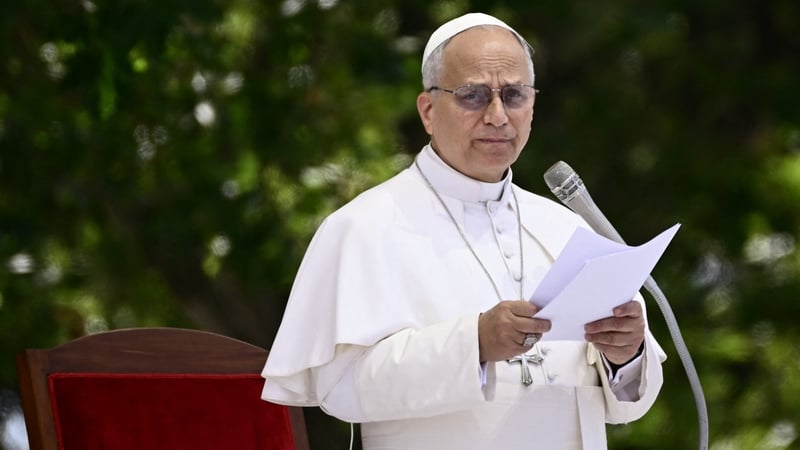

Pope Leo XIV's much anticipated first encyclical Magnifica Humanitas, or Magnificent Humanity, focusing on artificial intelligence is due to be published today by the Vatican.
It was signed by the pope on 15 May to mark the 135th anniversary of an encyclical presented by the last pontiff, who took the name Leo - Pope Leo XIII.
Rerum Novarum addressed the social and economic upheavals brought on by the Industrial Revolution in the late 1800s.
Today, Pope Leo XIV will address the latest revolution - Artificial Intelligence.
In a first for the Vatican, Pope Leo will be in the Synod Hall for the publication of the document which will be presented to the Curia, diplomats and the media.
The presentation of an encyclical by a pope is a new departure, indicating the importance of the document to the pontiff.
There is significant interest in who will join the pope for the presentation.
A panel of cardinals and theologians will have the co-founder of one of the most influential AI companies, Anthropic, seated alongside them.
Christopher Olah co-founded the US company - which is behind the AI system Claude - in 2021.
He has described Anthropic as an AI lab focused on the safety of large models.
By placing Mr Olah on a panel alongside cardinals and theologians, some would argue there are politics and ethics at play.
Anthropic drew the ire of the Trump administration earlier this year after it rejected a request from the Pentagon to unconditional use of its Claude AI models.
It resulted in the US president demanding the government "immediately" stop using Anthropic technology.
Anthropic vowed to sue over the "intimidation" and insisted its technology should not be used for the mass surveillance of US citizens or deployed in fully autonomous weapons systems.
Earlier this month, the Pentagon confirmed it had reached agreements with seven AI companies - excluding Anthropic - to deploy their advanced capabilities on the US Department of Defense’s classified networks as it seeks to diversify the range of AI companies working across the military.
Some observers believe Mr Olah’s presence at the publication of the encyclical could add fuel to the public dispute between Pope Leo and Donald Trump, which intensified in recent weeks.
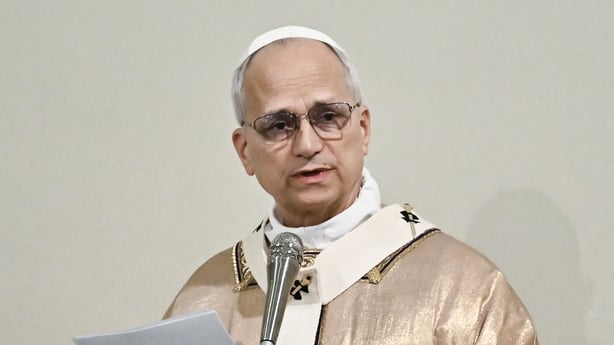
Last week, Pope Leo strongly criticised the use of AI in autonomous weapons and the militarisation of new technologies in ongoing global conflicts at a speech in Rome’s La Sapienza University.
He said AI investments and high-tech weaponry were leading the world into a "spiral of annihilation".
The Vatican has been wise to the power of artificial intelligence for some time.
Technology professionals based in Silicon Valley alerted the Holy See to what was coming as far back as 2016.
Those in Silicon Valley suggested that senior people in the Vatican, including Bishop Paul Tighe who is from Co Meath, start thinking about it.
Engagements between the Vatican and representatives from Silicon Valley have continued for a decade.
The Vatican recognised the benefits of AI, particularly around medicine and education.
However, it is clear it also has concerns over its exploitation.
The pope has expressed concern over job losses as a result of AI.
Ironically, Mr Olah’s company is currently seeking out new offices in Dublin to expand its EU Headquarters.
In March, the IDA announced that Anthropic had announced plans to significantly expand its Dublin presence over the coming year.
Despite this, figures from the Central Statistics Office last week showed a fall in employment levels in the tech sector.
Apart from labour and threats to jobs, the encyclical will address other topics such as justice, peace and morality.
The lengthy document will be the first signpost in Catholic teaching on the subject of AI and is likely to shape Pope Leo’s pontificate in the years ahead.