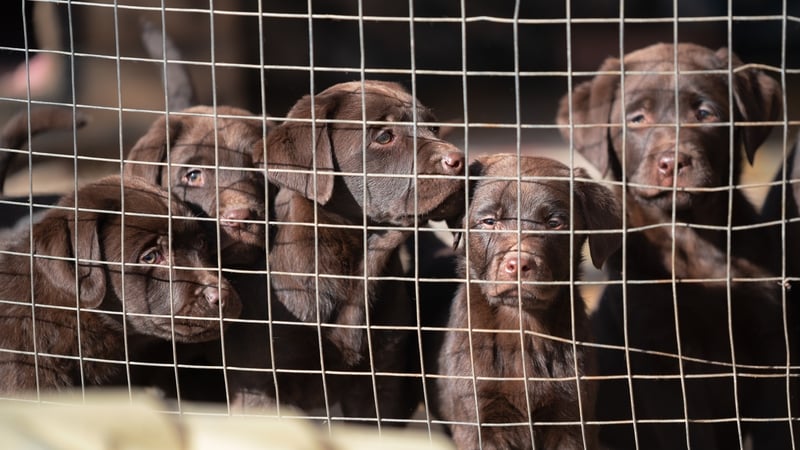

Minister for Agriculture Martin Heydon has brought draft legislation before Cabinet aimed at tackling so-called puppy farms.
A puppy farm is a commercial dog-breeding operation where dogs are generally bred in large numbers and in poor conditions.
The Dog Breeding Establishments Bill 2026 proposes a number of new measures, including lowering limits on litter numbers, introducing minimum and maximum breeding age limits, as well as ensuring minimum staffing ratios for breeding females on site for commercial dog-breeding establishments.
A minimum age will also be put on pups before they can be sold, with various conditions attached as to how and where they can be shown to customers.
Meanwhile, the standard of living for dogs at breeding operations will be addressed by the legislation.
According to the bill, enforcement tools to deal with puppy farms will be significantly strengthened, with seizure powers as well as stronger fines and penalties for offenders proposed.
Mr Heydon said the new legislation "supports responsible dog breeders by distinguishing compliant operations from non-compliant ones".
"While the Dog Breeding Establishments Act 2010 has served as the foundation of regulation in this area, the current legislation needs to evolve to meet modern animal welfare standards and enforcement needs," Mr Heydon said.
"The bill targets sales practices that can lead to poor outcomes for pups in terms of socialisation and early development, such as third-party sale after separation from the premises where they were born and reared.
"It should give consumers greater confidence and protection when purchasing a dog, ensuring they can see where and how it has been reared," he added.
"By tightening regulations, increasing transparency, and introducing meaningful penalties, we are sending a clear message that poor standards and exploitation will not be tolerated," Mr Heydon said.
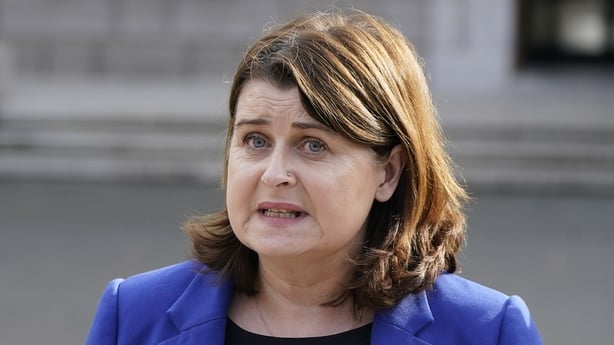
Commenting on the planned new laws, Agriculture Spokesperson for the Social Democrats Jennifer Whitmore said: "Legislation that protects and ensures the welfare of dogs is long overdue, and whilst I welcome any progress in this area, the devil will be in the detail with this particular bill."
"It will be important that any legislation includes a cap on the number of breeding females on any puppy farm, and strict regulation on the conditions they are kept in," Ms Whitmore said.
She added: "Half measures will not be acceptable when it comes to this legislation."
The proposed reforms have been informed by existing statutory Dog Breeding Establishment Guidelines, as well as by recommendations of the Department's Dog Control Stakeholder Group, and best practice in comparable jurisdictions.
Timelines for major infrastructure projects
The Cabinet also discussed timelines for major infrastructure projects, with Minister for Public Expenditure Jack Chambers outlining improvements in infrastructure delivery times as a result of changes introduced this year.
Mr Chambers told colleagues that the Greater Dublin Drainage project will now be delivered a year quicker than planned while six months has been saved on the Waterford wastewater treatment plant as a direct result of infrastructure reforms the Government has introduced.
He also outlined changes he is making to how disputes that arise in public works contract can be resolved more effectively.
Separately, the Taoiseach updated the Cabinet on a range of actions being carried out across Government to reduce regulatory burden on business, as well as new actions agreed by the Cabinet Committee on Economy, Trade and Competitiveness.
The Department of the Taoiseach is to co-ordinate a range of actions aimed at regulatory reform across government departments, including the establishment of a central Economic Regulators Forum.
The Department of Enterprise is also undertaking a programme of work with agencies to eliminate unnecessary administrative burdens on businesses.
The Taoiseach's officials will work with the Department of Enterprise on an initiative to reduce red tape to be launched in June.
An Economic Regulators Forum to engage with regulators on Government priorities will also be established after the summer.