
Donald Trump's message to Republicans ahead of November's midterm election has been clear: keep your majority in Congress, win as many seats as possible and do whatever it takes to get there.
What has followed is an intense, fast-paced redistricting battle across the United States, marked by accusations of cheating, voter suppression and racial discrimination.
Six months out from the midterms, Republicans and Democrats are racing to redraw congressional maps to maximise electoral advantage.
The fight over political boundaries has turned into one of the most controversial stories of modern midterm elections in the US.
Texas helped set in motion a wave of messy, aggressive redistricting across the country, following a request from the US President.
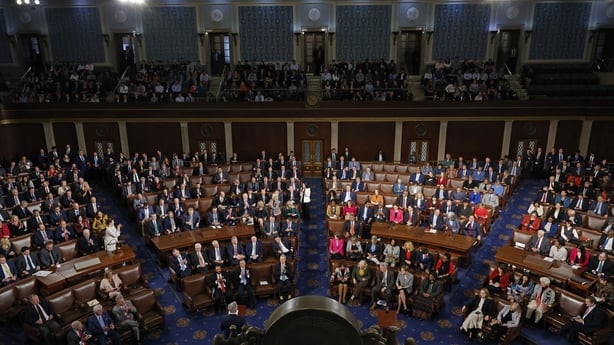
Republicans currently hold a 217-212 advantage over Democrats in the House of Representatives, with one independent member and five vacant seats.
All 435 are up for grabs in these high-stakes elections.
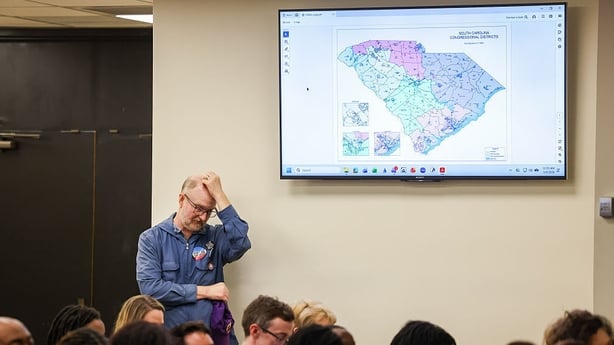
US Congressional districts are usually redrawn once every decade to account for population changes following the collection of new US census data.
As representation in the House is based on population, these districts are supposed to contain roughly equal numbers of residents so that each person's vote carries similar weight.
What we are seeing now are efforts to intentionally manipulate district lines, outside of the usual timeline, to advance one political party or dilute the voting power of a community.
Also known as gerrymandering, common tactics include splitting a voting group across many districts or cramming as many voters from a specific group into a few districts.
To try to keep the GOP's House majority, Republican Governor Greg Abbott signed a revised Texas House map into law last August using these tactics.
The hope was that this would help win Republicans five new seats.
A lower court found that the map was likely to be racially discriminatory in violation of US constitutional protections, but a few weeks ago the highest court in the land, the US Supreme Court, formally gave it the green light.
This is hardly the US's first rodeo when it comes to redistricting, but the move by Texas ignited what has been described as a 2026 redistricting arms race.
There is only one state bigger than Texas.
That Golden State decided to fight fire with fire. Outgoing California Governor Gavin Newsom successfully asked voters, through a referendum, to change the state's rules to allow for a new map that could give Democrats five more congressional seats to offset Texas’ changes.
The famous Democratic mantra of former First Lady Michelle Obama had become obsolete. No more: "When they go low, we go high". Now: "When they go low, we squabble up".
Ironically, her husband, and former president, Barack Obama, threw his support behind the effort (although he admitted that the strategy was not his preference).
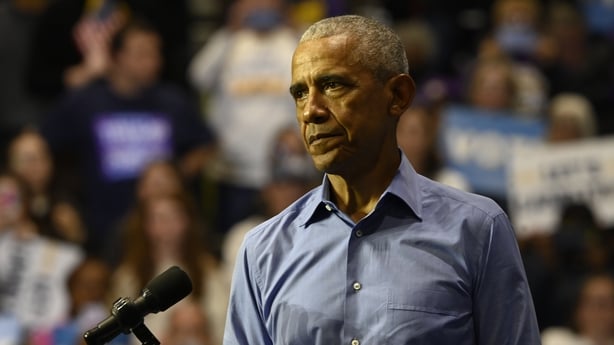
"We cannot unilaterally allow one of the two major parties to rig the game. And California is one of the states that has the capacity to offset a large state like Texas," he said.
In February, the US Supreme Court once again weighed in and allowed California to use its new electoral map after it rejected arguments from Republicans that the map violated the US Constitution because its creation was mainly driven by race, not partisan politics.
It didn't end there.
The domino effect had already begun. "Signed, sealed, and delivered," Florida Governor Ron DeSantis wrote on X after a move that could add three to four seats for Republicans in November.
"Locked in Missouri," wrote James Blair, the former White House deputy chief of staff who is overseeing President Donald Trump’s political operation, as Missouri put forward a new map to add one new GOP seat.
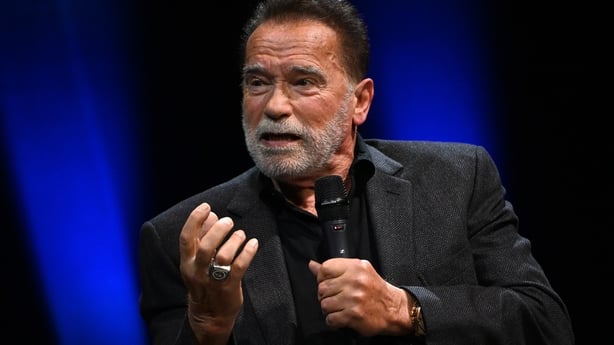
This also is, and isn't, a partisan issue. Former Republican California Governor Arnold Schwarzenegger criticised the redistricting efforts, describing them as cheating and "terribly wrong".
The action star had championed the establishment of an independent commission in California to draw political maps, removing political interference.
"Texas started it. They did something terribly wrong. And then all of a sudden California says, 'Well, then we have to do something terribly wrong.' And then now other states are jumping in," he said.
While Mr Schwarzenegger is no longer in office, Republicans who opposed the president’s call to change boundaries paid a price.
In Indiana, local politicians defied the president and refused to change the state's boundaries for political gain.
A proposed map was designed to give the GOP control of all nine of Indiana’s congressional seats and would have effectively erased the state’s two Democrat held districts by splitting Indianapolis into four.
"I’m a Christian first, then an American, then a conservative, then a Republican ... in that order. I’m confident that my vote reflects the will of my constituents," said Republican state senator Greg Goode, who voted against a proposed map.
President Trump soon dubbed him "No Goode" as he launched a revenge campaign against Republicans who opposed the redistricting move.
He backed GOP challengers, who went on to successfully beat most of the opponents in a recent primary election.
Just one of the eight senators, opposed by pro-districting groups, won: Greg Goode.
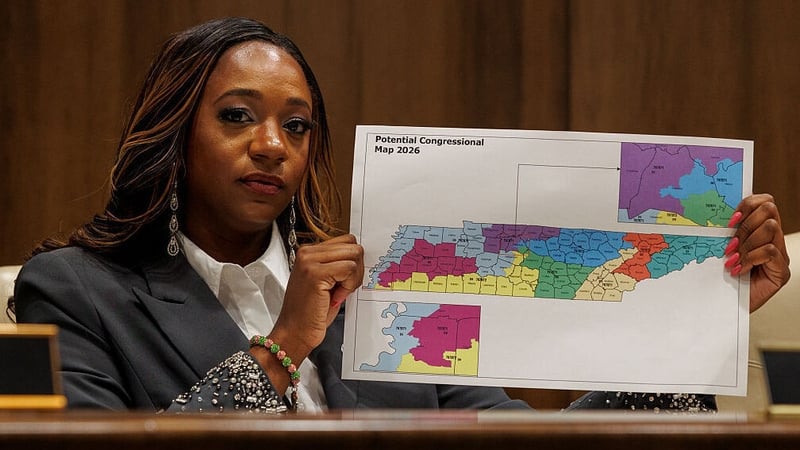
Indiana may have bucked the trend. The same cannot be said for other states, where the effect of redistricting is stark. Tennessee's redistricting has fractured a majority-Black city’s residents into three congressional seats that are likely to be held by Republicans.
The largest civil rights group in the US, the NAACP, has said that it has filed a federal lawsuit, alleging that Tennessee politicians "intentionally redrew Congressional District 9 - a district anchored in Memphis for more than 50 years - to crack the majority-Black district across multiple districts, with the intent of eliminating Black voting power and depriving them of a meaningful opportunity to elect candidates of their choice".
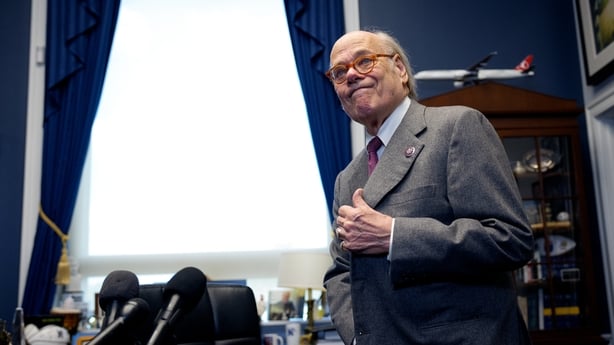
The state's only Democrat in Congress, Steve Cohen, announced that he is dropping his bid for re-election.
"I've had the great honour to represent the ninth district for the last 19 and a half years. And it's been a district that is a majority African American district," he said.
Mr Cohen said that he considered running in one of the new districts but added that they are "nothing like the ninth district that I’ve represented".
In Louisiana, the US Supreme Court struck down a second majority-Black congressional district, ruling it unconstitutional.
Opponents warned the decision could make it easier for states to dilute the political power of minority communities through redistricting and weaken protections for minority voting representation.
Supreme Court Justice Elena Kagan, joined by Justices Sonia Sotomayor and Ketanji Brown Jackson, issued a forceful 47-page dissent.
"Members of the racial minority can still go to the polls and cast a ballot. But given the State’s racially polarised voting, they cannot hope - in the way the State’s white citizens can - to elect a person whom they think will well represent their interests," she wrote.
The ruling kicked off new redistricting efforts in states such as Alabama to dismantle majority-minority districts.
A new poll from Politico this week suggested that many Democrats want their party leaders to fight back hard, even if that means fracturing districts that were created to protect the power of minority communities.
But Democratic moves to boost their midterm chances have dramatically backfired. Voters in Virginia narrowly approved measures to allow for a new map to favour the Democrats, only for it to be toppled by a Virginia Supreme Court ruling that invalidated the map.
The move could have given the Democrats four additional US House seats, but the court said that lawmakers had violated Virginia’s state constitution when placing the proposal on the ballot.
The decision highlighted the new Virginia governor, Abigail Spanberger’s initial scepticism about making the changes in the first place.
When asked by CNN, "Do two wrongs make a right?", she said: "You know, I hear them, and I won't argue with that point. But I think that the people of Virginia, when looking at the landscape of what is occurring across the country, the people of Virginia said we want to take this temporary responsive effort."
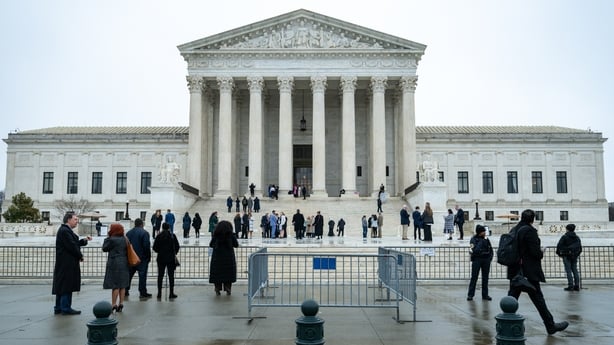
On Friday, the US Supreme Court dealt a final blow when it rejected an emergency request by Democratic officials in Virginia to use the new map in the midterms.
Republicans have argued that they could win over a dozen additional seats from new districts in Texas, Florida, Missouri, North Carolina, Ohio and Tennessee.
For now, Democrats hope is to gain up to six seats from new districts in California and Utah.
The enormity of these changes, and the resulting legal challenges, can be seen across American media, with many outlets now setting up trackers to follow states’ redistricting plans.
Historically, the president’s party tends to lose seats in the midterm elections and the assumption here is that previous voting patterns will hold.
But even with low approval ratings for Mr Trump and the concern over a cost-of-living crisis, voters for either the Democrats and Republicans are not guaranteed.
It's a risky business.
As the saying goes: "Every election is determined by the people who show up."
The battle for control of the House of Representatives is well under way, but in many states the battlefield itself is still being decided.