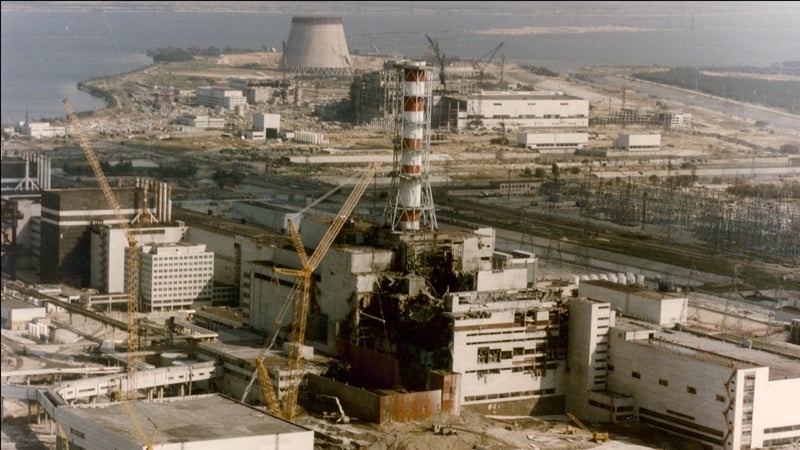

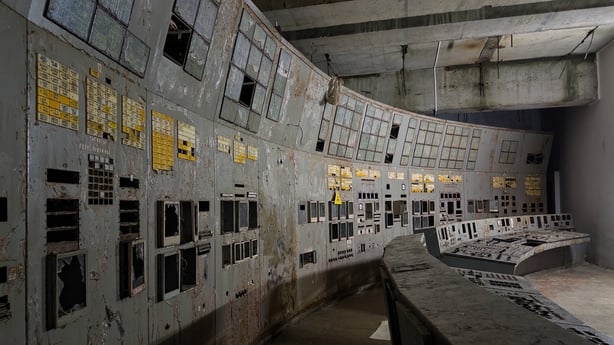
It is 40 years ago today since an explosion ripped through Reactor 4 at the Chornobyl nuclear power plant in northern Ukraine, then part of the Soviet Union, causing the world's worst nuclear disaster.
The explosion took place at 1.23am on 26 April 1986 during an aborted test procedure, blowing the reactor's roof into pieces and releasing an enormous cloud of radioactive waste into the atmosphere.
Plumes of radiation drifted westward and northward across Europe for days, with neighbouring Belarus being the worst affected from the fallout.
Soviet authorities took 36 hours to evacuate residents from the nearby town of Prypiat, where many of the plant's workers lived with their families.
Only when scientists at a Swedish nuclear plant observed higher than usual levels of radiation by noting radioactive particles specific to Soviet nuclear power plants, did Soviet authorities finally tell their own population that an accident had occurred at Chornobyl.
That admission came two days after the explosion.
About 30 of the first responders died in the weeks that followed from the enormous levels of radiation they were exposed to, and two people were killed by the immediate explosion.
Thousands of soldiers, miners and construction workers were deployed to clean up the radioactive waste in the months that followed.
Radioactive fallout rendered an area of more than 2,500sq/km around the plant uninhabitable and authorities introduced an exclusion zone, which is still in place today.
More than 200,000 people had to permanently leave their homes.
The exact number of people who have died from the effects of radiation remains unknown, but estimates put the figure in the thousands.
Increased incidents of birth defects as well as higher rates of thyroid cancer were recorded among children born close to the plant.
Chornobyl was decommissioned in 2000 when the last of its four reactors, number three, was shut down.
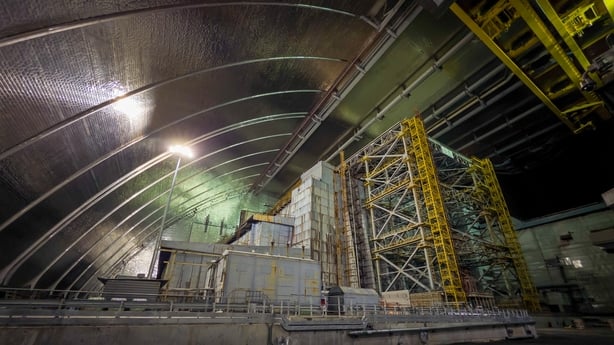
Today, more than 2,000 workers continue the slow decommissioning task at the site, disposing of nuclear waste and dismantling infrastructure.
It is a process that is managed by Ukraine's government and will take decades to complete safely.
But that work has been greatly compromised by Russia's full-scale invasion.
During the first five weeks of the invasion, Russian troops occupied the plant and held 300 of its staff captive.
"It was an act of nuclear terrorism by the aggressor state of Russia. It is very sad that the international community reacted very weakly, or, one might say, did not react at all," Oleksandr Hryhorash, the head of Chornobyl NPP’s operational control told Ukrinform, the state news service of Ukraine, earlier this week.
"No one could have foreseen that nuclear facilities would be seized and shelled," he said.
The Chornobyl plant lost electrical power on the first morning of the Russian occupation and back-up diesel generators kept the plant powering for the next six days.
Though the withdrawal of Russian forces from the plant in late March 2022 removed an immediate security risk to the decommissioned plant, the plant still remains under threat from Russian drone activity in the area.
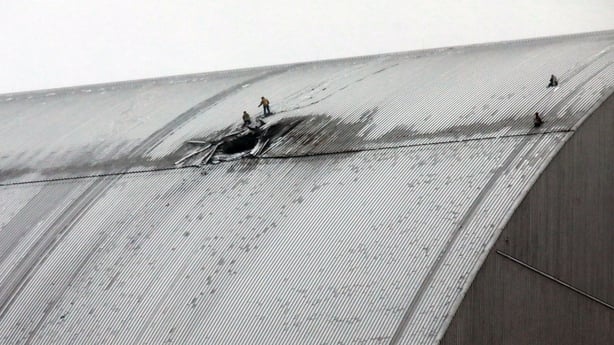
In February 2025, a Russian drone struck and penetrated a protective steel structure called the New Safe Confinement (NSC) that now encases Reactor 4 - the same reactor destroyed by the explosion in 1986.
The drone strike caused a fire to the outer layer of the NSC, which firefighters extinguished, preventing radioactive waste from seeping out of the protective layer.
Teams of workers temporarily patched up the 15sq/m hole left in the NSC by the Russian drone strike, but it could cost €500m to fully repair the damaged section, according to the European Bank for Reconstruction and Development.
A statement on Chornobyl NPP's website reads that the NSC "has lost its ability to fully maintain the leak-tightness of its internal volume".

Earlier this week, Ukrainian Prosecutor General Ruslan Kravchenko told Reuters that Russian drones routinely fly within 20km of the former Chornobyl NPP.
He also said 35 Russian hypersonic Kinzhal missiles have been detected within 20km of the decommissioned plant and Khmelnytskyi nuclear plant in western Ukraine since 2022.
And with such regular drone activity taking place close to the former Chornobyl NPP, it is hard to see investors wanting to pay for the NSC’s full reconstruction until the war ends.
After a team of inspectors from the International Atomic Energy Agency (IAEA) inspected the temporary repair work to the NSC last December, the agency's report stated "the NSC had lost its primary safety functions".
"Timely and comprehensive restoration remains essential to prevent further degradation and ensure long-term nuclear safety," it added.
With Russian drones flying close to Chornobyl, that assessment by the UN's nuclear watchdog makes Reactor 4 sound like a ticking timebomb.
For its part, the Kremlin has repeatedly said its forces do not target nuclear energy facilities.
Yet, Russian forces shelled Zaporizhzhia nuclear power plant in southern Ukraine before occupying the plant in March 2022, an occupation that continues until this day.
Russian President Vladimir Putin has demanded to retain control of the six-reactor nuclear plant, the largest in Europe, as part of an eventual peace settlement.
Drone strikes on the containment structure on one of the Zaporizhzhia plant's reactors were reported by the IAEA in April 2024, but the agency did not identify which side was responsible.
This week, the IAEA reported that Zaporizhzhia ZNPP temporarily lost all off-site power on two occasions after its last remaining off-site power line was disconnected.
Emergency diesel generators kicked in to supply the power during the outage.
A statement yesterday from the European Commission - marking the 40th anniversary of the Chornobyl disaster - called on Russia to "immediately cease all attacks on nuclear facilities in Ukraine" and to comply with the IAEA's Seven Indispensable Pillars for Nuclear Safety and Security during war.
But Russia has already violated some of those "pillars" at both Chornobyl and Zaporizhzhia, including the requirement that infrastructure and reactors must not be damaged, that staff employed at plants must not be coerced and that external power must be maintained at all times.
Seizing nuclear power plants by military force was already a risky move by Russia.
In Chornobyl's case, the damage to the radiation shield around Reactor 4 and the sheer unpredictability of Russia's drone tactics means the site of the world's worst nuclear disaster remains a place of high risk today.