
The next person to be murdered in Ireland as part of the business of organised crime will most likely be one of those already warned their lives are in danger.
That was the stark message this week from the Assistant Commissioner in charge of Policing Dublin when he revealed that 522 people had been formally notified by the gardaí of a threat to their lives. It is, he said, "the list of the next set of potential murders."
It is also likely that the next gangland murder victim here will be killed because of the Hutch-Kinahan feud.
There are two other murderous feuds ongoing in Dublin - one in Finglas/Ballymun, the other in Clondalkin/Ballyfermot, however the Hutch-Kinahan feud has for the past three years been responsible for the majority of organised crime shootings and killings.
The gardaí warn the potential targets that their lives are in danger.
The threat would be enough for most rational people to change their movements, habits, behaviour and way of life, but not for these people.
Too many of them ignore the warnings and remain actively involved in criminality.
Some of those in danger view the Garda Information Message (GIM) form as a status symbol, almost like a graduation parchment.
It is official recognition that they are, in the style of the Mafia, "made men" or "wiseguys", part of the gang culture.
Others do not need the recognition, nor do they worry about the threat.
They are happy to accept the formal warning simply because possession of the document means they no longer have to go to the bother of going down to the Social Welfare Office to collect their dole in person.
Other arrangements can now be made. The warning comes with unexpected privileges.
What the majority of those on the ‘lives at risk register’ have in common is that they do not engage, let alone co-operate with the gardaí who are actively trying to save their lives.
They will also not act on the measures recommended to protect themselves.
Nor will they help gardaí to apprehend those out to kill them.
There were two gang shootings in Dublin this week, the 32-year-old man shot and injured in Fortlawn Park refused to say anything to the detectives investigating the potentially fatal gun attack.
It may not seem like it, but the number of gangland killings in Ireland has been dropping over the past three years.
There were 16 in 2016, nine in 2017 and three so far this year.
But of those 28, 16 have been Hutch-Kinahan related.
The feud has become the dominant force in organised crime in Ireland ever since the first murder in September 2015 when Gary Hutch was shot dead at the swimming pool of the apartment complex where he lived in Spain.
The gardaí and the community groups in the areas of Dublin worst affected have recently reassessed the nature of this feud.
Rather than characterising it as a series of tit-for-tat killings between two rival gangs, the Hutch’s and the Kinahan’s now see it as the implosion of one major organised criminal group, albeit one that remains the most powerful example of the influence of Irish criminals in Europe and throughout the world.
The gardaí have also revised upwards to 18 the number of people killed in this feud.
They have recently included the murder of the dissident republican Vinny Ryan, shot dead a week before the Regency murder and the death of Glenn Clarke, a hitman who was found shot dead in a stolen car in Leixlip in December 2016.
He appears to have sustained an accidental self-inflicted fatal injury.
As well as those involved in serious and organised crime the feud has also claimed the lives of innocent people.
Martin O’Rourke, a 24-year-old father of three, was shot dead in Sheriff Street in April 2016.
Four months later, council worker Trevor O'Neill was murdered in front of his wife and children while on summer holidays with his family in Majorca.
Noel Duggan and Eddie Hutch were also shot dead in 2016, simply because they were the friend and brother of Gerard Hutch.
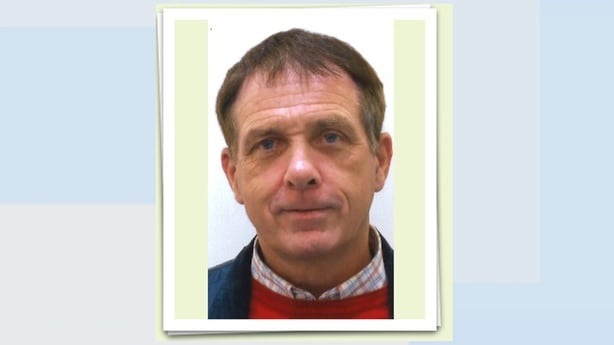
The Hutch and the Kinahan factions were up to three years ago part of the one multinational criminal organisation which trafficked drugs from wholesale cartels in South America, North Africa and the Middle East and sold them not just in Ireland but all over Europe.
Its headquarters was on the Costa del Sol.
The gang had alliances with South American, Dutch, Moroccan, UK and Russian criminal groups and business interests all over the world, including multi million euro property assets in Brazil, Dubai, Cyprus, Spain and South Africa.
Life was good, particularly for those at the top.
Convicted drug dealer Christy Kinahan now in his late 50s, was living in a luxurious mansion in Spain and all attempts by gardaí and European police forces to put him out of business had failed.
Even the most recent international investigation, Operation Shovel, which targeted his criminal empire and led to his arrest and imprisonment for a time, had to all intents and purposes "run into the Spanish sand".
The criminal mastermind and strategist Gerard ‘The Monk’ Hutch, also in his late 50s, had retired on the money he had earned from organised crime.
He had settled with the State and paid over €1 million in tax on his crime profits to the Criminal Assets Bureau.
He had a house in Clontarf, Dublin and a place in Lanzarote in Spain and could move freely between the real world and the underworld, an elder statesman and respected figure in organised crime who along with Christy Kinahan, was of the few who had done well and stayed alive.
Gerard even did a television interview on RTÉ in 2008 to tell the world he was not a criminal.
But the words of Al Pacino 27 years ago in Godfather 3 have a certain resonance for Gerard Hutch and Christy Kinahan even today: "Just when I thought I was out, they pull me back in".
In a case of ‘life imitating art’, it was the younger generation that would destroy any hopes either man may have had of getting out permanently.
Unlike their uncle who stayed away from drugs crime after witnessing firsthand the havoc heroin had wreaked upon his own community in Dublin’s north inner city in the 1980s, some of Gerard Hutch’s extended family had always been involved in the drugs business, as dealers and users.
His nephew Christopher, known as ‘Bouncer’ Hutch, had died because of it in 2003. Cocaine toxicity was cause of his death.
Christopher was the son of Eddie, Gerard’s brother, the fifth victim of the ongoing feud.
Gerard did not like drugs, but no more than Marlon Brando in Godfather 1 in 1972, he knew he could not hold back the tide and could not interfere in other criminals’ business.
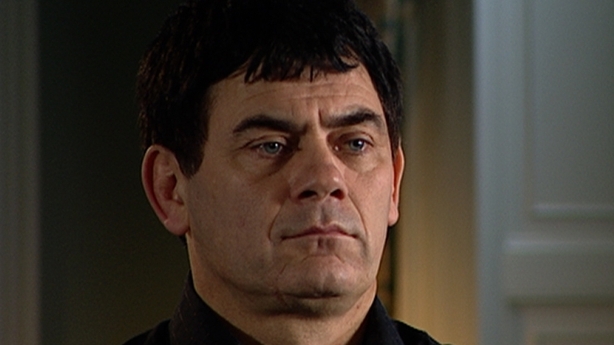
He stood by as others including his nephew Gary got involved.
Gary Hutch ascended to the most senior levels of one of Europe’s biggest drugs gangs and for years worked well with the Kinahan associates and fellow Irish criminals on the Costa del Sol.
In 2015 there was however the inevitable ‘falling out amongst thieves’.
Whether it was over a double cross, stolen money or a lost consignment of drugs, it did not matter.
Gary was blamed and became a marked man.
Not even a substantial financial settlement and the intercession of his highly respected uncle could save him and Gary was shot dead in September 2015.
Gerard appeared to accept this as one of the rules of the game, but when a killer turned up in December of that year to shoot him at a bar near his holiday home in the Canary Islands, Gerard too became the hunted.
The younger generation of criminals never had any real respect for the veterans.
Eamon Kelly was 65 when he was shot dead outside his home in Clontarf. In the world of organised crime, age is no guarantee of safety.
The implosion of the gang became public in the most dramatic fashion, the divisions permanent two months later.
In February 2016, David Byrne was shot dead at the Regency Hotel in Dublin.
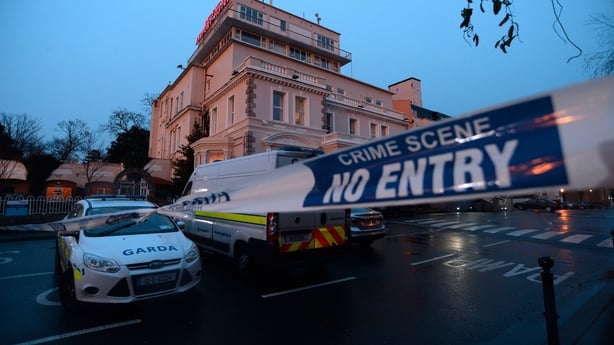
Christy Kinahan's son Daniel was also at the hotel that day for his company MGM’s boxing weigh in to promote a fight in the National Stadium the forthcoming Saturday.
Gardaí believe Daniel was the gunmen’s intended target. So too do the Kinahan cartel.
The murder of David Byrne split the gang along family lines into the Hutch and Kinahan factions, a split most keenly felt in Dublin’s north inner city.
Much like a civil war that pits brother against brother, friend against friend, the Hutch-Kinahan feud has pitted long time gang members and brothers in a criminal fraternity against each other in this ongoing murderous feud.
Violent, dangerous, unstable and unpredictable people who along with their families have lived beside each other for generations and who previously dealt drugs and carried out shootings together are now vying to kill one another.
The multi million euro purse strings of the Kinahan cartel have been loosened and large sums of cash are available to any low level criminal or drug addict prepared to pick up a gun and shoot a named individual dead.
Money is no object.
And the gardaí know the names of the targets, the individuals who are under threat.
It may have come as a shock to the public and the politicians when Assistant Commissioner Pat Leahy announced that hundreds of lives were at risk.
A combination of astonishment and dismay greeted his statement that there were five different threat levels - critical, severe, substantial, moderate and low.
He said that of the 11 people whose lives are at imminent and immediate risk, ten live in Dublin’s north inner city.
But none of this has come as any surprise to the people who have for generations been living with the devastation that drugs and crime can cause to a community.
Organised crime is fuelling this feud and the reality of organised crime can be seen on the ground, on the streets, every day, in these communities.
It is evident in the different types of policing response to the feud.
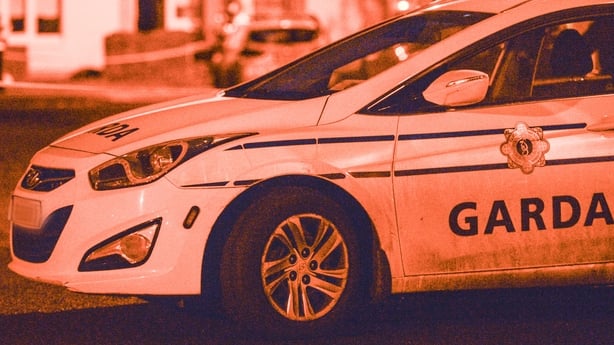
The periodic arrival and departure of the forensic specialists with white suits and blue tents because of the latest atrocity; the permanence of armed police to prevent extreme violence as perpetrated by the continuing spate of shootings and murders; the presence of gardaí on protection posts outside or nearby the homes of those most at risk; the introduction of "preservation of life" patrols. Saving lives is now the priority.
It is evident in the intimidation and fear that have now become a part of people’s lives.
Families of drug addicts have long been exposed to threats and violence from gangs seeking payment for drug debts but locals say the feud has escalated that violence and introduced new fears.
People no longer know who is on which side, aligned with which faction, Hutch or Kinahan, friend or foe.
Every fellow gangster, even neighbour or relation is therefore a potential victim or killer.
The feud is evident in the activities of those at street level supporting the gang structure and the lives of luxury of those at the highest levels who no longer live in the areas they are acting to destroy: open drug dealing as children pass on their way to and from school; drugs laid out on car bonnets only to be moved when the gardaí are alerted and displayed at new locations with clients informed by mobile phone; anti-social behaviour with gangs of youths hanging around being sucked into or already involved and embedded in criminality - the badge of the drug runner or drug dealer in their minds; a status symbol where education, employment, academic or sporting achievement is perceived as having little or no value; young people arrested and tarred with the stain of a criminal conviction, attained at a young age, setting them on a downward spiral in life.
These are the foot soldiers of this feud, the present and future generations of young people that will feed it for years to come. They are also the victims.
As Trina O’Connor of the Coalition of North East Inner City Communities points out, there are only a very small proportion of people profiting from crime, but the community has to witness and live with its detrimental affects every day.
"People worry about becoming desensitised to it, that there will be an acceptance of it and that their children in particular will come to see all this as the norm."
The battle against this feud in particular and organised crime in general is in the words of the officer in charge of Special Crime Operations "relentless."
Assistant Commissioner John O’Driscoll says the gardaí have saved over 50 lives, seized over €100m worth of drugs, almost 100 firearms including military grade weapons and thousands of rounds of ammunition.
A second Special Criminal Court has been set up to hear the cases of those charged with related offences including gang murders.
Some trials are currently underway.
So far one man has been convicted of one of the feud murders, that of Michael Barr, the eighth victim, shot dead at the Sunset House Pub in the North Inner city on 25 April 2016.
In January of this year the hitman Eamon Cumberton, a child of Dublin's north inner city, was sentenced to life in prison.
Such successes may interrupt, but nobody believes they will stop the killings.
The gardaí believe this feud is intergenerational and will continue for many more years.
As the foot soldiers fight it out on the ground in Dublin, the ‘godfathers’ are not totally unaffected.
Christy Kinahan has had to move from his base on the Costa del Sol to the relative safety of the Middle East. He is now believed to be living in Dubai.
The gardaí say they are pursuing Irish criminals abroad and are working with international police forces.
They point to the recent arrests and drugs seizures here and in places as far away as Australia as part of the investigation in the Kinahan cartel’s activities.
Gerard Hutch is also on the move.
It is over two years since he was last seen in public at his brother Eddie’s funeral.
He was in disguise wearing an ill fitting wig, a long dark coat, a baseball cap pulled down over his eyes. His life is in imminent danger.
The man who was with him that day, Noel Kirwan, was subsequently shot dead and became the 13th victim of the feud.
Gerard Hutch is constantly looking over his shoulder.
If either man came back to Ireland he would be arrested.
Gardaí believe they have sufficient evidence to charge at least one of them.
There is an irony here in that it is the older generation of criminals who now have to "watch their backs" because of a feud that the younger generation, ‘the hotheads,’ have perpetrated and are now prolonging.
Both men, the senior figures are being sought by gardaí and gangsters.
It is a fact of life that involvement in organised crime ends in either one of two places - the jail or the grave.
It is no different for those involved in any level of this feud.
But that is an extremely difficult message for community leaders and gardaí to get across to those young would be and wannabe gangsters in the marginalised areas of the city who are being seduced by false glamour and ill-gotten wealth.
It is also a message that even if they tried, the older Hutch-Kinahan faction leaders would have difficulty conveying to their younger acolytes.