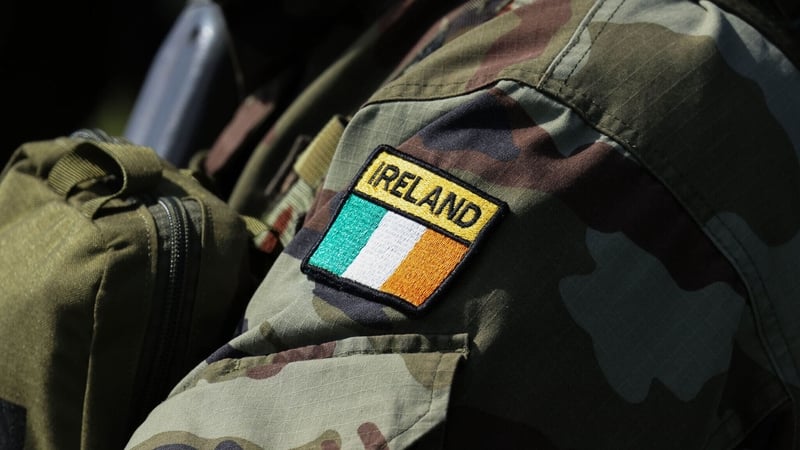
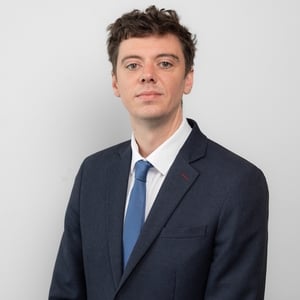
Members of the Defence Forces making complaints in the 1980s and 1990s lacked confidentiality "in a meaningful sense", a tribunal hearing has heard.
This was a "powerful deterrent" to reporting, according to Captain Kjell Arne Bratli, a former member of the Norwegian military who compiled a report on the complaints processes in Ireland's Defence Forces over a 40-year period.
Mr Bratli gave details of his report at the first public hearing of the Defence Forces Tribunal, which is looking at how the force dealt with complaints of abuse over a forty-year period.
Former and current members will give evidence in the hearing, which is part of the Tribunal of Inquiry set up following a report in March 2023 that detailed abuse.
Over 200 witnesses have made statements to the tribunal, including those from the Women of Honour Group, those who were exposed to chemicals while working for the Air Corps, and those who have suffered effects from Lariam, an anti-malaria drug, among others.
The tribunal is focusing on complaints processes in the Defence Forces spanning over four decades, from 1983 to 2024.
This morning senior counsel gave an opening statement, outlining the role of the tribunal and how the public hearing will proceed.
Aedan McGovern SC said that the first module will look at whether complaints were actively deterred, or "whether there was a culture that discouraged" complaints of abuse.
He said it is "therefore appropriate" to hear from those who suffered abuse but did not complain or believe they were deterred from making complaints.
Fifty-eight witnesses are expected to give evidence over this module of the hearing, with 36 of those in regards to Devoy Barracks in Naas.
Six of those giving evidence will do so in relation to the anti-malaria drug Lariam, with senior counsel noting that as of 2019, 225 proceedings have been taken in relation to the issue yet none of those who have taken cases made any complaint to the Defence Forces.
They said that the Tribunal will seek to find out why this was the case.
The first witness and only witness giving evidence today was Mr Bratli.
Mr Bratli served with the Norwegian defence forces for over 50 years, and compiled a report that looked at complaints processes in the Irish military.
His report noted that Ombudsman for Defence was established in 2005, does not investigate incidents predating its existence, and that it only started investigating incidents that had not been through internal processes within the Defence Forces since 2021.
From 2005 to 2021, it only investigated complaints that had already been exhausted internally.
Mr Bratli said that over the majority of the period being looked at in the tribunal, investigating officers for complaints were drawn from the same organisation or unit as the parties involved.
His report also said that the redress of wrongs system of complaints in the 80s and 90s lacked confidentiality in a "meaningful sense", and that there was "very limited" trust in confidentiality, which in turn was a "powerful deterrent to reporting".
"A member who believes that raising a complaint will expose them to informal retaliation, career consequences, or social exclusion within their unit faces a rational calculation that silence is safer." Mr Bratli's report said.
Overall, he said that there were a number of risks tied to complaints procedures in the Defence Forces over the period.
One was that there could be proximity between officers and the parties, which could see a possible tendency to minimise or informally resolve a complaint before it escalated, while this also meant protecting complainants from retaliation was difficult.
Before 2021, he noted that a serving member with a complaint about unacceptable behaviour would be "required to navigate the very chain of command that may have generated the conduct complaint of, or that may have a stake in managing the matter quietly".
On protected disclosures, he said that although whistleblowers are given legal protections, they are not shielded socially.
Mr Bratli said the most consistent finding across processes in the Defence Forces was that there were gaps between what was formally required and what was experienced in practicality.
By 2015, the formal procedure framework was developed substantially, but the Independent Review Group's findings in 2023 showed that the culture within the organisation had "not kept pace".
The report said: "Procedures that exist on paper but are not used, are not trusted, or are actively circumvented by institutional culture do not constitute and adequate complaints system.
"The test of adequacy is not procedural, but practical."
Mr Bratli did not face a cross-examination at the hearing, with applications made from a number of parties to put questions to him at a later date.
Hearings are due to continue tomorrow, with Cmdt David Lyons and Col Damien Coakley due to give evidence.