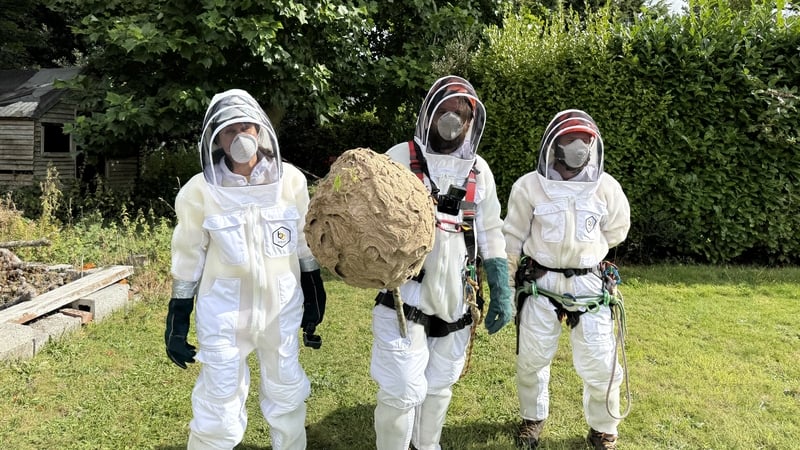

A new partnership is set to be launched with the aim of strengthening Ireland's approach to managing invasive species.
The National Parks and Wildlife Service (NPWS) and the National Biodiversity Data Centre (NBDC) have joined forces to establish the Invasive Species Bureau.
The partnership will be launched at the NBDC in Waterford this morning as will a new roadmap for managing the Asian hornet in Ireland.
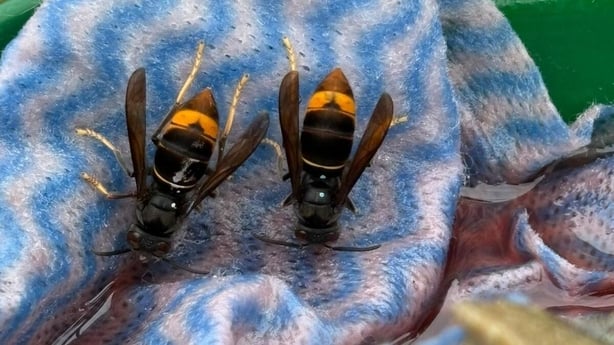
The Asian hornet, native to Southeast Asia, has spread through continental Europe since its accidental introduction in France in 2004.
It poses a major ecological risk to native pollinators, and a single nest can devastate local honeybee populations.
Last year, reported sightings of the invasive insect in Cork resulted in the location and removal of two Asian hornet nests.
Other examples of invasive species found in Ireland include rhododendron ponticum, North American mink and Japanese knotweed.
It comes as RTÉ’s This Week reported that several high-risk invasive plants that are illegal to sell in Ireland have been found for sale to Irish shoppers.
The Invasive Species Bureau formalises the partnership between the NPWS and NBDC to support the implementation of EU regulations in respect of these invasive species and others, and to strengthen Ireland’s approach to managing them.
We need your consent to load this rte-player contentWe use rte-player to manage extra content that can set cookies on your device and collect data about your activity. Please review their details and accept them to load the content.Manage Preferences
Minister of State for Nature, Heritage and Biodiversity, Christopher O’Sullivan will officially launch the partnership later this morning and also publish the 'Rapid response model for Asian hornet in Ireland'.
Speaking ahead of the launch, Mr O’Sullivan said members of the public are being asked to report sightings of the Asian hornet through an enhanced online portal.
He said: "We remain vigilant about the Asian hornet given the threat it poses to native pollinators. This roadmap does just that - it ensures that we are well prepared to prevent it from gaining a foothold in Ireland.
"Each step within this roadmap - from early detection, through to investigation, eradication strategy and deployment of all control measures - is based on the best available scientific evidence."
"The public plays an important role in our early warning system too. We have now made it even easier for everyone to log onto the invasives.ie portal and report suspected sightings of the Asian hornet along with other invasive species," the minister added.
Chairperson of the NBDC, John McCarthy said an effective response to invasive species requires "data and evidence at its heart, and greater national coordination of the key agencies delivering on the ground actions."
He said: "We are very pleased to be supporting NPWS in the delivery of this important work, drawing on the scientific and technical expertise of the National Biodiversity Data Centre."
"Contributing to improved national coordination of evidence-based actions will slow the rate of introduction of new invasive species and limit their negative impact on our native species and habitats," Mr McCarthy added.
Meanwhile, Niall Ó Donnchú, Director General of the NPWS, said the partnership demonstrates their commitment to protecting "our high value nature areas and native species and will ensure that we meet our national and EU obligations."
A memorandum of understanding signed by both parties sets out the objectives, terms and scope of the work to be undertaken by the newly established Invasive Species Bureau, including the drawing up of National Invasive Species Management Strategy for Ireland.