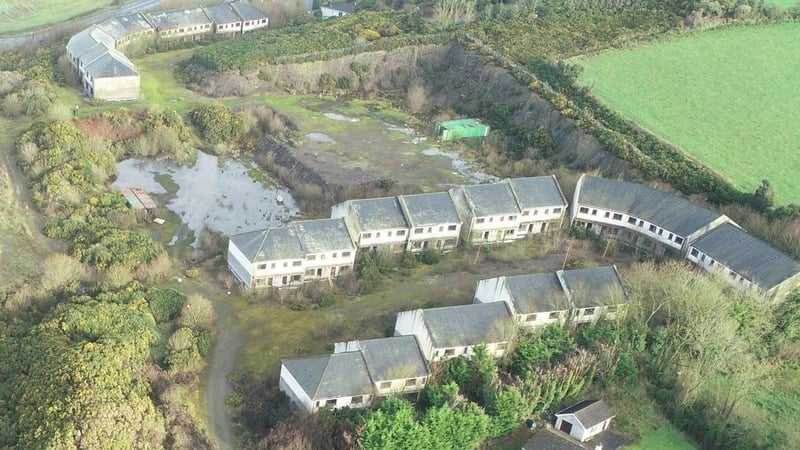

Tipperary County Council has approved the decision to demolish 52 derelict, half-built houses at Ballypadeen in Cashel.
The council has said the units in question were originally only granted planning permission as tourism accommodation linked to a hotel development that was never built.
In addition, the council said, the site is located on unzoned and unserviced land outside the Cashel settlement boundary, "conflicting with national, regional, and local planning policy".
The council has said the cost of the demolition works will not be known until the procurement process for the demolition contractor has been completed.
Tipperary County Council said the decision to demolish the houses follows a detailed planning assessment and public consultation process.
The council added that "independent technical assessments identified significant defects, making any reuse financially unviable".
Overlooking the Rock of Cashel, the 52 partially complete houses have lain idle for close to 20 years.
The properties were meant to be holiday homes linked to a hotel that never materialised.
Tipperary County Council has said the demolition works arise from a binding mediated settlement agreement between it and the landowner, which requires the removal of the structures.
The council said it acknowledges the ongoing need for housing, however, it said that housing delivery must take place on appropriately zoned and serviced lands.
"Cashel currently has a strong pipeline of housing developments in suitable locations," a statement from the council added.
Sinead Carr, CEO of Tipperary County Council, said that this had been a "complex and sensitive" case.
Ms Carr said: "We fully recognise the strength of public feeling, particularly in the context of the current housing crisis.
"However, the council must make decisions based on planning law, policy, and the long-term sustainable development of the area."
The statement from the council concluded by stating that the approved demolition works will also "serve to protect the visual setting of the nationally and internationally important Rock of Cashel and address long-term dereliction in the area".