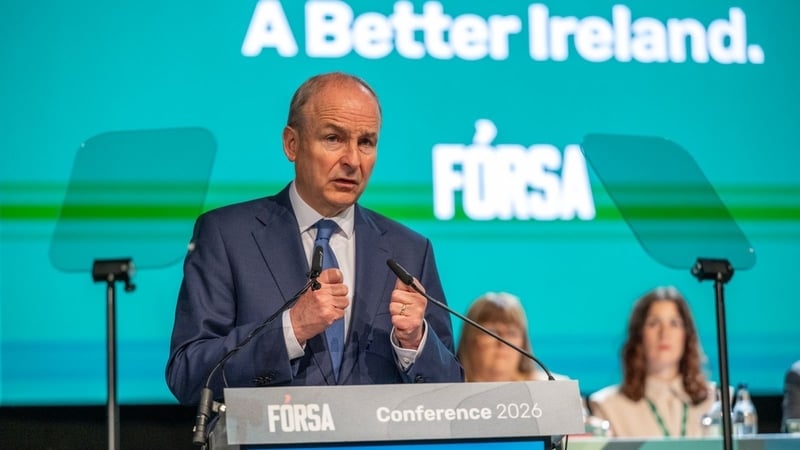

Taoiseach Micheál Martin has called for deeper social dialogue with trade unions and employer groups.
Mr Martin was addressing the biennial conference of the Fórsa trade union in Killarney today.
In his speech, he highlighted the fact that sub-groups have been established on issues such as migration, housing and health under the Labour Employer Economic Forum (LEEF) which is made up of representatives from the government, employers and trade unions.
"However, in light of the current economic and social challenges, I believe we need to go further than the current model of social dialogue," Mr Martin said.
"I believe there is scope to agree deeper shared understandings about the way forward," he said.
"We all know that many of the factors that affect workers' standard of living such as public services, taxation, housing, employment rights, pensions and childcare, fall outside normal pay negotiations," he added.
"As a first step, an intensive process of discussion has commenced under the LEEF on the current challenges to energy security and affordability, as well as Ireland's broader economic resilience," Mr Martin said.
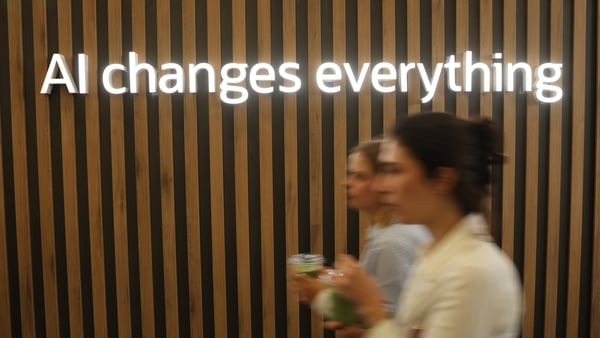
He also said that he is proposing that the Government, trade unions and employers would establish a forum under the LEEF to specifically explore the impacts of AI and wider digital change on the workplace.
Public sector pay
The current public sector pay deal is due to expire at the end of June and in his address, Mr Martin said the full implementation of the current agreement, including outstanding local bargaining claims, remains the immediate priority.
"I have made clear to all Ministers that I want and expect rapid progress in the coming weeks to resolve outstanding aspects of applying the local bargaining clause," Mr Martin said.
"The Government also wants to explore the potential for a new agreement with public service unions and representative associations over the period ahead. I hope to see initial contacts made on this shortly," he added.
Warnings of industrial unrest
At their conference today, Fórsa delegates called for a "better deal" on public sector pay that must address wider issues such as housing affordability, commuting costs, remote and flexible working arrangements, and the long-term sustainability of public services.
The conference was told that if a negotiated multi-annual public sector agreement cannot be achieved, the union should seek an immediate pay round, pursue local bargaining claims independently, and ballot members for industrial action where necessary.
The General Secretary of Fórsa, Kevin Callinan, said the next public sector pay deal will need to be different from previous agreements and if an acceptable outcome cannot be reached, industrial unrest could be inevitable.
"I think we would be looking at a situation where we go back to the 70s and 80s where where we just looked at pay rounds," Mr Callinan said.
"If we are in that scenario, then we don't have the advantages for government and employers that come with cost certainty, industrial peace, and cooperation."
"We would be into a different era and inevitably I think there will be more conflict."
"But we're ready for that, if that's what government want, we'll be ready," he added.
More than 150 motions
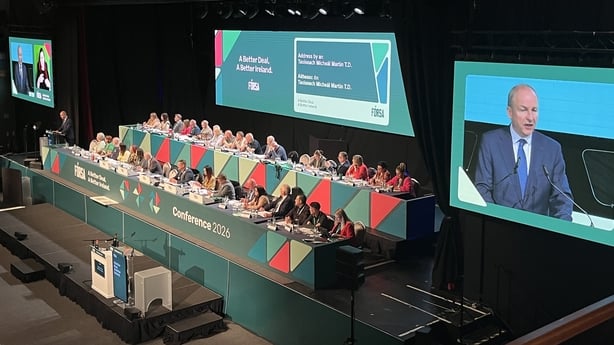
Pay, artificial intelligence and remote working will be among the topics debated by members of Fórsa at this week's conference. More than 150 motions are being voted on by delegates over the course of three days.
One of the motions on wages calls for "a significant increase in members' pay, beyond the level of inflation".
Another states that the next public service agreement should provide for "a fairer work-life balance through agreed policies on flexible work arrangements, remote working, and a shorter working week."
The resolution also calls for the agreement to include "targeted investment in public healthcare and housing".
Remote working
A survey of Fórsa members on remote working, which was conducted by Amárach Research, attracted almost 20,000 responses and was presented at today's conference.
It found that seven in ten Fórsa members, who currently work remotely or in hybrid arrangements, said they would consider moving role to retain or improve their current level of flexibility.
Four in ten workers said they would look for another job if access to remote work was reduced, while 28% said they would accept the change.
One of the motions on remote working states that remote and hybrid work must be better protected and promoted.
"Flexible work should not become a privilege for higher paid workers, rather it should be secured and defended through national and local bargaining," according to the resolution,
Another motion opposes "unilateral employer decisions to roll back blended working without clear evidence- informed justification or meaningful engagement."
Artificial intelligence
On artificial intelligence, one motion calls for the inclusion of AI-related clauses in the forthcoming public service pay negotiations.
These would include the right to meaningful consultation and collective bargaining on AI deployment; protections against AI-driven job displacement; commitments to benefit-sharing including the exploration of reduced working time as an "AI Time Dividend"; and guaranteed access to paid, protected time for AI training and upskilling.
Another motion calls on the union to ensure workers’ rights are respected and prioritised in the Government’s roll-out of artificial intelligence systems across workplaces.